Quarterly Business Review: How to Plan, Structure & Run a QBR Meeting
Introduction
Every quarter, we pause and ask ourselves a familiar question: are we actually moving the business forward, or are we just staying busy?
Revenue numbers fluctuate, projects move across the board, clients share feedback, and teams hit milestones. But without a structured way to connect all of it, it’s easy to miss the bigger picture.
A quarterly business review becomes essential here. Instead of treating performance as a collection of isolated metrics, we step back and review the full story. We examine business goals and outcomes, analyze key performance indicators (KPIs), revisit client alignment and expectations, and define clear action items and next steps.
In this guide, we’ll walk through what a quarterly business review is, why it matters, how to structure a strong quarterly business review agenda, and how to run a productive QBR meeting that drives data-driven decision making and long-term growth.
What is a Quarterly Business Review (QBR)?
A Quarterly Business Review (QBR) is a structured meeting held every quarter to review performance, present key performance indicators (KPIs), align stakeholders on goals, and set clear action items for the next quarter.
A strong QBR uses a focused agenda, data-backed metrics like revenue and growth, and direct discussion on client alignment, risks, and priorities. These meetings support better planning, stronger relationships, and faster decisions across sales, customer success, product, and leadership teams.
Depending on the audience, a QBR can take different forms:
- An internal business performance review for leadership and functional teams
- A client-facing client business review to align on outcomes and expectations
- A cross-functional strategic review meeting to decide priorities and trade-offs
In all cases, the goal stays the same: make the quarter’s performance useful, not just visible.
Purpose of a Quarterly Business Review
The quarterly business review purpose is to formally evaluate performance for a completed quarter and define the direction for the next one. It is different from a casual quarterly performance review.
A QBR meeting serves four core purposes:
1. Performance evaluation: It provides a structured forum for reviewing quarterly business performance against predefined KPIs. This includes revenue and growth analysis, operational metrics, sales performance, product usage data, and previously agreed objectives.
2. Accountability review: It checks progress on commitments made in the previous quarter. Action items, strategic initiatives, and SMART goals are revisited to determine completion status and impact.
3. Strategic recalibration: It allows leadership or client stakeholders to adjust priorities based on performance data, market changes, or evolving business goals and outcomes. The QBR ensures that strategy is reviewed on a fixed cadence rather than informally.
4. Next-quarter planning: It formalizes decisions for the upcoming quarter, including revised targets, key initiatives, resource allocation, and measurable action items.
A QBR is not a status update meeting. It is a scheduled governance mechanism for performance review, alignment, and structured decision-making at the end of each quarter.
This structure matters because performance systems often lack credibility. Deloitte’s 2025 Global Human Capital Trends report found that 61% of managers and 72% of workers do not trust their organization’s performance management process. A well-run QBR restores trust by grounding reviews in transparent KPIs and documented action items.
A QBR typically runs 60 to 90 minutes. Client-facing reviews usually include the account manager or CSM, an executive sponsor, and key stakeholders from both sides. Internal QBRs bring together department leads and cross-functional team leaders.
Benefits of Having a QBR Meeting for Your Business
A well-run quarterly business review creates discipline around performance. It forces the business to step back, assess results, and make intentional decisions for the next quarter.
1. Tracking business performance over time
Quarter-over-quarter reviews reveal patterns that daily reporting misses. Revenue trends, churn shifts, operational delays, and sales conversion changes become easier to interpret when viewed in structured intervals. A QBR meeting turns raw KPIs into performance insights.
2. Setting actionable business goals
A quarterly review meeting connects results to direction. Instead of vague targets, teams leave with measurable priorities and defined action items. Goals become grounded in data, not assumptions. This strengthens accountability across departments.
3. Improving client relationships and communication
In client-facing environments, a client business review builds transparency. Performance is reviewed openly. Expectations are clarified. Risks are surfaced early. This reduces friction and strengthens long-term partnerships.
4. Ensuring alignment on future business strategy
Misalignment is expensive. A structured QBR aligns leadership, sales, operations, and product teams around shared business goals and outcomes. Revenue and growth analysis is discussed alongside capacity and execution realities. Strategy becomes coordinated instead of fragmented.
5. Driving continuous improvement and growth
Recurring issues become visible when performance is reviewed consistently. Bottlenecks, inefficiencies, and underperforming initiatives can be corrected before they compound. Continuous review creates continuous improvement.
6. Building trust and transparency with clients
Clear metrics and honest discussion build credibility and reinforce accountability. A strong account review meeting shows ownership of results and a clear plan forward. Whether internal or client-facing, the quarterly business review becomes a reliable checkpoint for progress and performance.
That’s the real value of a quarterly business review: clarity, alignment, and forward momentum every 90 days.
How to Plan & Run a Productive QBR Meeting
A strong QBR meeting does not succeed because of good slides. It succeeds because of structure. Planning determines whether the session becomes a reporting exercise or a decision-making forum.
Large enterprises formalize this cadence at the highest level. For example, DHL Group’s 2024 Annual Report outlines quarterly business review meetings held multiple times per year between divisions and executive leadership, reinforcing that structured review is embedded in corporate governance.
Let’s break down how to design the flow of a QBR, starting with the agenda and how to manage the discussion in your next meeting.
Setting the QBR Agenda
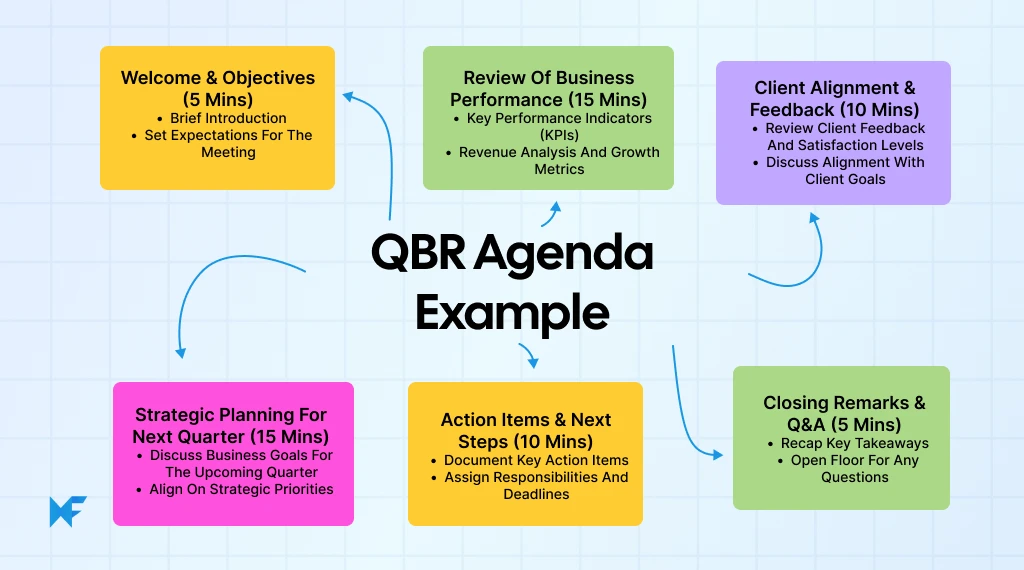
The quarterly business review agenda is the backbone of the meeting. Without a clear structure, discussions drift into operational details or unrelated updates. A QBR agenda should move logically from performance review to alignment to next-quarter planning.
Key Components of a QBR Agenda
1. Review business performance (KPIs)
The meeting should begin with a structured review of KPIs tied to the previous quarter’s goals. This includes:
- revenue performance,
- growth metrics,
- operational efficiency indicators,
- sales outcomes, and
- product usage where relevant.
The focus should be on variance analysis. Where did performance exceed targets? Where did it fall short? What factors influenced the results?
2. Client feedback and alignment
In a client-facing account review meeting, this segment ensures expectations are aligned. Feedback should be surfaced clearly and discussed in context of business outcomes. Internally, this is where cross-functional teams confirm whether priorities were interpreted consistently across departments.
3. Strategic goals and action items
The final core section transitions from analysis to direction. Decisions for the next quarter must be defined explicitly. This includes measurable goals, ownership assignment, and timelines. A QBR without documented action items does not fulfill its purpose.
Quick tip → For external clients, try different formats. For mature accounts, focus on long-term strategy, expansion opportunities, and innovation alignment. For newer clients, emphasize onboarding progress, adoption metrics, and early performance wins to build trust and momentum.
Building a Balanced Agenda
Even with the right components, time allocation determines effectiveness.
1. Include enough time for both presentation and discussion
A QBR should not be a one-way presentation. Data should be summarized clearly, but discussion time must be protected. Stakeholders need space to challenge assumptions, clarify interpretations, and align on decisions.
2. Keep the meeting focused
Scope discipline matters. If operational deep-dives emerge, they should be parked for separate working sessions. The QBR is a strategic review meeting, not a troubleshooting workshop.
3. Allocate time for Q&A
Structured Q&A ensures unresolved concerns are addressed before commitments are finalized. It also reduces post-meeting confusion and follow-up clarification cycles.
A balanced agenda creates flow: review → alignment → decision → confirmation. When structured correctly, the quarterly review meeting becomes a controlled environment for decision-making rather than a reactive status update.
Choosing a Virtual Collaboration Tool for QBR Meeting
A QBR meeting that relies only on static slides limits interaction. In contrast, a structured visual collaboration workspace visual workspace allows teams to analyze performance, debate priorities, and document decisions in real time even for remote and hybrid teams.
Virtual collaboration tools are essential because they:
- Centralize KPIs, dashboards, and supporting documents in one place
- Allow live edits and updates during discussion
- Reduce context switching between presentation, chat, and documentation tools
- Make decisions visible rather than buried in meeting notes
When reviewing quarterly business performance, clarity and visibility matter as much as the data itself.
MockFlow’s IdeaBoard provides a shared visual workspace that supports structured QBR discussions without turning the meeting into a passive presentation.
Instead of presenting slides sequentially, teams can build a live board that includes:
- KPI summaries
- Revenue and growth analysis
- Customer feedback artifacts
- Strategic priorities
- Action item tracking sections
Because the board updates in real time, participants can highlight concerns, annotate metrics, and refine goals as discussions unfold.
For teams looking to start quickly, IdeaBoard’s template library offers ready-made formats designed for structured planning sessions. The Quarterly Business Review template is particularly useful for QBR meetings. It provides pre-defined sections to:
- Review customer insights and product performance
- Evaluate risks and priority shifts
- Document business goals and outcomes
- Plan next-quarter initiatives with clarity
Using a structured template reduces setup time and ensures the QBR agenda flows logically from performance review to strategic decisions.
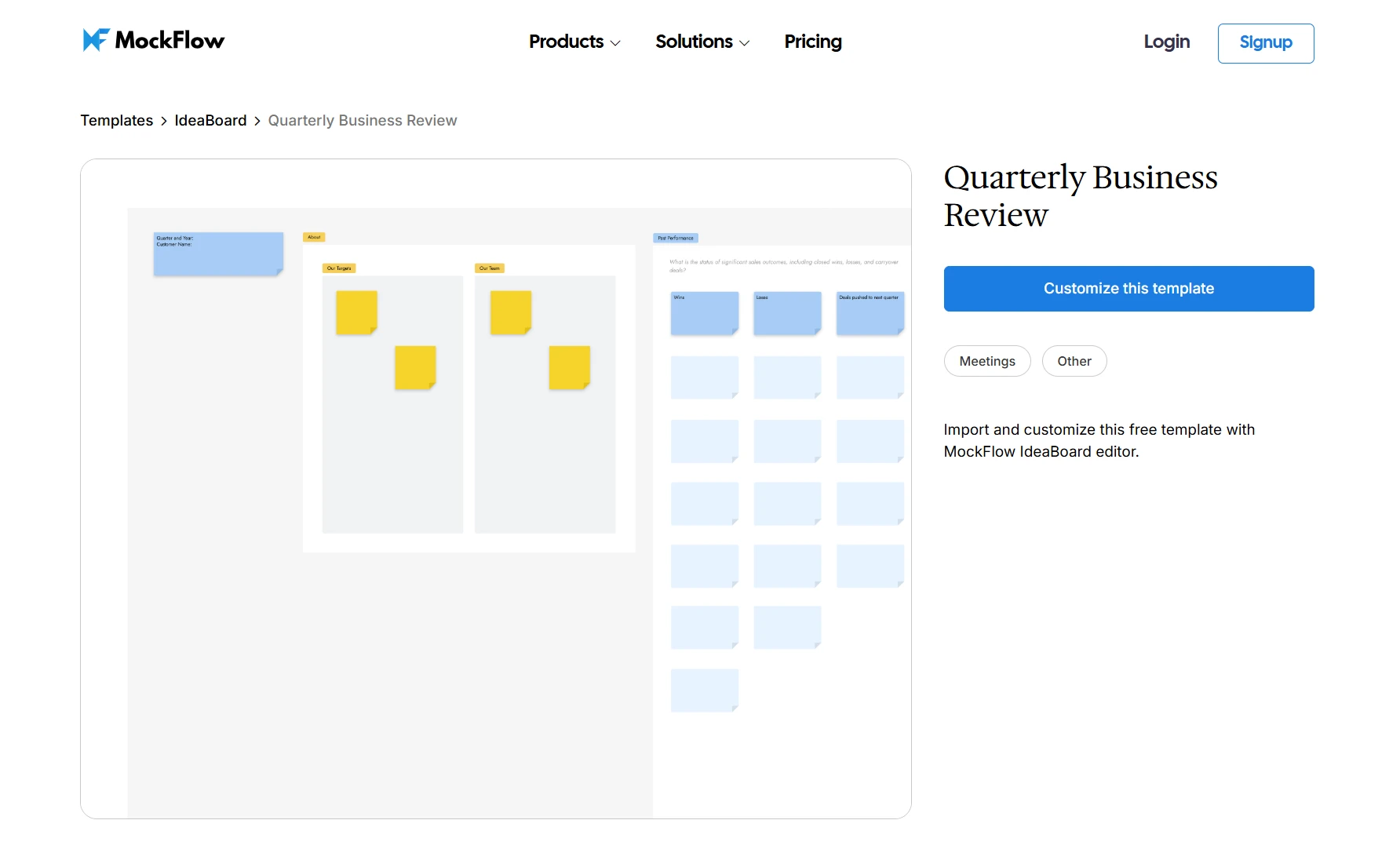
Customize and use this QBR template in your next quarterly review meeting
IdeaBoard let’s you:
- Create a live visual QBR workspace where KPIs, revenue metrics, customer insights, and strategic priorities sit on one shared board instead of scattered slides.
- Collaborate in real time with live co-editing and visible cursors so cross-functional teams can analyze performance and refine decisions together.
- Communicate inside the board using built-in chat, voice, and video comments, keeping discussions directly tied to specific metrics or action items.
- Use AI-assisted generation to build strategy maps, restructure boards, and convert notes into organized visuals during or after the QBR.
- Apply structured templates like Kano Model, Conversion Funnel Backlog, SWOT, and project planning boards to evaluate performance and plan next-quarter execution.
- Embed supporting materials and documents like quarterly reports and share as PDFs with the team so every decision is backed by visible context.
This format is especially effective for cross-functional quarterly review meetings where leadership, sales, product, and customer success teams must align in one structured session.
Actionable Steps for Running a QBR Meeting
A QBR meeting only delivers results when it is managed deliberately before, during, and after the session. Execution discipline determines whether the quarterly business review drives decisions or becomes another calendar event.
1. Share the agenda and materials ahead of time
Distribute the quarterly business review agenda, KPI dashboards, revenue summaries, and supporting documents at least a few days before the meeting. This allows stakeholders to review performance data in advance and come prepared with questions. A QBR should not be the first time participants see the numbers.
2. Set clear expectations
Clarify the purpose of the session, the scope of discussion, and the expected outcomes. Define who will present which sections and who is responsible for decision inputs. When participants understand their role, the QBR becomes structured rather than reactive.
Quick tip → High-performing teams avoid turning QBRs into live data-reading sessions. Sharing dashboards, KPIs, and reports in advance allows stakeholders to review performance beforehand, so meeting time can focus on strategy, risks, and future planning rather than reviewing past metrics line by line.
3. Stick to the agenda
Follow the planned flow: performance review, alignment discussion, decision-making. If operational deep dives arise, capture them separately for follow-up sessions. The QBR is a strategic checkpoint, not a troubleshooting meeting.
4. Encourage participation and feedback
A productive quarterly review meeting requires input from leadership, sales, customer success, product, and operations where relevant. Prompt discussion around KPI variance, client expectations, and next-quarter priorities. The goal is alignment, not one-way reporting.
5. Document key takeaways
Record decisions, revised targets, and defined action items immediately after the meeting. This documentation becomes the reference point for the next QBR and ensures accountability.
6. Assign tasks and set deadlines
Translate decisions into assigned ownership with timelines. Use task management systems to track progress across the quarter. A QBR is complete only when decisions are operationalized into measurable next steps.
Key Performance Indicators (KPIs) to Discuss in a QBR
A quarterly business review should focus only on KPIs that directly influence revenue, retention, and strategic direction. The objective is not to review every number, but to analyze the metrics that explain performance shifts and guide next-quarter priorities.
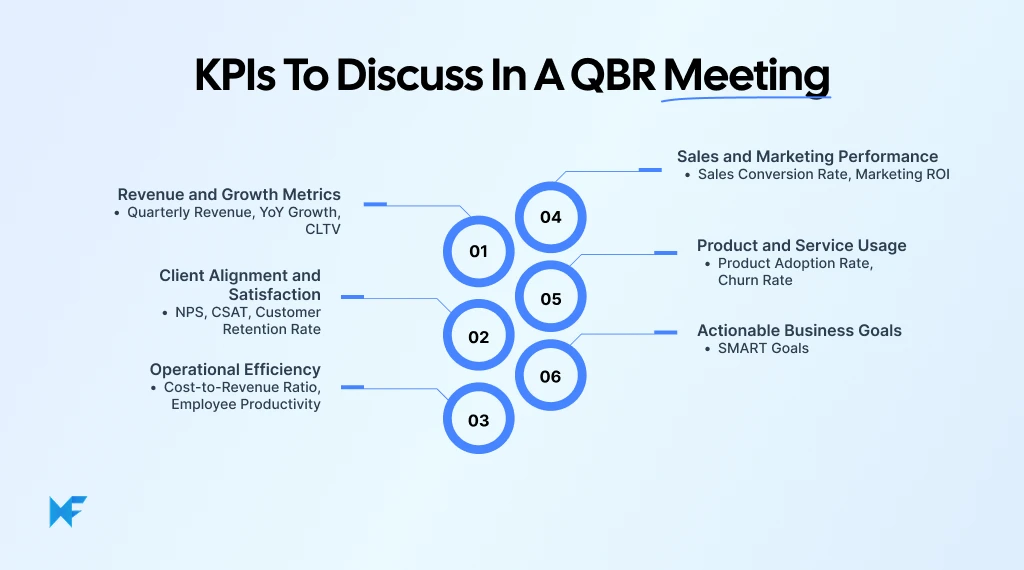
1. Revenue and Growth Metrics
Revenue metrics anchor the QBR in measurable outcomes. They help us evaluate whether execution translated into financial results.
Quarterly Revenue: Compare actual revenue against targets and identify variance. Break down the difference into contributing factors such as pipeline volume, conversion rate, pricing, or retention.
Year-over-Year (YoY) Growth: Measure performance against the same quarter last year. This removes seasonality and highlights whether growth is structural or situational.
Customer Lifetime Value (CLTV): Assess the long-term value generated per customer. A declining CLTV often signals churn risks or weak expansion strategies. A rising CLTV indicates stronger retention or upsell effectiveness.
When revenue or growth underperforms, the conversation should move beyond “numbers are down” to “where exactly is the drop happening?” For example, if sales conversion rate declines or lead-to-customer progression slows, mapping the funnel stages visually can make bottlenecks obvious.
In such cases, teams can use a structured funnel analysis approach. For instance, a board like IdeaBoard’s Conversion Funnel Backlog template can help break revenue into stages, identify drop-offs, prioritize optimization efforts, and assign fixes by stage. This keeps the discussion grounded in root-cause analysis rather than surface-level reporting.
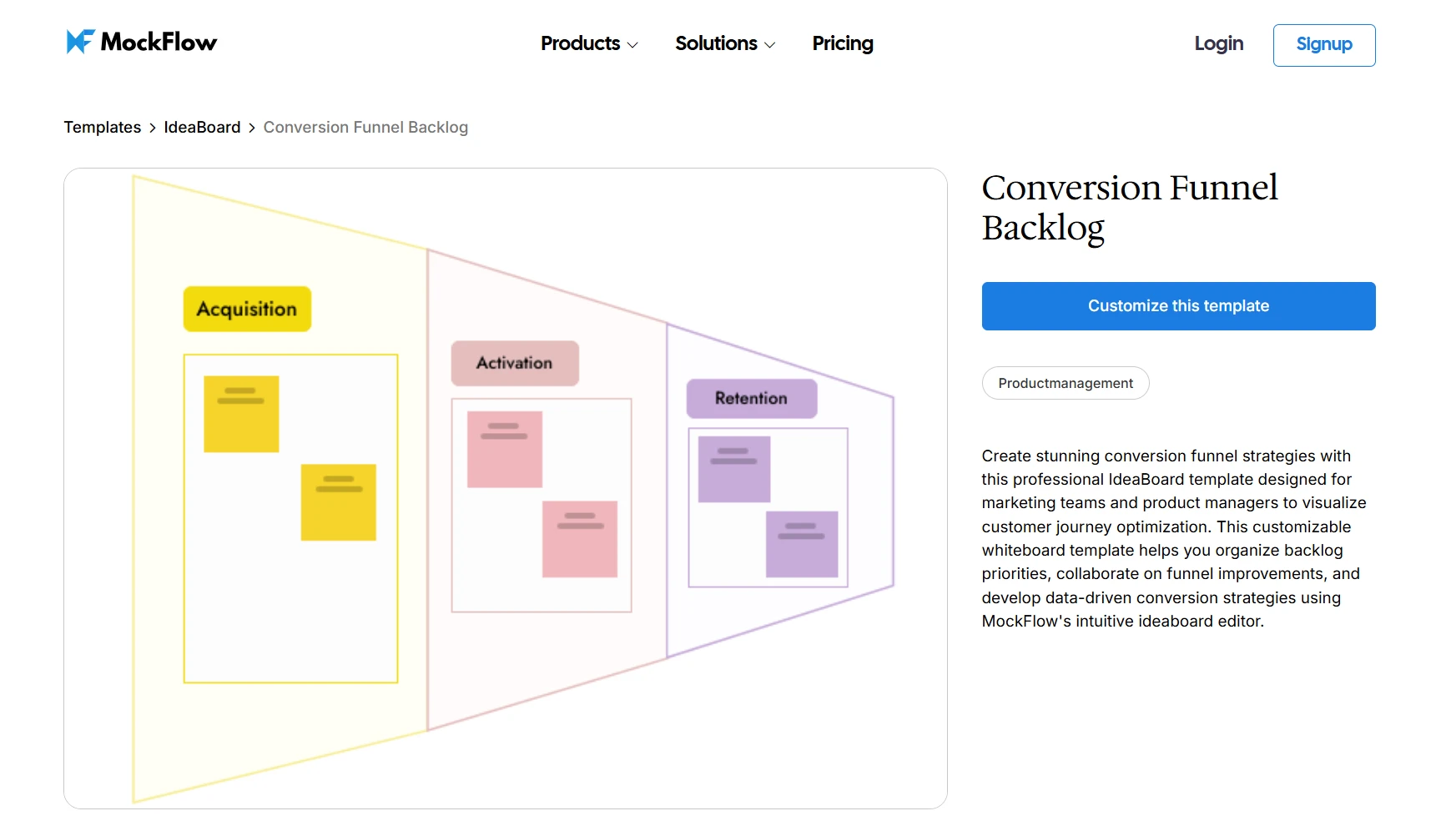
Customize this conversion funnel backlog template
Revenue tells us what happened. Funnel-level analysis explains where performance changed and what needs to be addressed next.
2. Client Alignment and Satisfaction
A strong quarterly business review must evaluate whether clients remain aligned, satisfied, and committed. Gartner reported in 2024 that only 14% of customer service issues are fully resolved in self-service environments, reinforcing the need for structured, proactive review forums like QBRs to surface friction and value gaps early.
Net Promoter Score (NPS): Track advocacy trends. Focus on movement over time and root causes behind shifts. Declining NPS requires immediate analysis of service gaps or product friction.
Customer Retention Rate: Measure the percentage of customers retained versus last quarter. Retention directly reflects value delivery and expectation alignment.
Customer Satisfaction Score (CSAT): Assess short-term satisfaction tied to product releases, support quality, or service interactions. Compare CSAT trends with churn patterns.
When NPS or churn trends signal risk, the discussion should move toward understanding what specifically influences satisfaction. One practical way to structure that discussion is to categorize features into must-haves, performance drivers, and differentiators.
In such cases, teams can use a framework like IdeaBoard’s Kano Model template to visually identify which product or service elements impact satisfaction most and prioritize improvements that reduce churn.
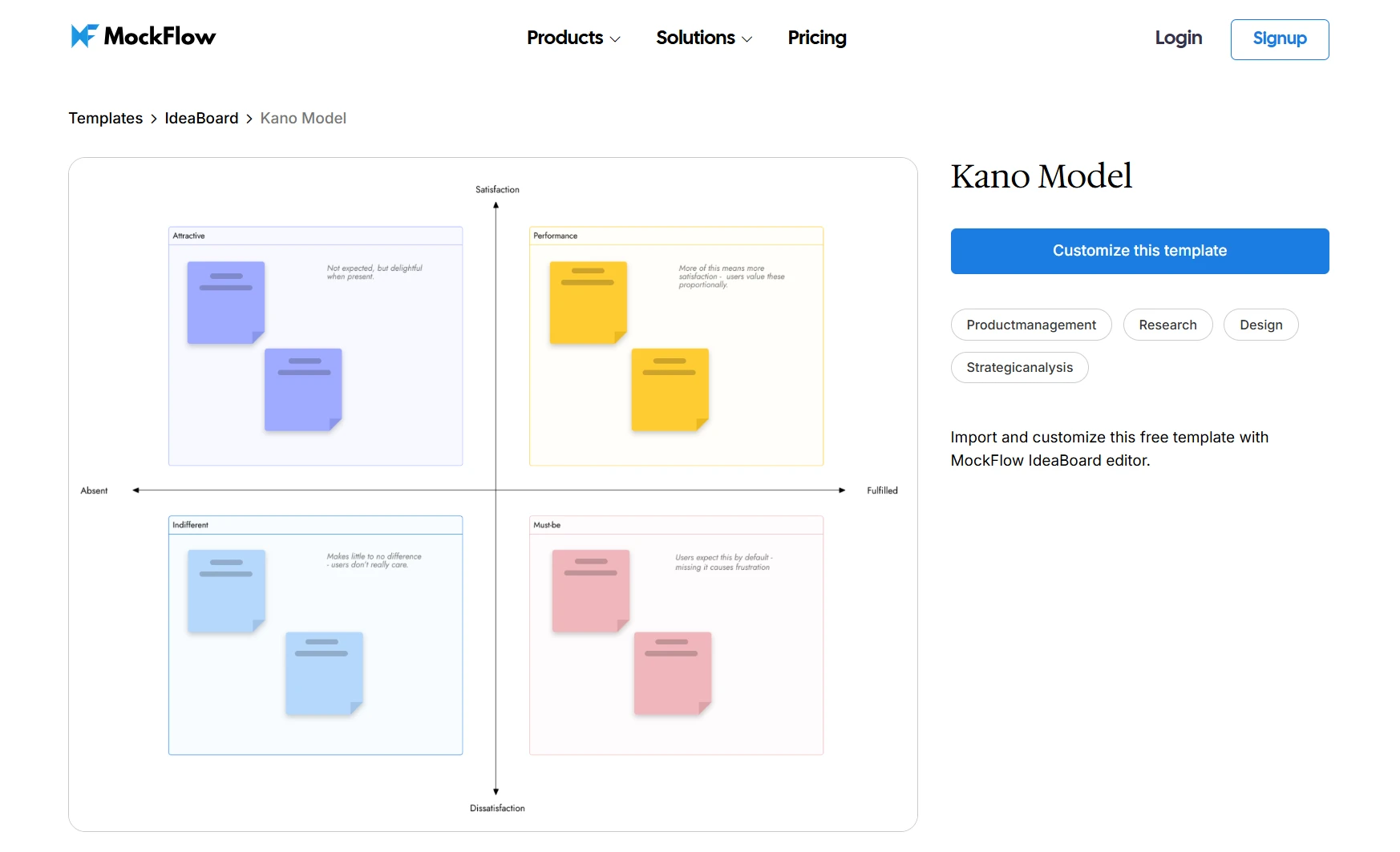
Customize this Kano Model template on IdeaBoard
Customer Success has become a standard operating function in recurring revenue businesses, with 95% of companies reporting established customer success teams in 2024, as per TrustRadius. This means they are part of mainstream operating cadence which is no longer optional.
3. Operational Efficiency
Operational KPIs determine whether growth is sustainable. A QBR should assess how efficiently the business converts resources into outcomes.
Cost-to-Revenue Ratio: Evaluate how much it costs to generate each dollar of revenue. Rising costs without proportional revenue growth signal margin pressure or inefficient resource allocation.
Time-to-Resolution for Customer Issues: Measure how quickly support tickets or service requests are resolved. Longer resolution times often correlate with lower CSAT and retention risks.
Employee Productivity: Assess output relative to capacity. This includes delivery timelines, project completion rates, and workload balance across teams.
When these metrics reveal recurring delays, process breakdowns, or operational bottlenecks, the discussion should move toward root-cause analysis rather than surface fixes. For example, teams can map potential failure points and assess their impact using a structured risk framework.
A method like IdeaBoard’s FMEA Analysis template can help identify where processes fail, evaluate severity and likelihood, and prioritize corrective actions.
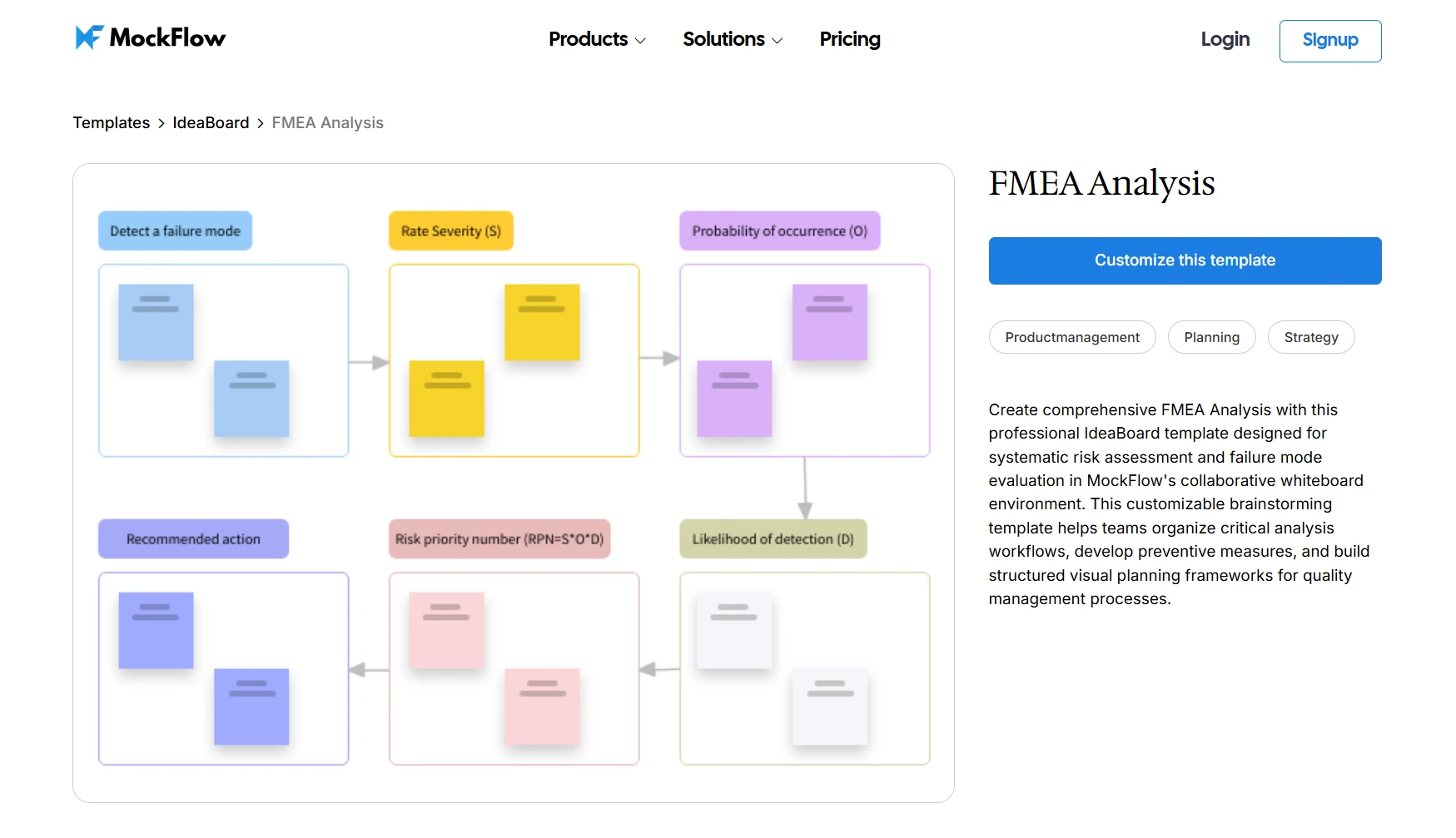
Customize this FMEA Analysis template for QBR Meeting
Operational metrics show where inefficiency exists. Structured risk analysis helps determine what to fix first and create process maps accordingly.
4. Sales and Marketing Performance
Sales and marketing KPIs indicate whether demand generation and revenue conversion are aligned. In a QBR, these metrics explain how pipeline activity translates into closed revenue.
Sales Conversion Rate: Track the percentage of qualified leads that become paying customers. If conversion declines, analyze qualification criteria, sales cycle length, or deal-stage drop-offs.
Marketing Return on Investment (ROI): Compare revenue generated from campaigns against marketing spend. Low ROI signals targeting inefficiencies, weak messaging, or poor channel mix.
Lead Generation and Nurturing: Measure both lead volume and progression through the pipeline. High lead volume with low progression suggests nurturing gaps or misaligned ICP targeting.
Sales and marketing metrics reveal whether revenue shortfalls are demand-driven or conversion-driven. The goal in a QBR is clarity on which lever requires attention next quarter.
5. Product and Service Usage
Usage metrics determine whether customers are realizing value after purchase. A QBR should assess not just acquisition, but sustained engagement.
Product Adoption Rate: Measure the percentage of active users relative to total customers. Low adoption often precedes churn and signals onboarding or product-fit issues.
Feature Utilization: Track which features are used most and least. Underutilized high-value features may indicate usability friction or insufficient customer education.
Churn Rate: Monitor the percentage of customers who discontinue within the quarter. Analyze churn drivers alongside usage patterns to identify preventable loss.
Product usage metrics show whether customers are extracting value. When adoption drops or churn rises, next-quarter priorities should focus on activation, enablement, or experience improvements.
6. Actionable Business Goals
A quarterly business review should end with clarity on execution. Reviewing performance is incomplete unless it connects directly to next-quarter commitments.
SMART Goals Progress: Revisit the specific, measurable, achievable, relevant, and time-bound goals defined in the previous QBR. Evaluate completion status, impact, and variance. If targets were missed, identify whether the issue was execution, unrealistic planning, or shifting priorities.
Completion of Action Items: Assess the percentage of action items delivered versus committed. Recurring delays often signal ownership gaps, resource constraints, or unclear accountability structures.
When moving from performance analysis to next-quarter planning, structured strategy framing helps. For example, if KPI results indicate both strengths and weaknesses, a visual SWOT board can help contextualize those insights and align them with updated priorities.
Teams can use a framework like IdeaBoard’s SWOT-style strategic board to connect strengths and opportunities with upcoming initiatives while addressing threats or operational gaps identified during the QBR.
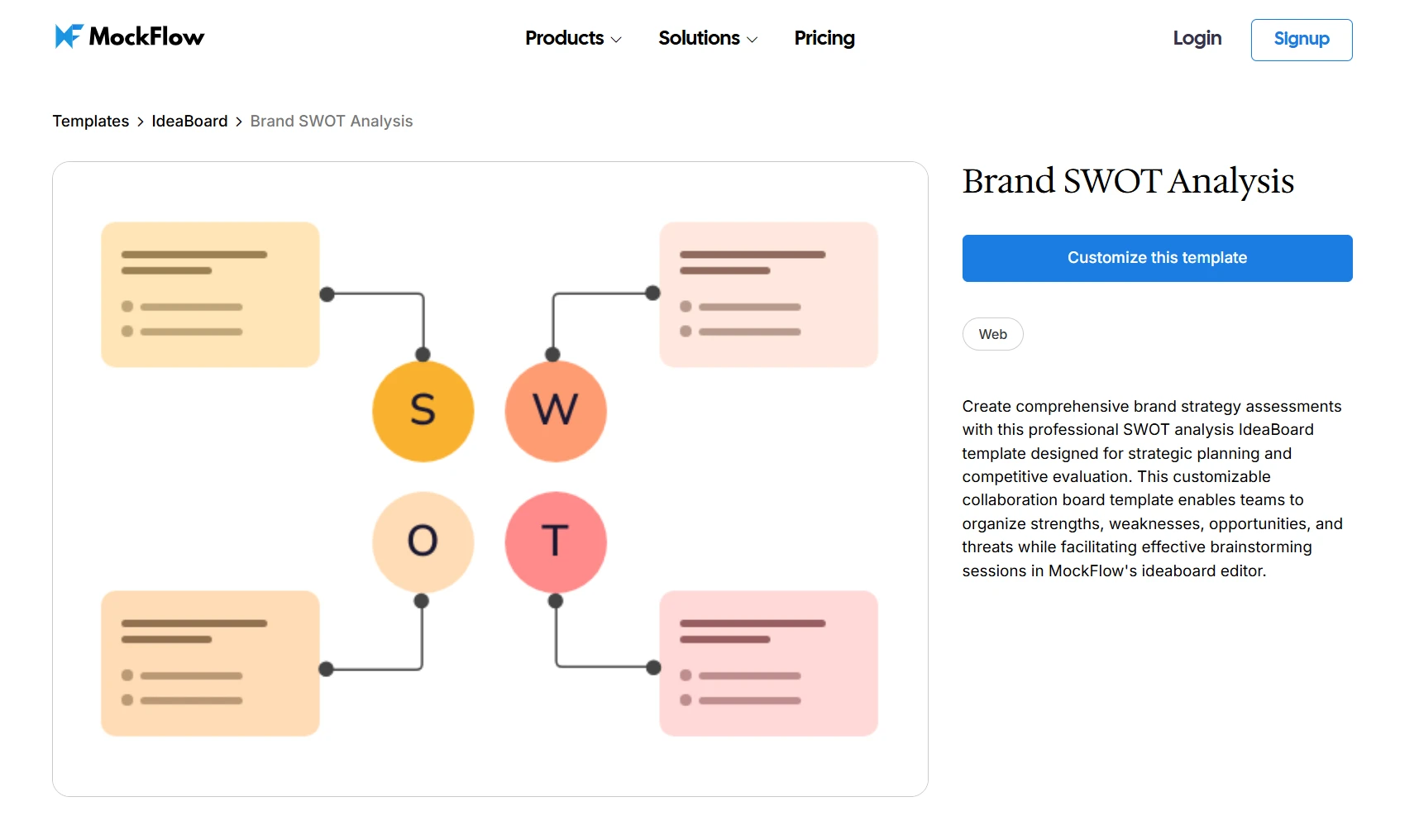
Customize this SWOT Analysis template on IdeaBoard
Once direction is clarified, translating decisions into execution plans becomes critical. A structured planning format such as a Project Plan Mind Map can help break strategic goals into actionable steps, owners, and timelines.
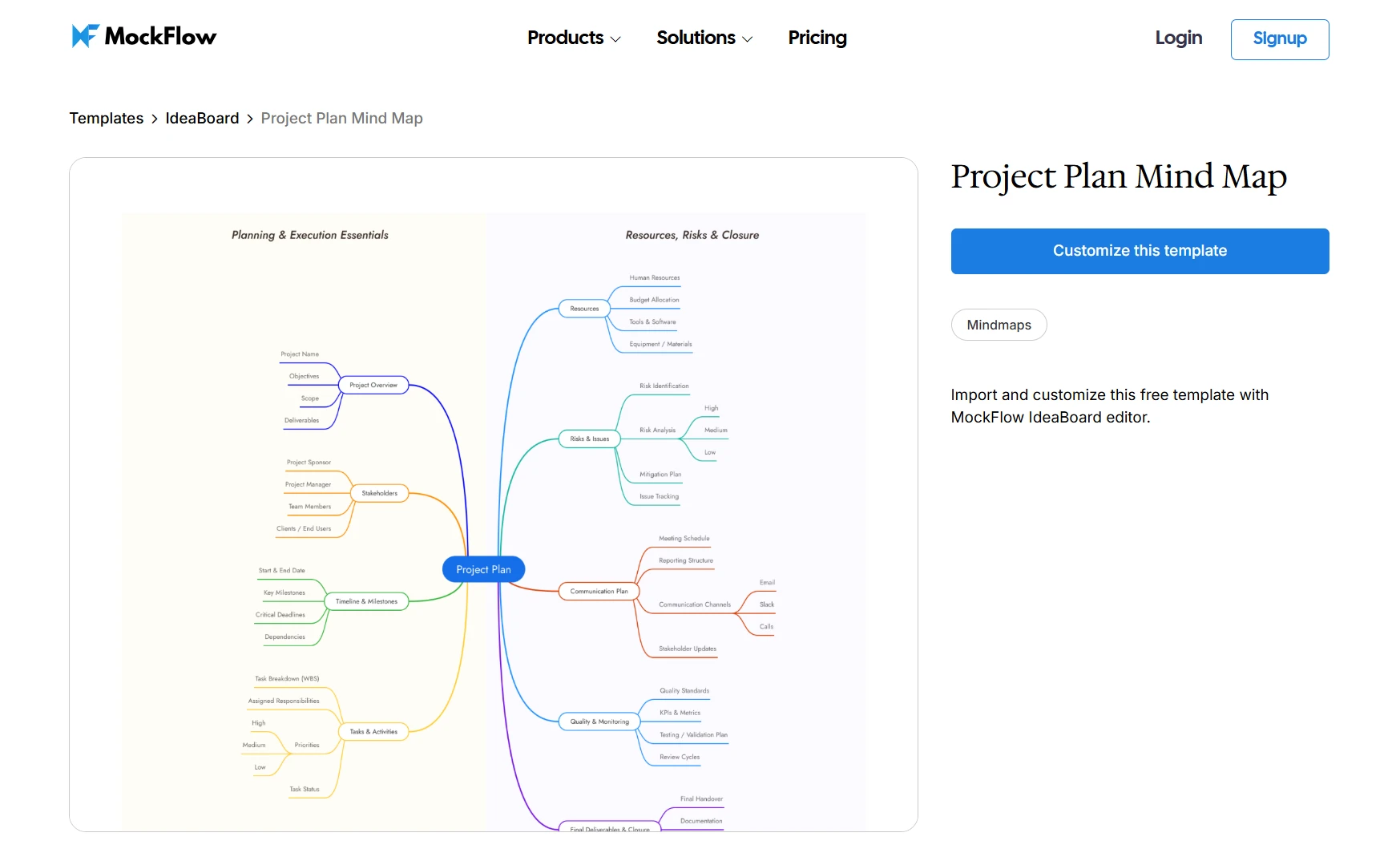
Customize this project plan mind map template
KPIs explain what happened. Clear goal tracking and structured planning define what happens next.
All the above-mentioned KPIs help assess both financial health and client satisfaction, while also providing actionable insights for refining strategies in the upcoming quarter.
Best Practices for Effective Virtual Collaboration During a QBR
A virtual QBR meeting must be structured for clarity and engagement. The objective is simple: keep discussion focused, ensure participation, and convert insights into accountable actions.
1. Establish Clear Communication Channels
Set up a single collaboration platform like IdeaBoard before the meeting so all KPIs, documents, and discussion points are centralized. Avoid switching between multiple tools during the session. If your team already runs meetings in Microsoft Teams, IdeaBoard's Microsoft Teams integration lets you pin the board as a channel tab or open it live during the call, so the QBR stays anchored to one shared view instead of scattering data across chat and slides.
Use built-in messaging or live chat for real-time questions without disrupting flow. Clear communication channels reduce confusion and keep the quarterly business review efficient.
2. Encourage Active Participation
Use polls or structured Q&A segments to gather quick input on priorities, risks, or goal alignment. This prevents the meeting from becoming one-way reporting.
Ensure every stakeholder group contributes. Sales, product, operations, and customer success perspectives are critical for balanced decision-making.
3. Use Interactive Visual Tools
Present performance data in a shared visual workspace rather than static slides. Tools like IdeaBoard enable live annotations, structured KPI mapping, and collaborative planning in real time.
Display dashboards or embedded metrics directly inside the board so discussions happen around visible data, not interpretations.
4. Track and Follow Up on Action Items
Clearly assign owners and deadlines before closing the session. Action items should be documented in a visible, shared location.
Track progress through task management systems and review status in the next QBR. Without follow-up, even the most productive quarterly review meeting loses impact.
Run a Virtual QBR Meeting with IdeaBoard
A virtual quarterly business review works best when performance analysis and planning happen in one structured space. With IdeaBoard, you can set up a dedicated QBR board that includes pre-defined sections for KPIs, revenue and growth analysis, customer insights, risks, and next-quarter goals.
Start with a ready-made template such as the Quarterly Business Review layout or use strategic boards like SWOT or project planning templates to move from performance review to execution.
During the meeting, teams can annotate metrics live, document decisions instantly, and convert discussion points into assigned action items without switching tools. This approach keeps the QBR meeting focused, interactive, and execution-driven.
If you want to streamline your next virtual review session, you can sign up and try IdeaBoard for free.
FAQs about Quarterly Business Review
1. What is a QBR?
A quarterly business review (QBR) is a structured meeting held every quarter to evaluate performance, align on business goals, and define next-quarter action items. It connects KPI results with strategic decisions rather than serving as a simple status update.
2. How often should a QBR be held?
A QBR should be conducted once every quarter. This cadence provides enough time to measure meaningful performance shifts while maintaining consistent strategic alignment and accountability.
3. What should be included in a QBR agenda?
A strong quarterly business review agenda should include:
- KPI and revenue performance review
- Client or stakeholder alignment discussion
- Risk and opportunity assessment
- Defined action items and next-quarter goals
The meeting should move from analysis to decisions.
4. How do you conduct a QBR remotely?
Use a centralized virtual and remote collaboration platform to review KPIs, discuss performance, and document decisions in real time. Keep the agenda structured, enable live participation, and ensure action items are assigned before closing the session.
5. How can QBRs improve client relationships?
QBRs create structured transparency. By reviewing results, expectations, and next steps together, clients gain clarity on performance and direction. This strengthens trust and reduces misalignment.
6. How do you make a QBR engaging?
Keep it interactive. Share data visually, invite cross-functional input, and allocate time for discussion. Focus on decisions and next steps rather than long presentations.

How to Make a Flowchart: Symbols, Types, Steps, and Templates
When a process has too many steps, decisions, or handoffs, it becomes harder to explain and even harder to improve. A flowchart...

How to Approach SaaS Product Design the Right Way
SaaS product design shapes how users experience your software from the first click to daily use. It goes beyond visual polish,...

Affinity Diagram: A Practical Guide to Organizing Ideas and Insights
Introduction Brainstorming sessions often produce dozens of ideas in minutes, but it gets difficult to figure out which ideas...
