
8 Group Brainstorming Techniques for Remote Collaboration in 2026
Introduction
Group brainstorming is one of those activities that seems simple at first but can turn into something really powerful when done right. It’s the kind of experience where ideas flow freely, creativity sparks, and everyone’s perspective adds something unique to the mix. It’s about collaboration, pushing boundaries, and getting everyone to share what’s on their mind.
Today, teams are blending in digital tools to make the process even more dynamic. Think real-time collaboration, organized idea flow, and remote brainstorming made easy, all of it happening on digital whiteboarding platforms like IdeaBoard. Whether you're meeting in person or virtually, group brainstorming helps create a space where creativity and strategy meet.
In this guide, we’re going to dive into the best group brainstorming techniques, tips on running effective sessions, and some practices that’ll help make sure your next brainstorming session is anything but ordinary.
Group brainstorming techniques teams actually use
Group brainstorming is a collaborative technique that sparks creativity and generates solutions through shared idea generation. It encourages diverse perspectives and fosters innovation by enabling teams to brainstorm together in an organized environment.
Effective brainstorming sessions can enhance problem-solving, creativity, and strategic planning. Modern tools like IdeaBoard streamline this process, enabling real-time collaboration for both remote and in-person teams.
By adopting the right techniques and tools, group brainstorming sessions can drive better outcomes and innovative solutions for teams facing complex challenges. Let’s dive deeper into a couple of these techniques and how they work.
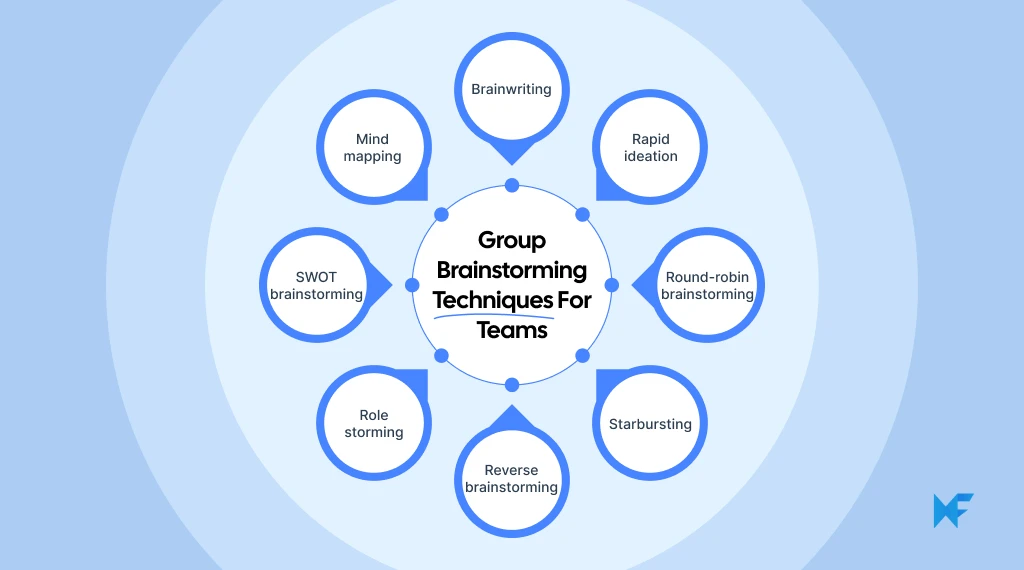
1. Mind mapping
Mind mapping is a visual technique that helps teams explore and organize ideas. It begins with a central concept or problem in the middle of the board, and then branches out into related ideas, concepts, or solutions.
It’s an excellent technique for breaking down complex problems or exploring new ideas during early-stage brainstorming sessions.
How to use mind mapping:
- Start with a core idea or problem in the center of the map.
- Branch out from this central concept with subtopics, questions, or related ideas.
- Continue expanding the map as new ideas emerge, connecting them to the relevant sections.
Mind mapping clarifies connections between ideas, making it easier to spot patterns and insights. It improves collaboration by organizing ideas in a shared space and keeps the team focused, preventing off-topic discussions.
Digital tools like IdeaBoard make this process easier. These hybrid and remote collaboration tools have become a major growth category, with the global market expected to reach roughly $75 billion by 2032, as per Dataintelo.
With templates like the sticky note mind map and product development mind map, tools like IdeaBoard help teams organize their thoughts quickly, see connections, and adjust the map as new ideas come up.
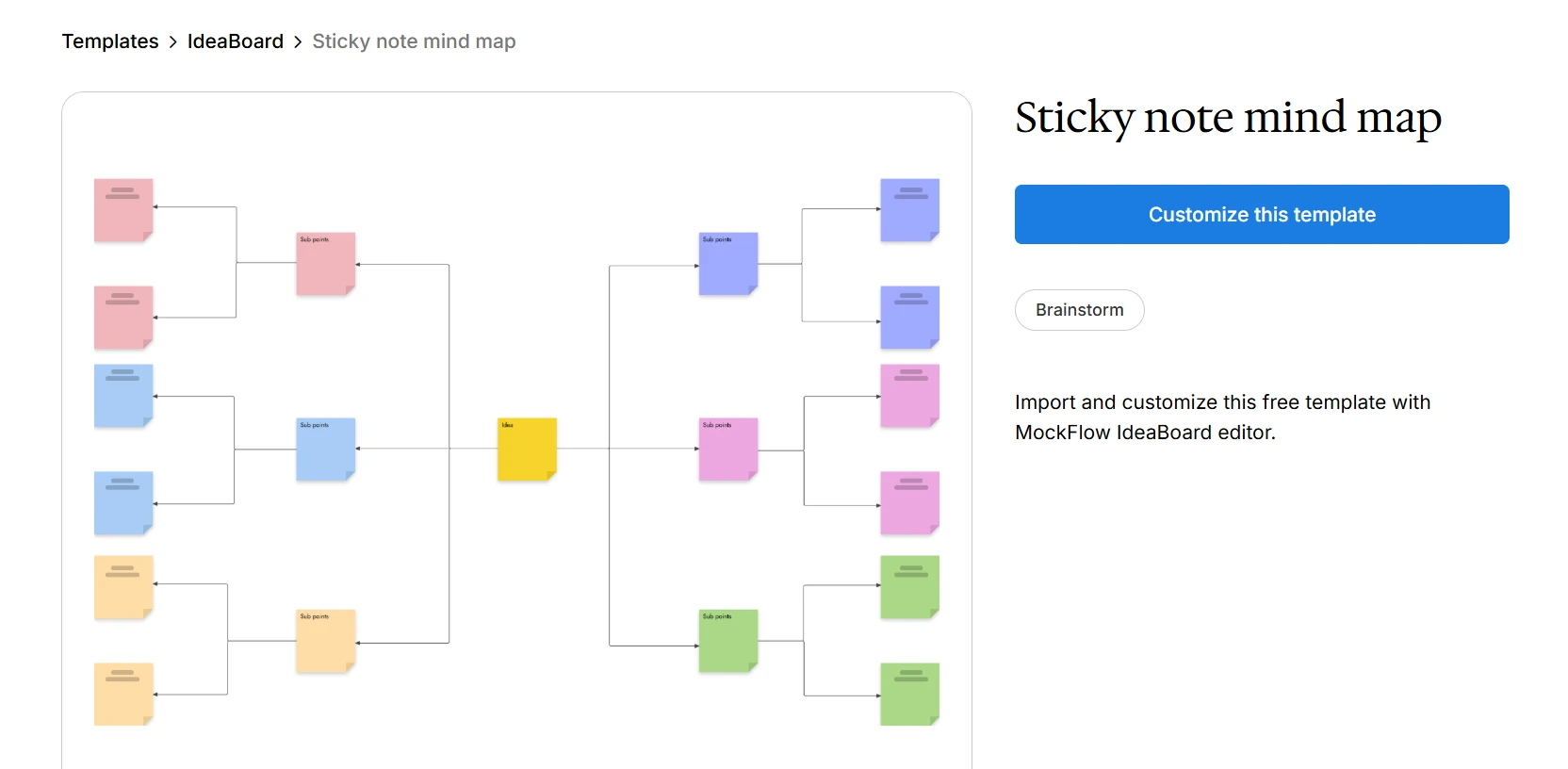
Click and customize this sticky note mind map template on IdeaBoard
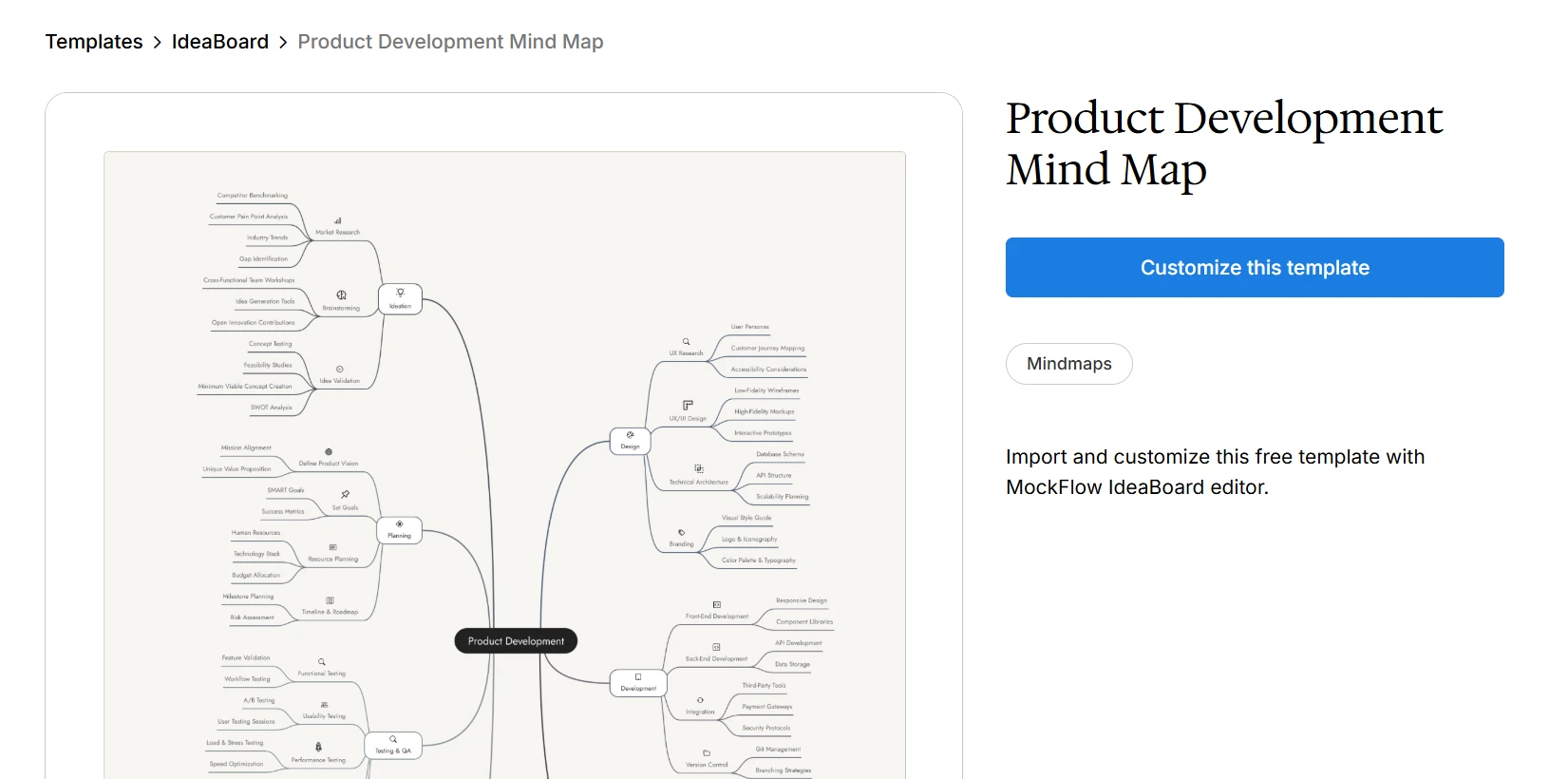
Click and customize this product development mind map template on IdeaBoard
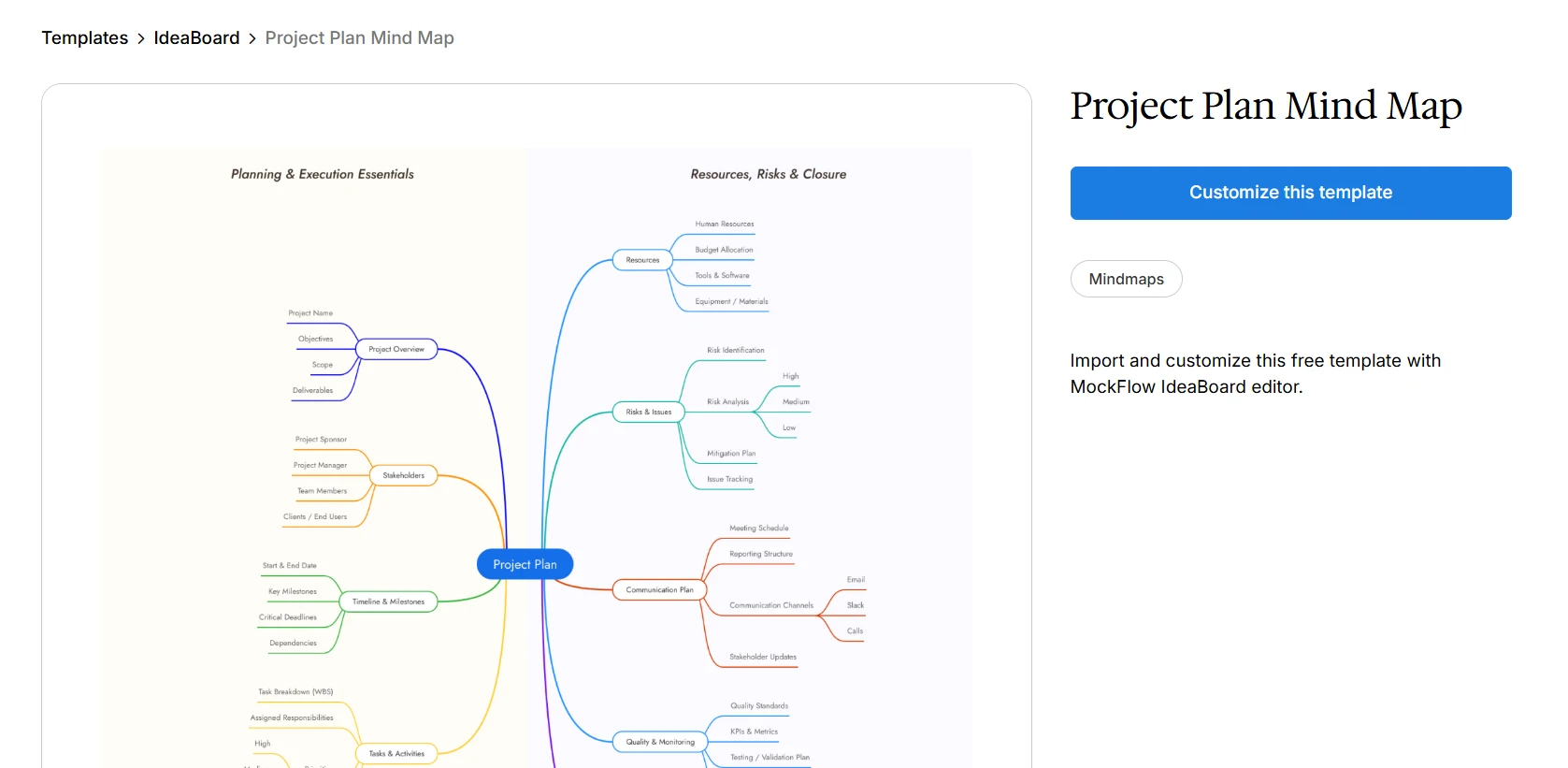
Click and customize this project plan mind map template on IdeaBoard
2. Brainwriting
Brainwriting is a silent technique where participants individually write down their ideas before any group discussion happens.
This technique is particularly helpful for preventing "groupthink," where louder voices can dominate the conversation, or when participants feel reluctant to speak up. It encourages everyone to contribute, making it ideal for diverse teams with varying levels of comfort in group discussions.
How to use brainwriting:
- Each participant writes down their ideas silently for a set amount of time (e.g., 5-10 minutes).
- Afterward, everyone shares their ideas with the group or builds on ideas already written down by others.
- The group can then discuss and refine these ideas, combining the best elements.
Brainwriting encourages deeper thinking by allowing participants to reflect before sharing ideas. It prevents dominance by ensuring everyone contributes, and fosters creativity by giving individuals space to think outside the box without the pressure of speaking up.
IdeaBoard’s brainwriting template lets participants silently input their ideas into a shared virtual space, and the team can immediately start building on them, creating a more collaborative environment.
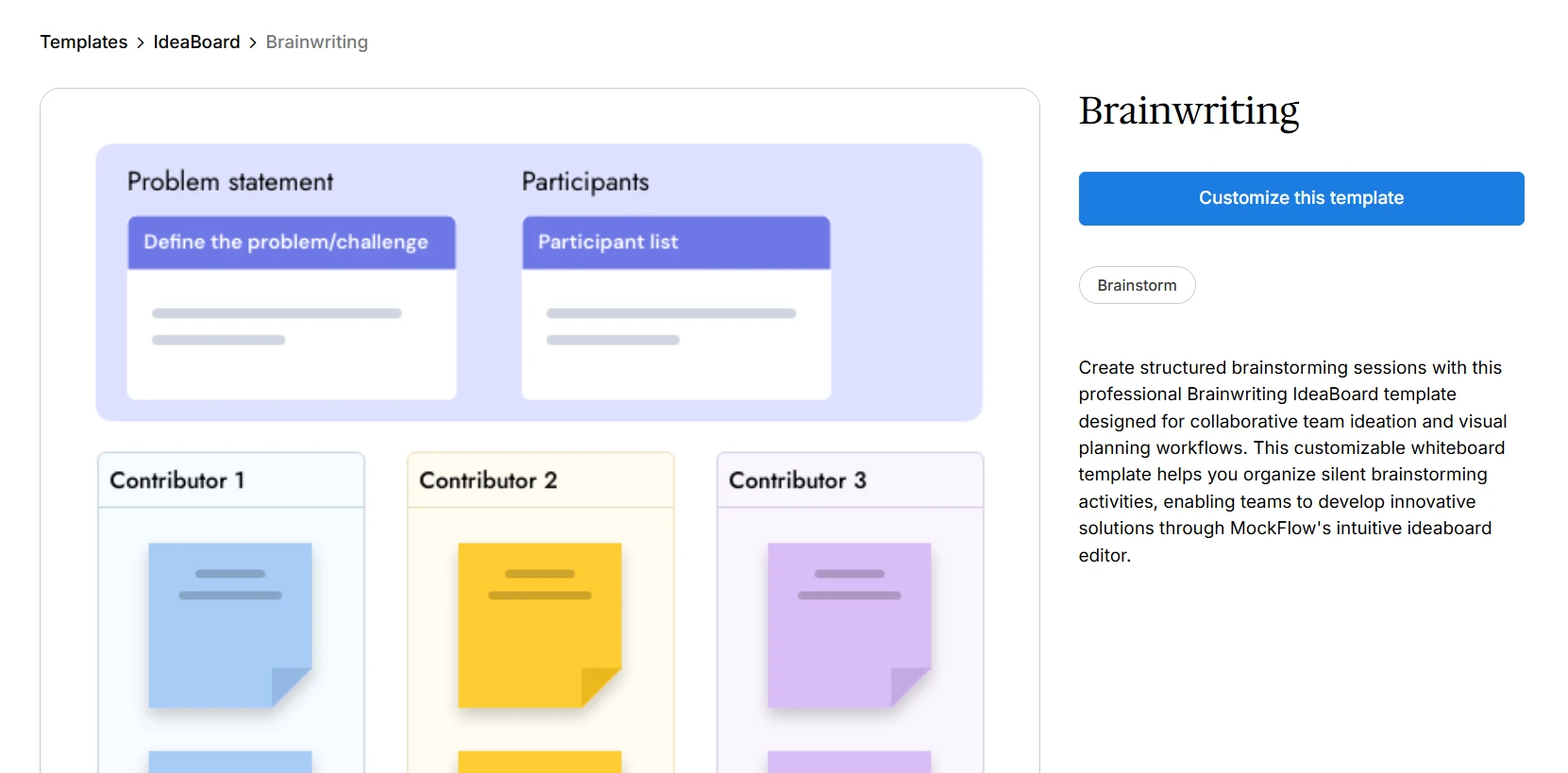
Click and customize this brainwriting template on IdeaBoard
3. Rapid ideation
Rapid ideation is all about generating a high volume of ideas in a short period. It’s designed to encourage fast thinking and minimize the internal filters that can sometimes slow down the creative process. The goal here is not to focus on quality or refinement but to come up with as many ideas as possible.
This technique works well when you're feeling stuck or need a quick burst of inspiration.
How to use rapid ideation:
- Set a strict time limit (e.g., 10-15 minutes) and challenge participants to write down as many ideas as possible, regardless of how rough or incomplete they might be.
- Focus on quantity; encourage everyone to think freely without worrying about whether the ideas are practical or polished.
- After the timer goes off, review all the ideas as a group and prioritize the most promising ones for further discussion and refinement.
Rapid ideation helps break creative blocks by encouraging fast, free-thinking without focusing on perfection. It boosts momentum and ensures diverse input by prioritizing quantity, making it ideal for quickly generating ideas and kickstarting brainstorming sessions.
4. Round-robin brainstorming
Round-robin brainstorming is a structured approach where each participant contributes one idea at a time, taking turns until everyone has had their say.
This technique is designed to promote balanced participation in the idea generation process. It ensures that everyone gets a chance to share their thoughts, making it particularly useful for preventing dominant voices from taking over the conversation.
How to use round-robin brainstorming:
- Begin with one participant contributing an idea.
- Move clockwise or counterclockwise around the group, with each person offering a new idea or building on the previous one.
- The session continues until everyone has had a chance to contribute. Repeat the cycle as needed for additional rounds.
Round-robin brainstorming ensures balanced participation by giving everyone a chance to contribute, preventing dominant voices from taking over. It fosters diverse thinking and helps generate a wider range of solutions by building on each other’s ideas.
As Forbes reports, 79% of employees say communication is a key factor in team productivity and collaboration, making structured methods like round-robin essential in creating an inclusive brainstorming environment.
5. Starbursting
Starbursting focuses on asking questions instead of providing solutions. Rather than immediately jumping to possible answers, participants use a structured set of questions (who, what, when, where, why, and how) to explore all the angles of an idea or problem.
This technique is especially useful when teams need to validate an idea or clarify details before moving forward with a solution.
How to use starbursting:
- Start by presenting an idea or problem to the group.
- Instead of discussing possible solutions, ask each participant to contribute questions that help explore the idea from different perspectives.
- Focus on critical questions like: Who will be affected? What are the potential risks? When should this be implemented? Where will this work best? Why is this important? How will it be executed?
Starbursting helps teams deeply explore ideas by asking critical questions. It clarifies concepts, examines gaps, and validates ideas, ensuring a thorough understanding of critical factors before moving forward.
IdeaBoard’s starbursting brainstorming template makes it easy to organize questions and collaborate in a structured, methodical way.
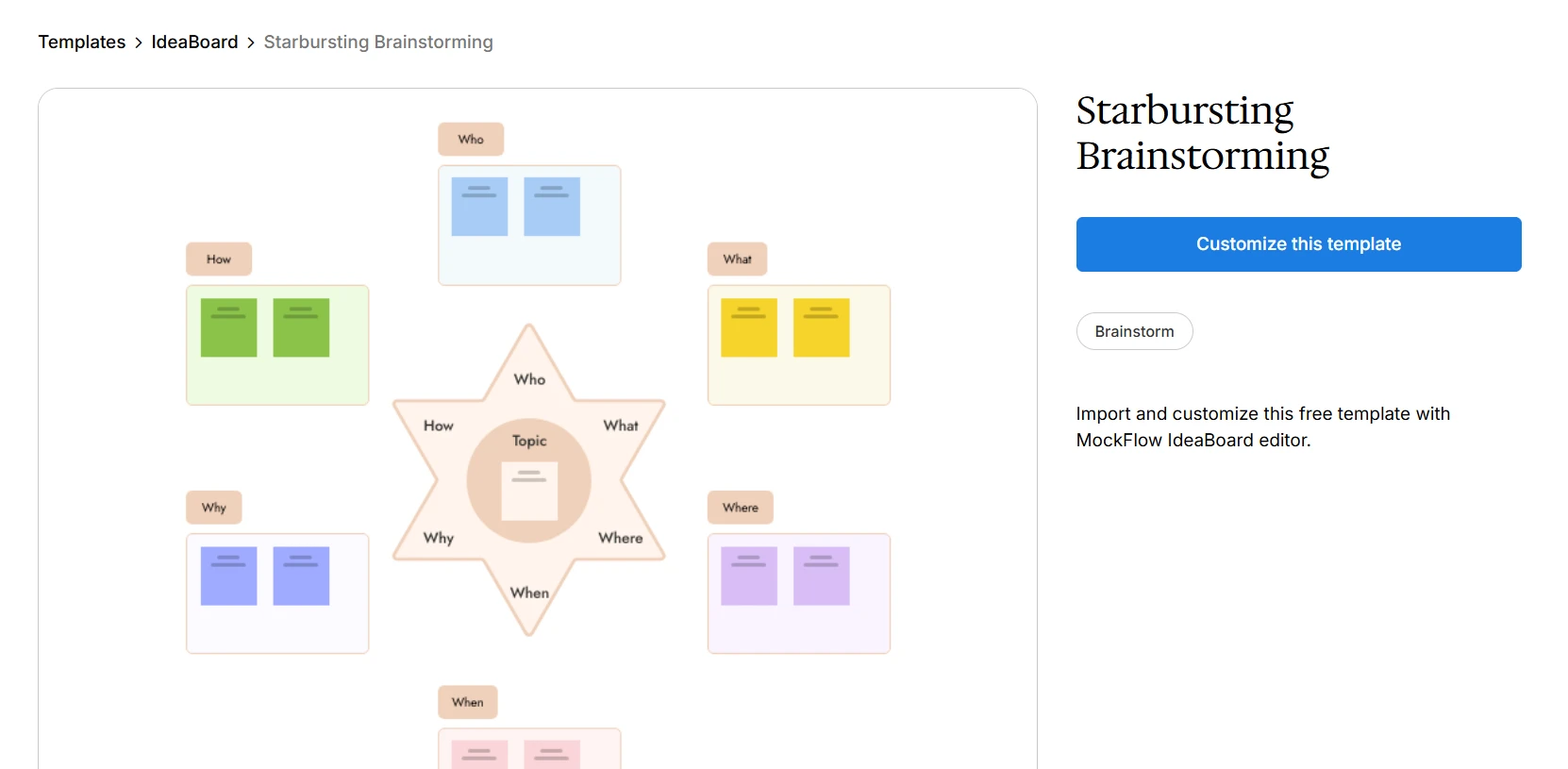
Click and customize this starbursting template on IdeaBoard
6. Reverse brainstorming
Reverse brainstorming is an unconventional yet highly effective technique that flips the traditional approach on its head. Instead of asking "How can we solve this problem?", the group asks, "How could we cause this problem?"
This technique forces teams to think in the opposite direction and challenge assumptions, often revealing hidden risks or overlooked flaws in current processes.
How to use reverse brainstorming:
- Start by framing the problem in reverse; ask your team to think about ways to make the problem worse or ensure failure.
- Encourage everyone to come up with ideas on how to exacerbate the issue or cause the problem to occur.
- Once you've generated a list of these "negative" ideas, shift the focus to understanding why these things would happen and how you can avoid them.
Reverse brainstorming uncovers hidden risks, gaps, and assumptions by viewing problems from the opposite perspective. It’s effective for identifying weaknesses and refining processes, leading to improved decision-making and better outcomes.
IdeaBoard’s reverse brainstorming template provides a structured framework that visually organizes and tracks the outcomes of reverse brainstorming sessions.
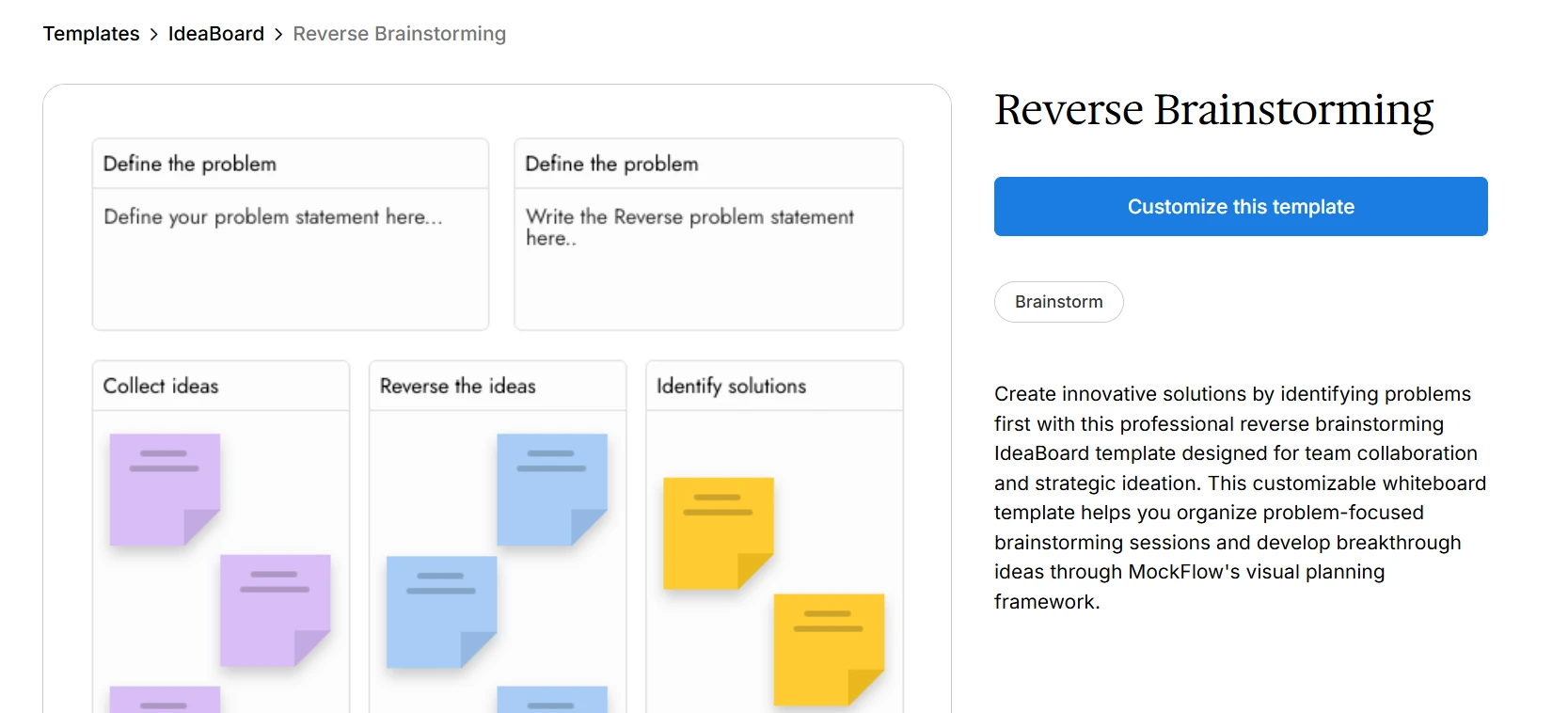
Click and customize this reverse brainstorming template on IdeaBoard
7. Role storming
Role storming is a technique where participants take on different roles or perspectives while generating ideas. Instead of just thinking about the problem from their own point of view, participants adopt the perspectives of different stakeholders, such as customers, competitors, or other departments within the company.
How to use role storming:
- Assign each participant a specific role to brainstorm from. This could be a customer, a different department, or a competitor.
- Have everyone generate ideas as if they were that person or entity, considering their unique needs, challenges, and perspectives.
- After the session, discuss the different perspectives and how they contribute to the overall solution.
Role storming fosters empathy and diverse viewpoints by encouraging participants to brainstorm from different perspectives. It helps avoid narrow thinking and is especially useful for cross-functional teams, enabling them to address a wider range of challenges and priorities.
8. SWOT brainstorming
SWOT brainstorming uses the classic SWOT analysis framework (Strengths, Weaknesses, Opportunities, and Threats) as a structured way to generate ideas and make strategic decisions. It provides a clear structure that helps teams assess the internal and external factors influencing a particular project or business decision.
How to use SWOT brainstorming:
- Divide your brainstorming session into four key categories: Strengths, Weaknesses, Opportunities, and Threats.
- Ask participants to brainstorm ideas and observations for each of these categories.
- After collecting the ideas, discuss the insights to identify actionable strategies that play to strengths, mitigate weaknesses, capitalize on opportunities, and guard against threats.
SWOT brainstorming structures discussions, helping teams evaluate strengths, weaknesses, opportunities, and threats. It fosters balanced thinking and is effective for strategic planning and decision-making.
Teams can benefit from using IdeaBoard’s SWOT analysis template to organize their SWOT sessions and ensure a structured approach to strategic brainstorming.
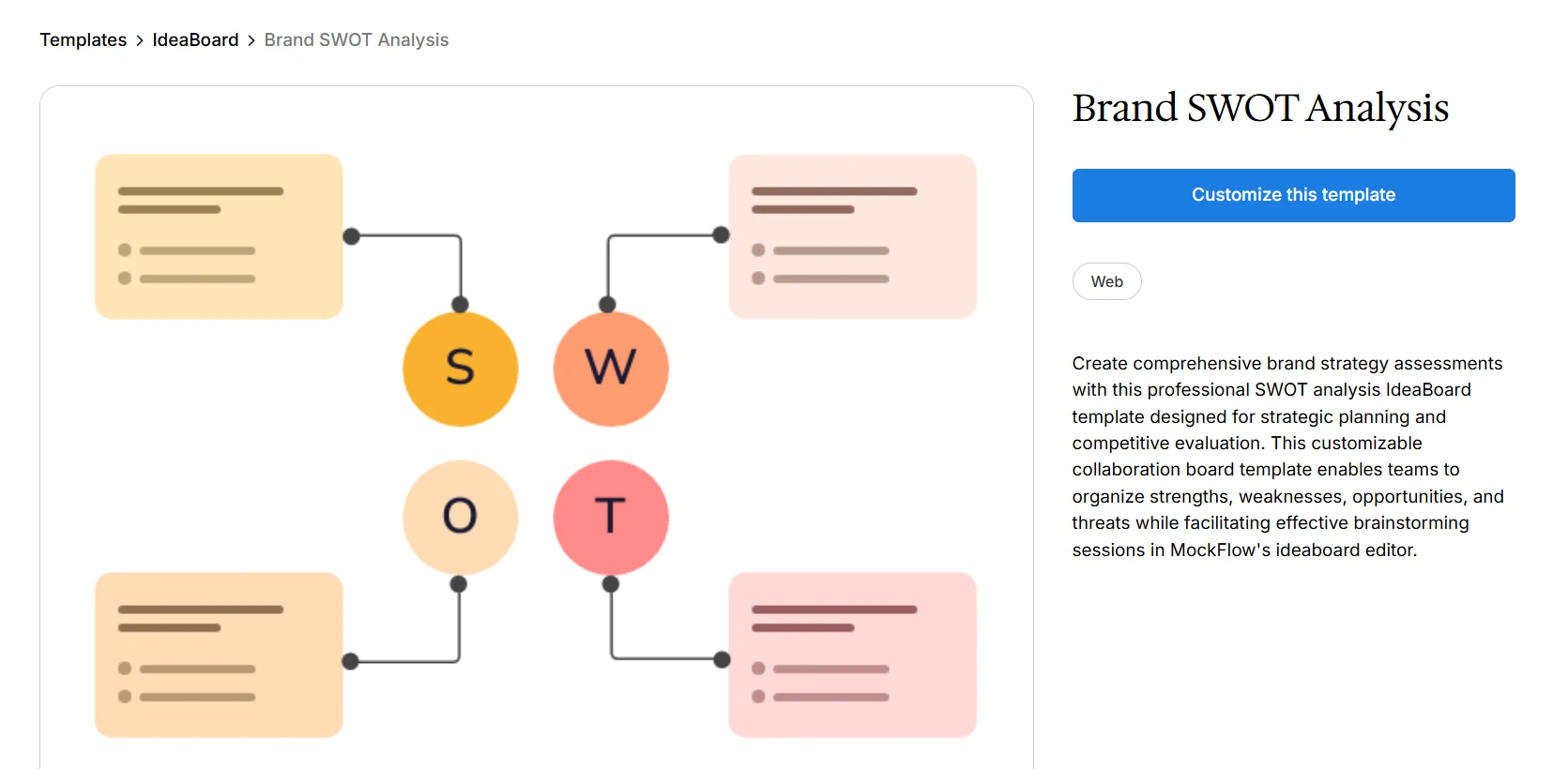
Click and customize this SWOT analysis template on IdeaBoard
When teams engage in collaborative brainstorming, the results can be more impactful. Gallup reports that organizations with higher levels of employee engagement are 21% more profitable, highlighting how fostering collaboration through the above techniques can not only enhance problem-solving but also drive better business outcomes.
How to conduct group brainstorming in remote teams
Running remote brainstorming sessions can be just as effective as in-person meetings when done right. The key is to design a process that accommodates the unique challenges of remote work while maintaining high engagement and idea quality.
Steps to run effective remote group brainstorming:
- Asynchronous idea collection: Start by allowing team members to submit their ideas before the live session. This gives everyone time to think without the pressure of real-time discussions, ensuring that all voices are heard.
- Silent brainstorming: During the live session, give everyone time to independently jot down their ideas before opening up the floor for discussion. This prevents dominant voices from steering the conversation too early and ensures that all ideas are considered.
- Set clear time boxes: Establish time limits for each phase of the session to keep the group focused and prevent fatigue. This ensures that ideas stay fresh and the session remains productive.
- Leverage visual collaboration tools: Use tools like IdeaBoard to replace physical whiteboards and ensure real-time visual collaboration. The infinite canvas feature allows participants to freely expand on ideas without running out of space, and the real-time collaborative canvas ensures that every contribution is captured instantly, making it easy for team members to build on one another’s thoughts.
MockFlow IdeaBoard’s collaborative features make it an ideal tool for remote teams to brainstorm effectively. With these tools, remote brainstorming becomes just as dynamic and engaging as in-person sessions.
Best practices for brainstorming in a group
The right environment is key to making group brainstorming effective. These best practices ensure that your sessions are productive and that the ideas generated lead to meaningful outcomes.
1. Foster creativity in group brainstorming
- Create psychological safety: Make sure everyone feels safe to contribute, regardless of how developed or "out-there" their ideas might seem.
- Encourage quantity before quality: The more ideas, the better; worry about refining them later.
- Use prompts, visuals, and examples: Visuals can spark new ways of thinking, and using real-world examples helps participants understand what’s expected.
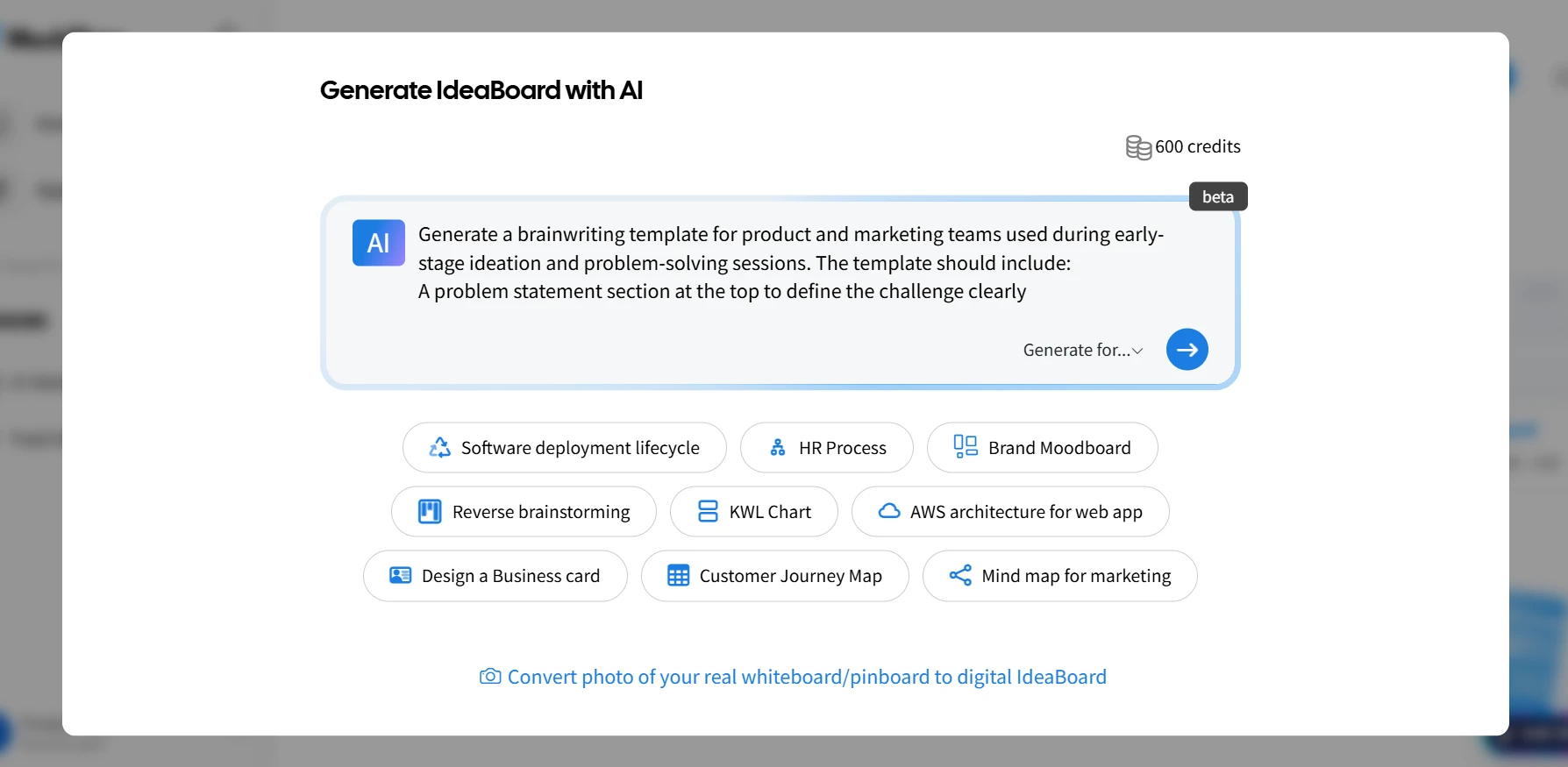
Tools like IdeaBoard’s drag-and-drop features make it easy for everyone to contribute and quickly organize ideas, regardless of their design experience. The AI Toolbox, with its vast and editable prompt library, generates ready-to-use brainstorming layouts in seconds, speeding up the process and ensuring ideas are captured efficiently.
2. Encourage equal participation
- Use silent or written techniques: This ensures that everyone has a chance to share their thoughts without being interrupted.
- Rotate facilitators or speakers: This prevents any one person from controlling the conversation.
- Actively invite quieter voices: Encourage those who are less vocal to contribute their ideas, ensuring all perspectives are considered.
With IdeaBoard, this is easier than ever. The real-time collaboration features allow everyone to participate simultaneously, even in large groups. Team members can use multimedia commenting to add voice or video comments to specific ideas, capturing nuanced thoughts without relying solely on text.
3. Keep sessions focused and outcome-driven
- Set clear objectives and time limits: Establish what you want to achieve in the session and how long it will last.
- Capture ideas visibly: Use boards or digital tools to display ideas so everyone can see them and stay on track.
- Summarize key ideas: Ensure you highlight the most valuable insights from the session.
- End with next steps: Make sure the session ends with a clear direction for what happens next.
Once the brainstorming session is complete, IdeaBoard allows you to export the brainstorming results in formats like images or .board files for follow-up actions. This makes it easy to document outcomes and share them with stakeholders. Additionally, if your team has limited connectivity or needs local control, the offline desktop app lets you continue working even without an internet connection.
Key takeaways
Effective group brainstorming hinges on the right approach, techniques, and facilitation. By fostering an environment that values creativity, equal participation, and clear focus, teams can consistently produce innovative solutions.
When everyone is engaged and the session is driven by a strong structure, brainstorming becomes not just a meeting, but a powerful tool for turning creativity into action. These strategies help teams navigate complex challenges and unlock their full collaborative potential.
Ready to elevate your team’s brainstorming sessions? Install our Chrome extension or sign up with IdeaBoard for free and experience real-time, visual collaboration that brings your ideas to life.
FAQs about Group Brainstorming
1. How can group brainstorming improve creativity?
Group brainstorming boosts creativity by bringing together diverse perspectives. It encourages idea-sharing and collaborative problem-solving. With multiple minds working together, the collective intelligence often leads to more innovative and out-of-the-box ideas than when working individually, fostering a dynamic environment where creativity thrives.
2. What are the benefits of group brainstorming over individual idea generation?
Group brainstorming encourages collaboration and synergy. Unlike individual brainstorming, which can be limited by personal biases, group sessions allow diverse viewpoints that challenge assumptions and generate more well-rounded solutions. It enhances creativity, promotes problem-solving, and reduces the risk of tunnel vision by considering multiple perspectives, leading to more innovative outcomes.
3. How can I structure a productive brainstorming session?
Begin by stating the problem, followed by a mix of techniques such as mind mapping or rapid ideation to stimulate creative thinking. Maintain a structured approach, encouraging equal participation, and ensure that ideas are captured and reviewed. Use tools like MockFlow IdeaBoard for visual collaboration, especially for remote teams.
4. How does group brainstorming lead to innovative solutions?
Group brainstorming drives innovation by combining the creativity and knowledge of multiple participants. By sharing diverse perspectives and engaging in collective problem-solving, teams can come up with more creative solutions that might not be possible through individual idea generation.
5. What are some common challenges in group brainstorming sessions?
Common challenges in group brainstorming include domination by a few participants, lack of clear structure, and groupthink, where ideas are not critically examined. Managing diverse opinions and ensuring equal participation can also be difficult, especially in larger teams. Overcoming these challenges requires setting clear goals, using structured techniques, and fostering an environment where all ideas are heard and valued.
6. How can I overcome the barriers to effective group brainstorming?
Establish ground rules for participation, such as encouraging quieter members to contribute and ensuring that dominant voices don’t take over. Use structured methods like brainwriting or mind-mapping to ensure equal contribution. Creating a psychologically safe environment where all ideas are welcomed and reducing the pressure to speak up can help foster a more effective brainstorming session.

Workflow Diagram: Types, Examples, Templates & How to Create
Introduction When we sit down to map a process, it usually starts off simple. A few steps, a couple of decisions, nothing...

Collaboration Skills: How to Improve Team Performance and ROI
Introduction Smart teams fail more often than we admit. Deadlines slip when communication breaks down, projects stall when...

10 UI/UX Design Trends to Watch For in 2026
Introduction UI/UX design in 2026 is moving in two directions at once. Interfaces are becoming more adaptive, intelligent, and...
