Product updates
Keep track of announcements and product updates in MockFlow
Android 17 wireframe UI kit for MockFlow
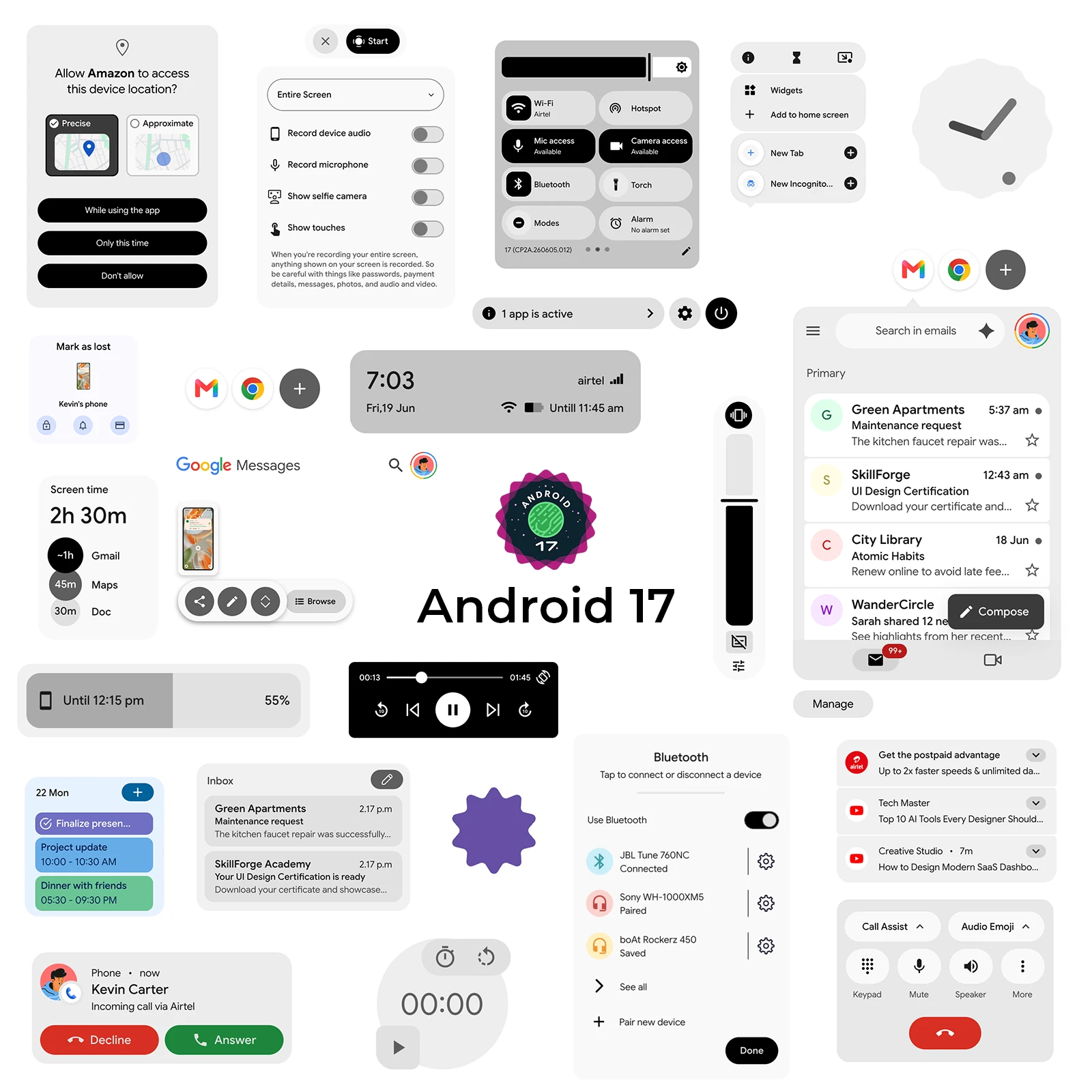
Now ideate and wireframe apps for Android 17 OS faster. With 150 ready-to-use components, this kit helps you quickly plan mobile app screens that follow the latest Android interface patterns.
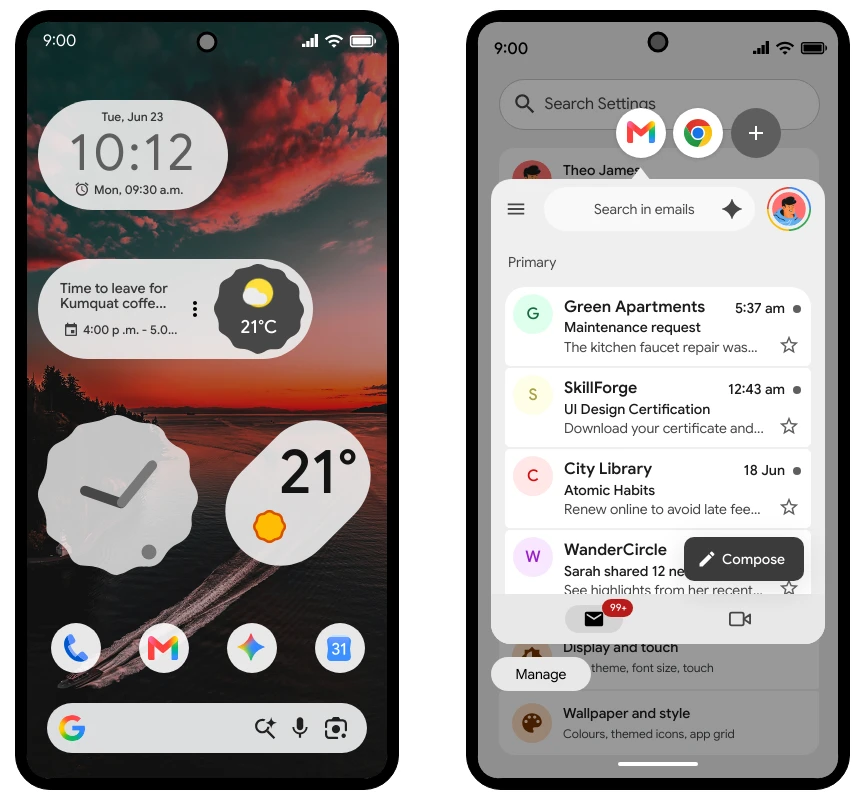
Whether you are sketching early app ideas, building product flows, or creating detailed wireframes for development handoff, the Android 17 OS UI Kit gives you a complete set of native-style elements to bring your concepts to life.
The kit includes components across the following categories:
- Frames & Keypad
- Top navigation
- Bottom navigation
- Buttons
- Icons
- Notification & Widgets
- List & Popup
- Form elements
- Tabs & Loaders
- Page elements
- Other elements
- UI Screens
From app frames and navigation bars to forms, buttons, notifications, widgets, tabs, loaders, popups, and complete UI screens, this new kit provides everything needed to visualize Android app experiences with speed and clarity.
Before moving into high-fidelity design or development, it is important to map out your app structure and user flows in a native mobile format. With MockFlow's Android 17 OS UI Kit, teams can brainstorm layouts, iterate faster, and communicate app ideas more effectively — all without starting from a blank canvas.
Once you are done with Android wireframing you can either export to code with our integrated build-mode or use MCP server to integrate with Android Studio. If you want further prototype based refinements and animations you can export the wireframes to Figma directly.
WireframePro MCP Server: Turn Any AI Assistant Into a Wireframing & Design-to-Code Engine

Draft wireframes from a prompt, generate them contextually from your existing code, specs, or requirement docs, and convert wireframes into code all from Claude, Cursor, VS Code, and any MCP-compatible AI assistant.
Why this matters
WireframePro now speaks the Model Context Protocol (MCP) — Anthropic's open standard for connecting AI assistants to external tools. Any MCP-compatible AI client can now call WireframePro directly to render a wireframe, read a wireframe, and convert it to code, without ever leaving the assistant.
And uniquely in our Desktop App edition, the workflow is two‑way:
1. Prompt → Wireframe — describe a screen in natural language, and the AI builds it as an editable wireframe on your canvas (not a static image).
2. Wireframe → Code — point the AI at any existing canvas in your project and generate production‑ready React, Vue, Next.js, Tailwind, or plain HTML/CSS from it.
The real unlock: contextual wireframing
Since WireframePro now plugs into an AI agent that already has access to your codebase, specs, tickets, PRDs, API schemas, and design docs, the agent can do the translation work for you and use WireframePro purely as the rendering surface. The MCP server is the bridge; the agent is the designer.
A few workflows that simply weren't possible before:
- "Wireframe this PRD." Drop a product requirements doc into Claude or Cursor. The agent reads the entire spec, identifies every screen and state it implies, and renders a complete
multi‑screen wireframe set on your WireframePro canvas, already organized by user flow.
- "Wireframe the settings page from our existing codebase." The agent reads your React/Vue source, understands the component tree and routing, and produces a wireframe that faithfully reflects what ships in production today, ideal for audits, redesigns, and onboarding new designers.
- "Generate wireframes for every endpoint in this OpenAPI spec." The agent parses the schema, infers the CRUD screens each resource needs, and lays them out as a connected flow. What used to be a week of design work becomes a single prompt.
- "Turn this Jira epic into a UI wireframe." The agent pulls the ticket, reads the acceptance criteria, drafts screens, and iterates with you in natural language all while the
canvas updates live.
- "Redesign our checkout to match our new brand guidelines." The agent reads your existing checkout code and your brand style guide, then renders a proposed redesign using a custom Design Skill that encodes your tokens.
- "Document this legacy app." Point the agent at an old codebase with no design files. It reverse‑engineers the UI into wireframes so the team finally has a visual source of truth to plan
migrations against.
The pattern is the same in every case: the AI agent does the heavy lifting of understanding context : code, docs, specs, tickets and WireframePro MCP is the tool it reaches for whenever the output needs to be visual. You stop being the middleman between written requirements and visual design, and become the editor of an AI‑produced first draft.
This is why shipping MCP and especially the two‑way Desktop edition — is bigger than "another AI feature." It's a new category of design work: contextual, source‑aware wireframing, where the distance between "a spec exists" and "a wireframe exists" drops from days to seconds.
Two ways to connect
We've shipped the MCP server across every WireframePro surface so teams can adopt it on their own terms.
1. Desktop App MCP — the full two‑way experience
Built directly into the MockFlow Desktop App (macOS, Windows). Open any WireframePro project, register the local MCP endpoint in your AI client, and start designing:
claude mcp add --transport http -s user mockflow-wireframepro http://localhost:21194/mcp
- Works offline — the MCP server runs locally, so your canvas, prompts, and generated code never leave your machine.
- Both directions — this is the only edition that ships read_wireframe, enabling wireframe‑to‑code conversion.
- Live canvas rendering — wireframes appear on the active page of your open project in real time, so you can edit as the AI builds.
Best for: Product designers, UX teams, and engineering teams that want wireframe‑to‑code in a secure, local environment.
2. CLI / npm MCP Server — for developer workflows
A standalone npm package for developers who live in their terminal and IDE:
npm install -g @mockflow/wireframepro-mcp
mockflow-wireframepro-mcp login
mockflow-wireframepro-mcp
OAuth‑based login to your MockFlow account; wireframes are saved to your cloud workspace so they're shareable with the rest of the team. Ideal for engineers scaffolding UIs from inside
Claude Code, Cursor, or VS Code Copilot. Developers who want to auto-generate wireframe designs as part of their process continously. Can be integrated part of the AI assistant based API.
Supported AI clients
WireframePro MCP works with every major MCP‑compatible assistant:
- Claude.ai and Claude Code
- Cursor
- VS Code + GitHub Copilot
- OpenCode, Cline, and other MCP clients
Design Skills — teach your AI a design language

Out of the box, AI‑generated UI tends to look generic because the model has no opinion about visual style. Design Skills solve that: they're reusable style recipes your AI assistant loads
as agent skills, instructing it to render wireframes in a specific design language — Material, Fluent, iOS, Shadcn, Bootstrap, retro Windows 98 style, Cyberpunk UI and more.
WireframePro MCP ships with a growing library of curated Design Skills, with new styles added regularly.
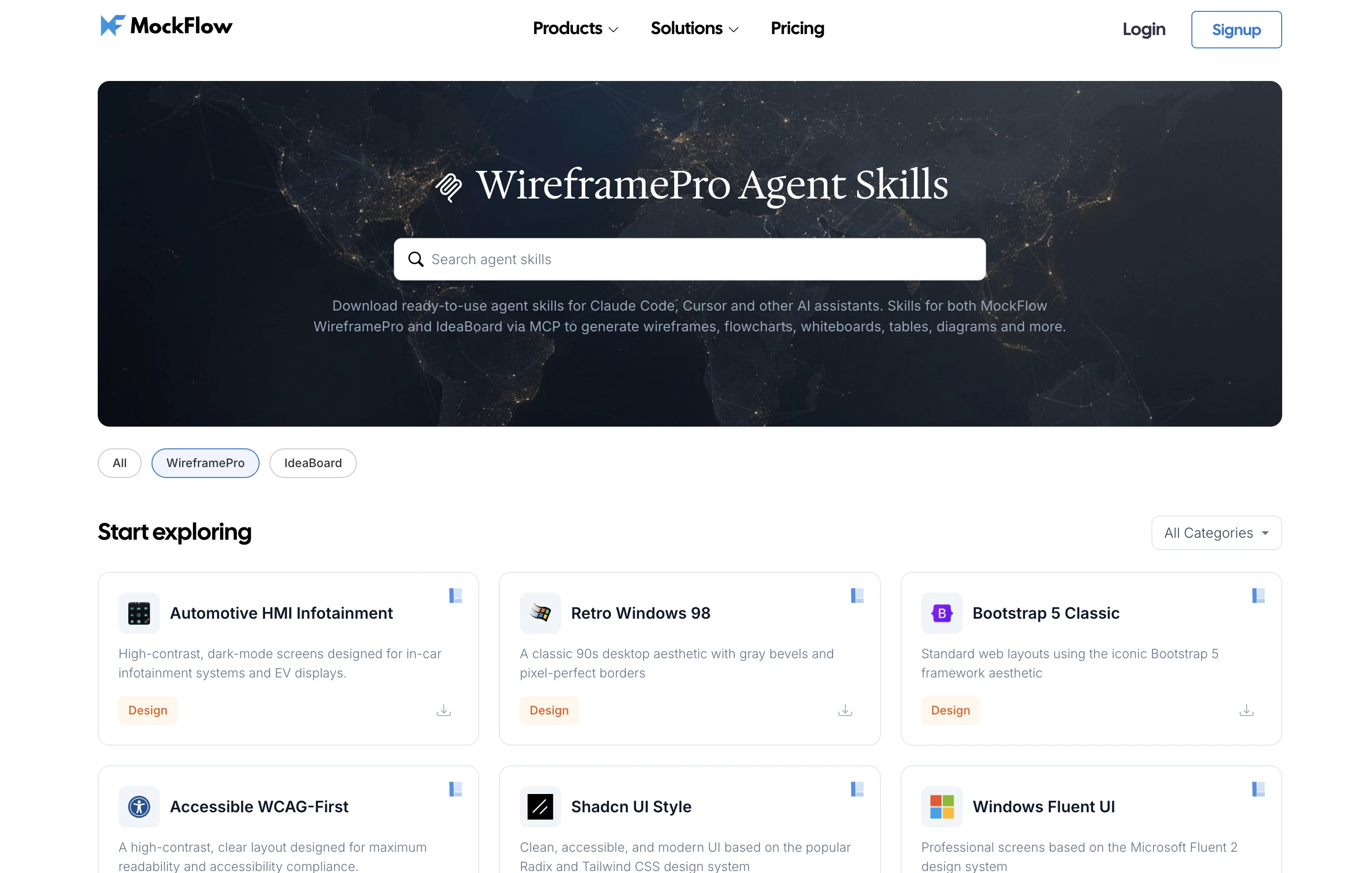
Custom Design Skills — your brand, your design system
Paid users can go a step further and author their own Design Skills that encode their company's brand guidelines or internal design system like tokens, typography, spacing, component library, voice and then instantly share them with their team. Once published, every designer, PM, and engineer on the team can load the skill inside their AI assistant and produce wireframes that match the house style on the first try, with zero manual styling.
Browse the full catalog and learn how to publish a custom skill at https://mockflow.com/skills/wireframepro.
Business use cases
Product Management
- Turn a PRD or Jira ticket into a clickable wireframe in under a minute.
- Generate multiple screen variations during discovery without a designer in the loop.
- Attach interactive mockups to specs so engineering estimates are grounded in visuals.
Software Engineering
- Scaffold a new feature UI straight from your IDE — Claude Code reads the ticket, calls render_wireframe, and you refine on canvas.
- Point the AI at an existing wireframe and generate the React/Vue/Tailwind component tree that matches it — cutting UI implementation time dramatically.
- Reverse‑engineer UIs from existing code — point the agent at a legacy screen and get a clean wireframe back, ready for redesign discussions.
- Document API flows with render_flowchart and solution architectures with render_cloudarchitecture, all from the same assistant.
Design & UX Teams
- Use AI as a rapid ideation partner while keeping every output fully editable in WireframePro. - Lock generated output to your design system via custom Design Skills.
- Move seamlessly from hand‑sketched ideas to code‑ready specs without leaving the canvas.
Startups & Founders
- Go from idea → interactive mockup → shippable frontend code in a single working session.
- Validate product concepts with investors and early users without hiring a designer.
Agencies & Consultancies
- Respond to RFPs with wireframes generated during the sales call itself.
- Produce client‑ready deliverables — wireframe packs, user flows, and architecture diagrams — from a single prompt‑driven workflow.
Enterprise & Regulated Teams
- The Desktop App edition keeps every prompt, wireframe, and generated code local, meeting the security posture required in finance, healthcare, and government environments.
- Pair with an on‑prem Claude/Cursor setup for a fully air‑gapped design‑to‑code pipeline.
Education
- Teach UI/UX fundamentals by having students prompt, critique, and refine AI‑generated wireframes live in class.
- Use Design Skills to demonstrate the visual differences between Material, Fluent, and iOS design languages.
Plans & availability
Basic plan: allows 10 tool calls for 30 minutes
Paid plan: allows 30 tool calls per minute
For more information visit:
https://mockflow.com/mcp/wireframepro
https://mockflow.com/skills/wireframepro
Multi-Screen AI in WireframePro — From One Prompt to a Complete Design Plan
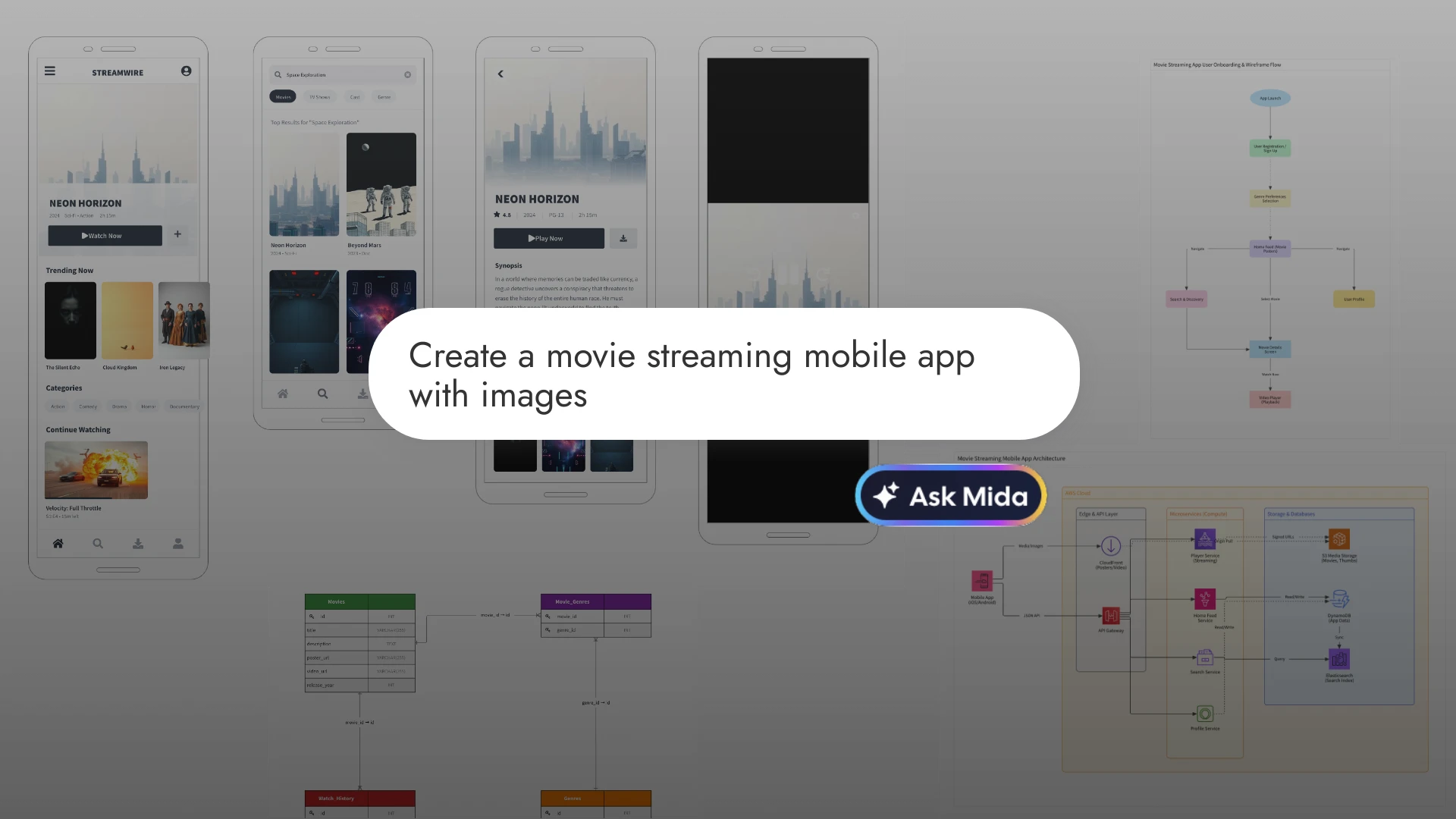
Ideating an entire product in WireframePro no longer means prompting one screen at a time. MockFlow AI now detects multi-screen intent, plans every wireframe, flowchart, architecture diagram, and database schema your project needs, and generates them all in one go.
Now WireframePro intelligently understands the scope of your idea. When your prompt describes something that naturally requires multiple screens like an ecommerce website, a SaaS dashboard, or a mobile app , Mida (MockFlow Intelligent Design Assistant) automatically enters Plan Mode before generating anything. Instead of jumping straight to a single wireframe, it first thinks through what your project actually needs.
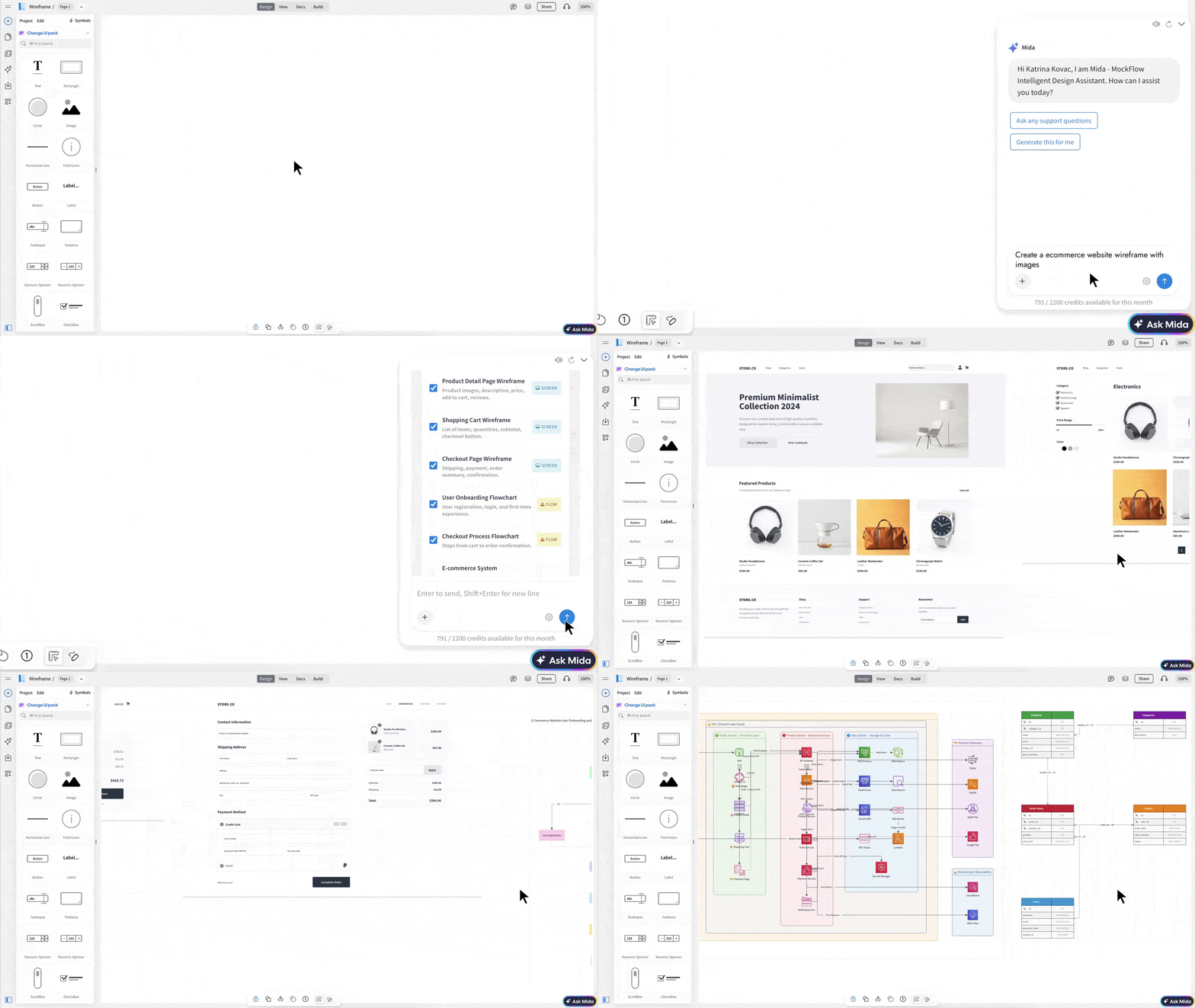
Plan Mode: AI That Thinks Before It Designs
When MIDA detects a multi-screen intent in your prompt, it pauses generation and presents a structured design plan with a curated list of 5 to 10 deliverables that a designer would typically produce for that project. This isn't limited to wireframe screens. MIDA plans across four types of design artifacts:
- Wireframe Screens — the core UI pages your product needs (Homepage, Dashboard, Product Listing, Settings, Profile, etc.)
- Flowcharts — process and workflow diagrams that map user journeys (Checkout Flow, User Onboarding, Approval Workflow)
- Architecture Diagrams — system-level views of how things connect (Cloud Infrastructure, Microservices Layout, API Gateway)
- Database Diagrams — entity relationship and schema diagrams that define the data layer (Table Structures, Entity Relationships)
The plan appears as an interactive checklist directly inside the Mida chat. Each item shows its name, a brief description, and a type badge so you can see the mix of deliverables at a glance. You select what you want, deselect what you don't , giving you full control over what gets generated.
Choose How Your Screens Are Laid Out
Before generating, you can choose between two layout modes:
- Separate Pages — each selected item is generated on its own WireframePro page, making it easy to organize and present as a multi-page project
- Same Page — all selected items are placed side by side on a single canvas, useful for comparing screens or creating overview presentations
One Click, Consistent Ideation
Once you've reviewed the plan and made your selections, hit Generate. MIDA produces all selected wireframes, flowcharts, architecture diagrams, and database schemas in one go. Every generated screen shares a unified design system , the same color palette, typography, navigation patterns, and component styles carry across all pages, so your wireframes look like they belong to one product, not a patchwork of separate prompts.
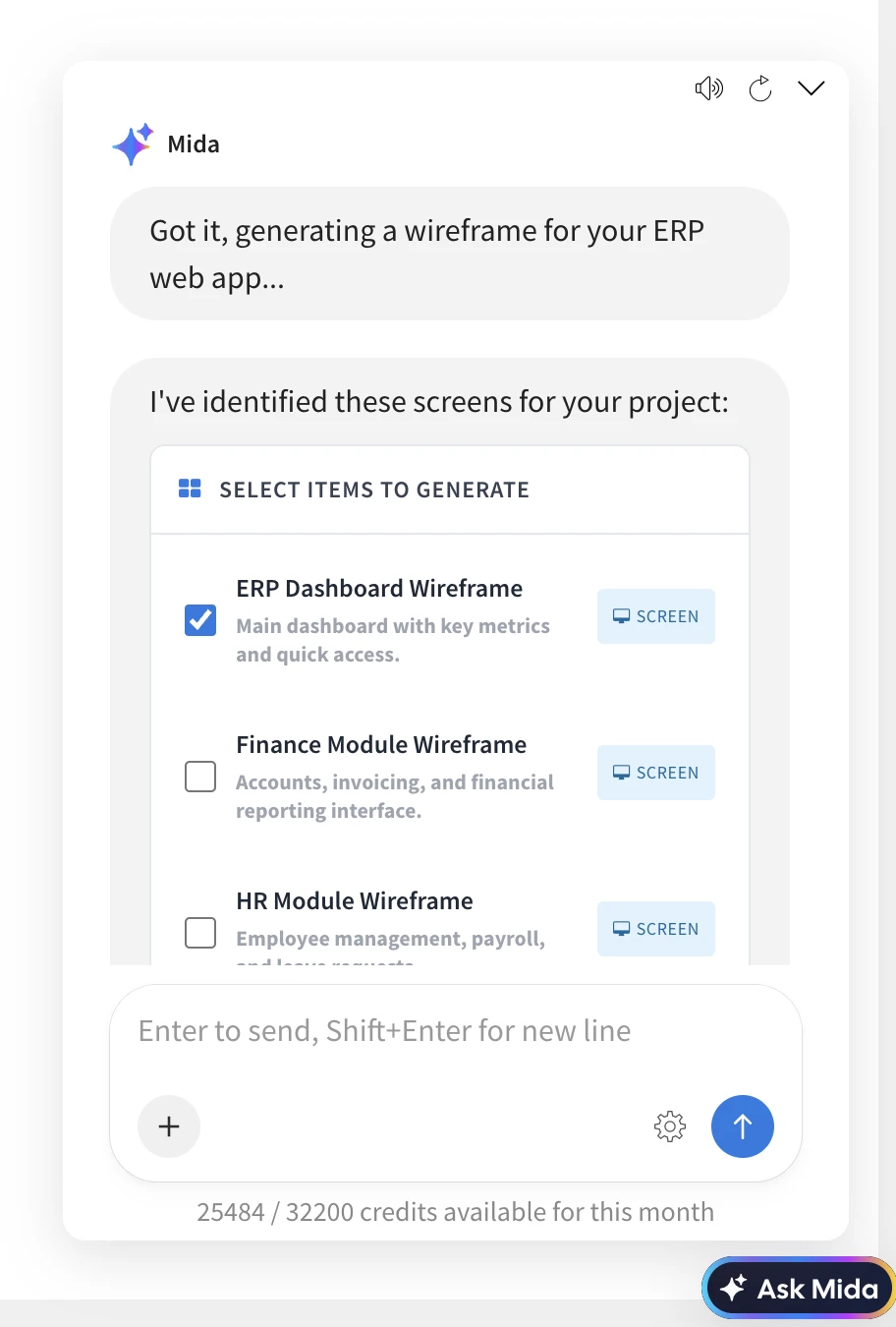
Single-Screen Prompts Still Work Instantly
This new behavior is entirely automatic and contextual. Prompts that describe a specific screen — like "create a login page" or "design a pricing table" continue to generate immediately, exactly as before. Plan Mode only activates when MIDA recognizes that your idea needs more than one screen to fully express.
Wireframing Is Ideation, Not Just Layout
The purpose of wireframing has always been to explore ideas quickly to figure out what a product needs before investing in high-fidelity design or code.
Multi-screen ideation in MockFlow with AI takes that further. Instead of wireframing one screen at a time and mentally tracking the bigger picture, you can now describe an entire concept and let MIDA map out the full scope with screens, flows, systems, and data , so you can focus on refining the idea rather than assembling the pieces.
Note: Multi-screen AI is available only on WireframePro and Bundle plans. Basic plan users can add additional flow diagram with generation.
Instantly Export MockFlow Wireframes as Native Figma Designs
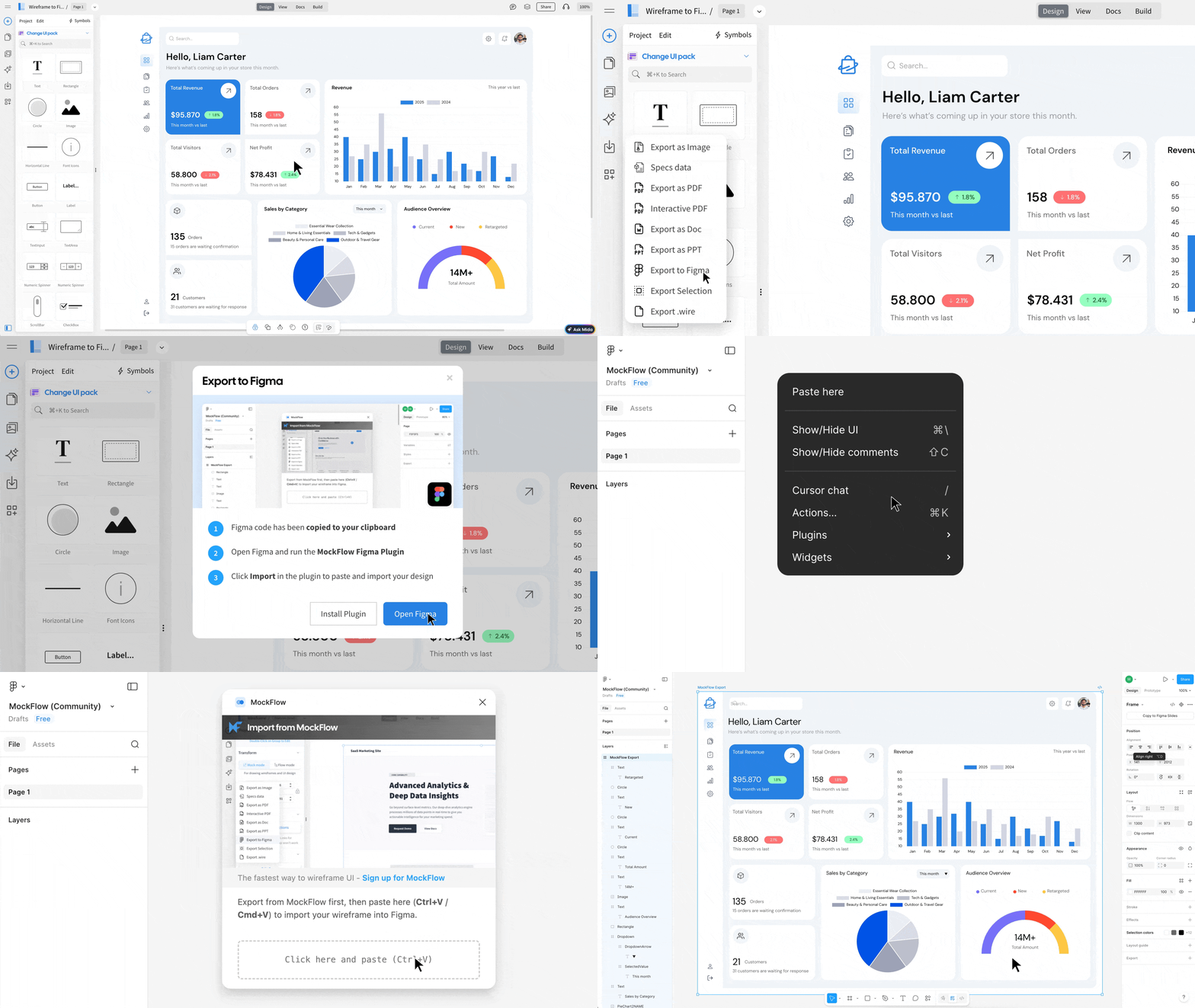
The MockFlow Figma Plugin lets you export your WireframePro wireframes as editable Figma components, preserving styling, layer structure, and layout accuracy so your designs are ready to refine the moment they land in Figma.
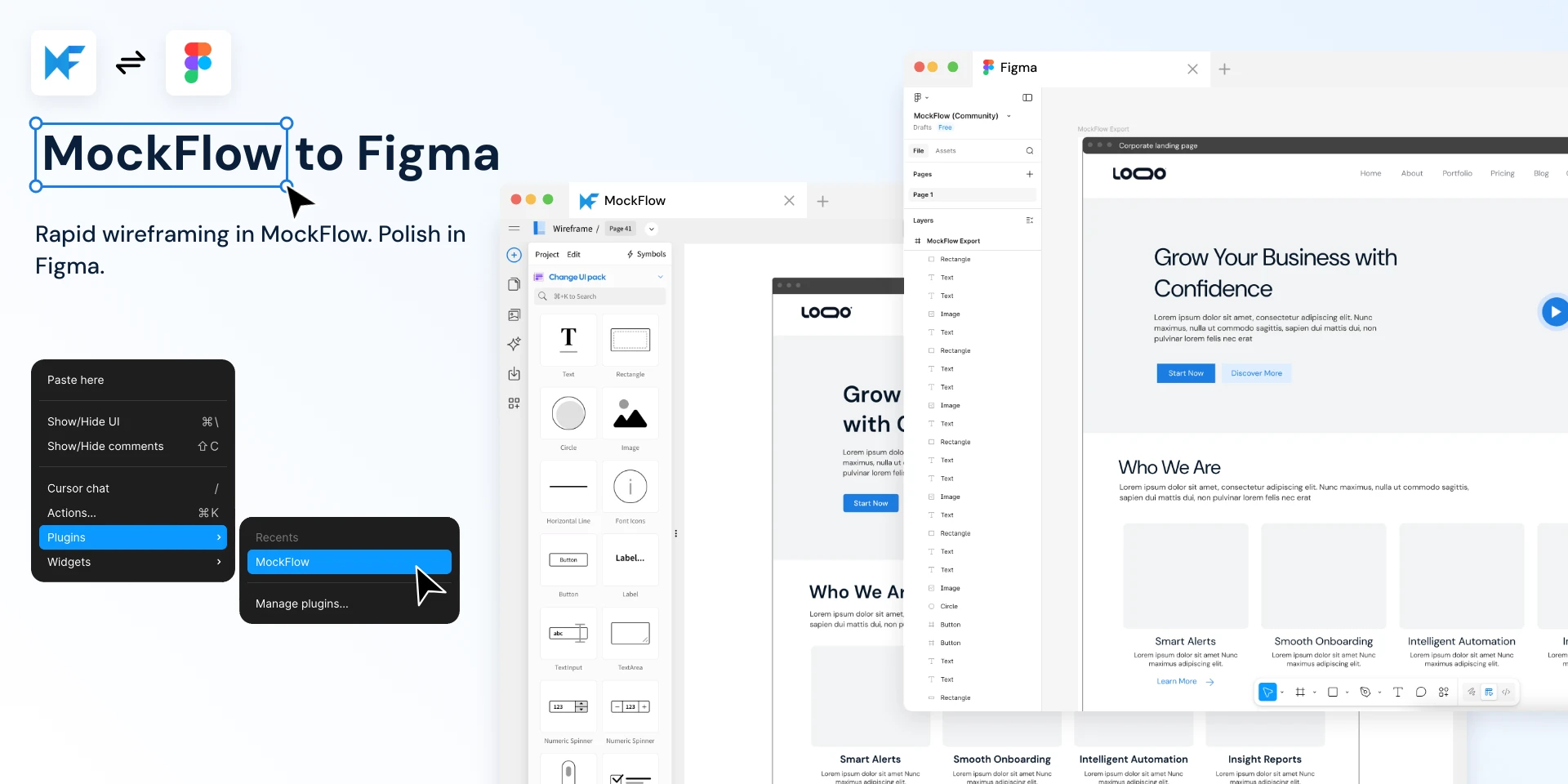
MockFlow WireframePro is built for speed helping teams sketch out ideas, validate layouts, and iterate on UI concepts faster than any high-fidelity tool allows. But when it's time to move from wireframe to polished design, Figma is where most teams go next.
The MockFlow Figma Plugin bridges this gap. Wireframe components transfer to Figma with accurate styling, proper layer structure, and full visual fidelity — making the handoff from rapid wireframing to high-fidelity design seamless.
Why Wireframe in MockFlow and Design in Figma?
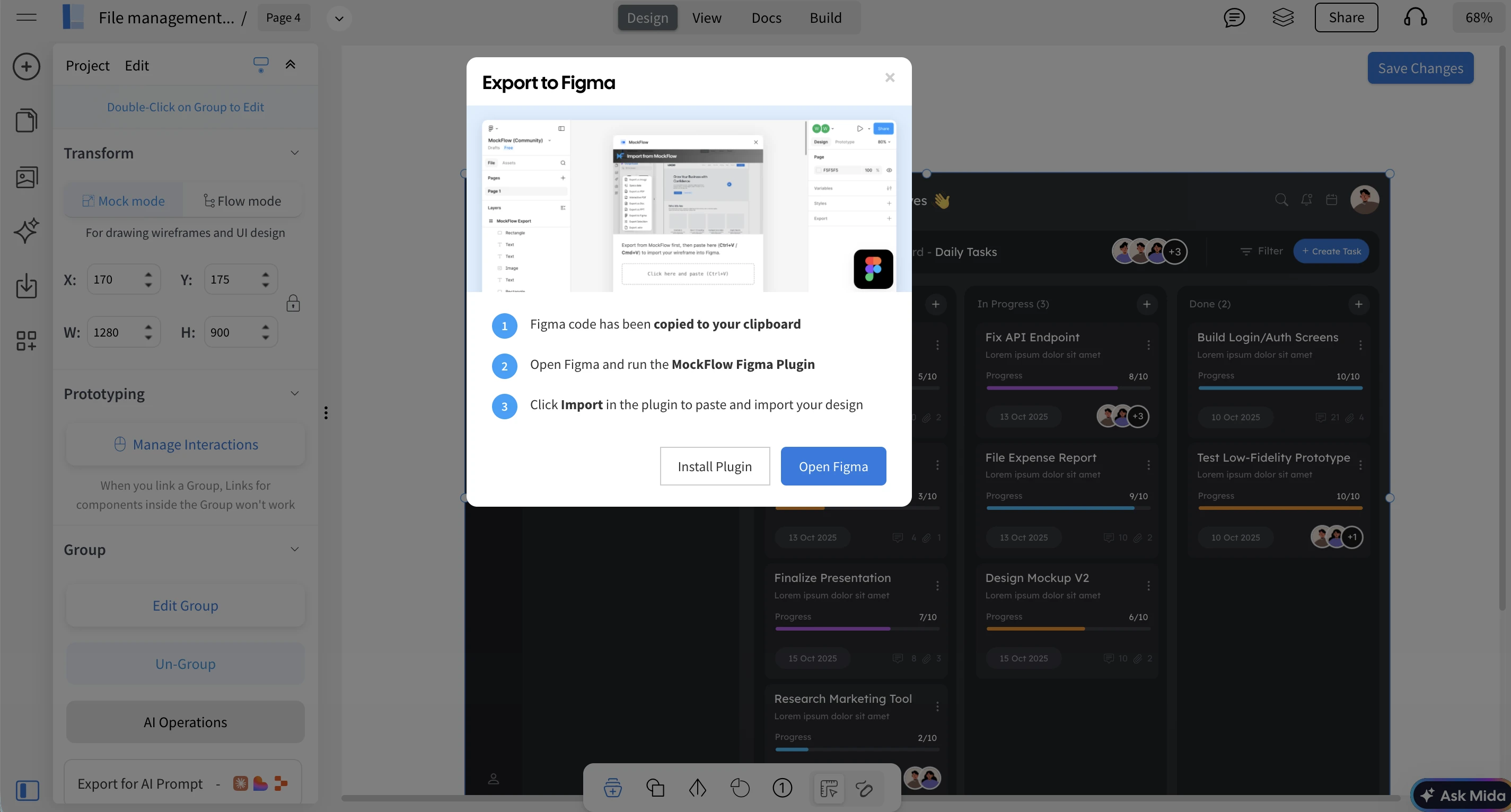
The best design workflows separate ideation from execution. Wireframing is about exploring structure, flow, and content hierarchy — not pixel-perfect aesthetics. That's what MockFlow WireframePro excels at:
- Speed over polish — Drag-and-drop wireframe components let you build screens in minutes, not hours
- Built-in AI assistant (Mida) — Generate and modify wireframes using natural language prompts
- UI packs for anything — Visualize for any device, any framework it provides professionally maintained UI packs for all
- Zero learning curve — Purpose-built for wireframing, not adapted from a general design tool
- Advanced components — MockFlow provides ready made components for datagrid, charts, dropdown, arrows, all easy to create and edit for your UI brainstorming
Once your wireframe structure is validated, export to Figma where your design team can apply brand styling, build interactions, and create production-ready prototypes.
When the Plugin Saves You Hours
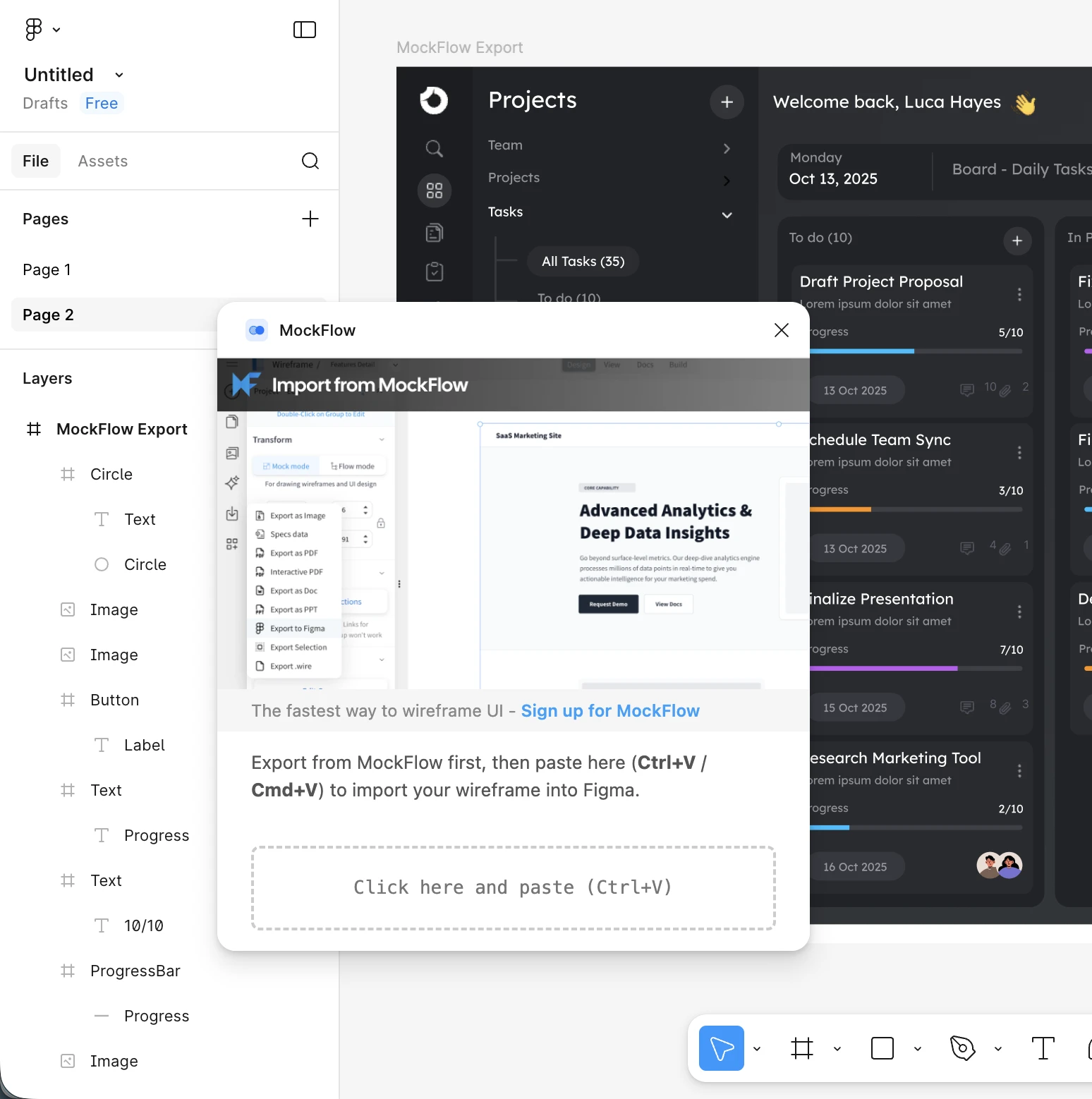
Stakeholder Reviews That Turn Into Real Designs
Product managers wireframe screens in MockFlow during a sprint planning call. Once the team agrees on structure, one click exports everything to Figma — where the design team picks up with brand colors, typography, and interactions already roughed in. No redrawing from scratch.
Agency Teams With Parallel Workflows
A UX lead wireframes three layout options in MockFlow while the visual designer works on another project in Figma. When the client approves a direction, the wireframe transfers instantly — borders, fonts, shadows, gradients, charts, and all ready for the designer to refine without recreating components.
Freelancers Delivering to Figma-First Clients
Many clients expect Figma deliverables. MockFlow lets you ideate and iterate at wireframe speed, then export a structurally accurate Figma file that looks like it was built natively. Buttons, inputs, data grids, navigation bars, device frames — everything carries over with correct layer naming and hierarchy.
Remote Design Sprints and Workshops
Teams brainstorm UI layouts in MockFlow's collaborative editor. Participants who aren't designers can contribute meaningfully at the wireframe level. The winning concepts export to Figma where the design system is applied — no translation layer, no screenshot tracing, no
miscommunication.
Non-Designers Who Need to Hand Off to Design Teams
Product owners, developers, and founders often know exactly what they want but aren't fluent in Figma. MockFlow's component library lets them express UI ideas clearly. The Figma export gives the design team an editable starting point with proper Figma primitives — not a flattened image.
Rapid Prototyping Across Large Projects
When you're wireframing 50+ screens for an enterprise app, rebuilding each one in Figma doubles the timeline. Export entire pages at once standard and sketchy components, charts, icons, SVGs, illustrations, images, and custom CSS styling all included.
How It Works
1. Select components on your wireframe page (or export the entire page)
2. Click Export to Figma from the settings or right click menu
3. The wireframe data is copied to your clipboard
4. Open the MockFlow plugin in Figma and paste
Each import places the wireframe at your current viewport position and as a separate frame.
No Credits. No Limits. Instant Export.
Figma export consumes no credits. Export your entire project — every page, every component — as many times as you need. There are no usage caps or throttling.
Works Offline in Desktop Apps
The Figma export is fully available in MockFlow's desktop applications with file mode and offline mode. Wireframe without an internet connection, and export to Figma when you're ready to hand off.
Availability
The Export to Figma feature is available on paid MockFlow plans (WireframePro and Bundle) across web, desktop, and offline modes.
Download Plugin
Plugin is required for pasting the converted MockFlow Wireframe into Figma editor. Plugin just reads from your clipboard the copied design from MockFlow. There is no network access and requires no authentication and also it is very straightforward to use. Install plugin from here.
Export wireframes as AI visual prompt for agentic tools like claude code
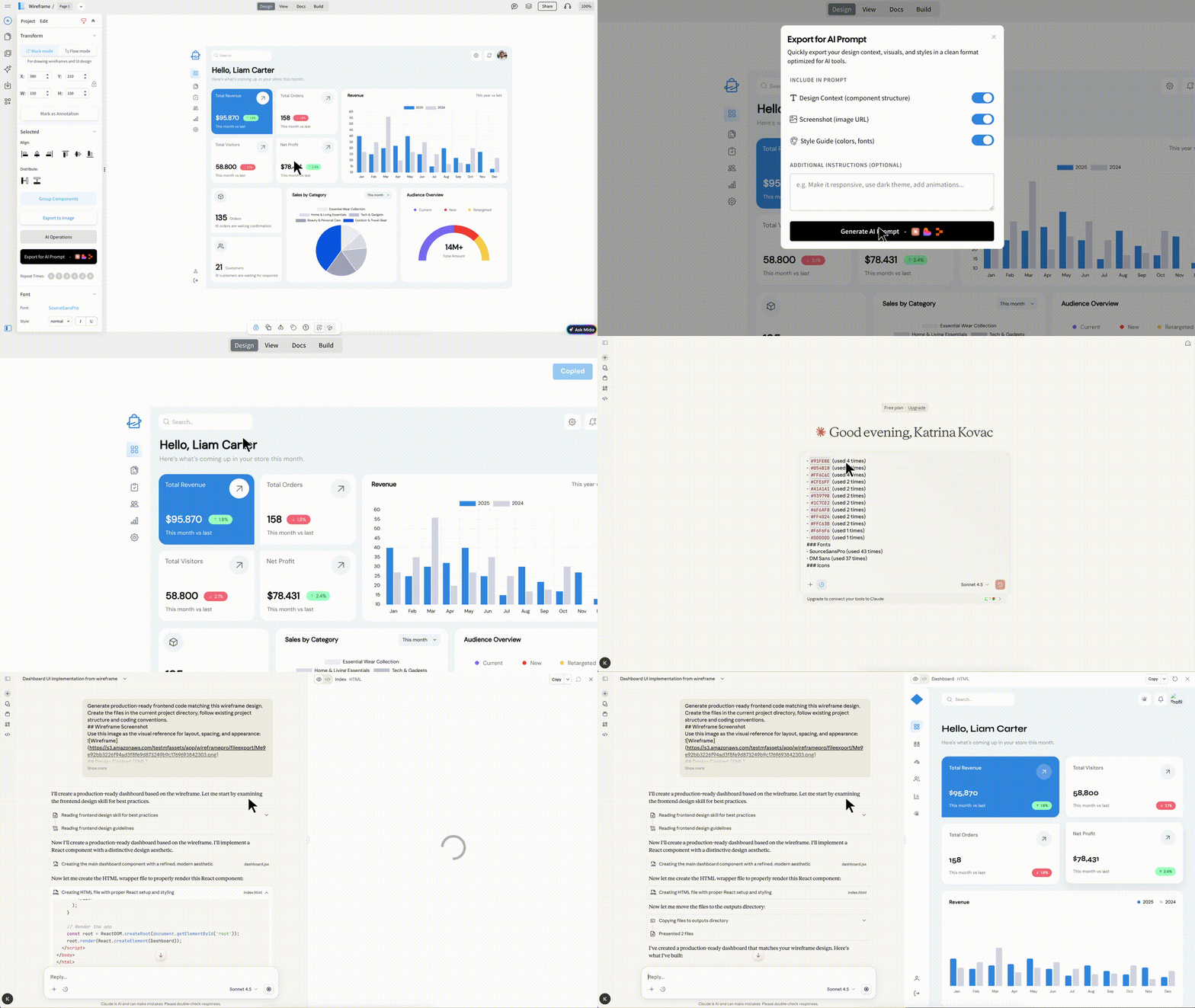
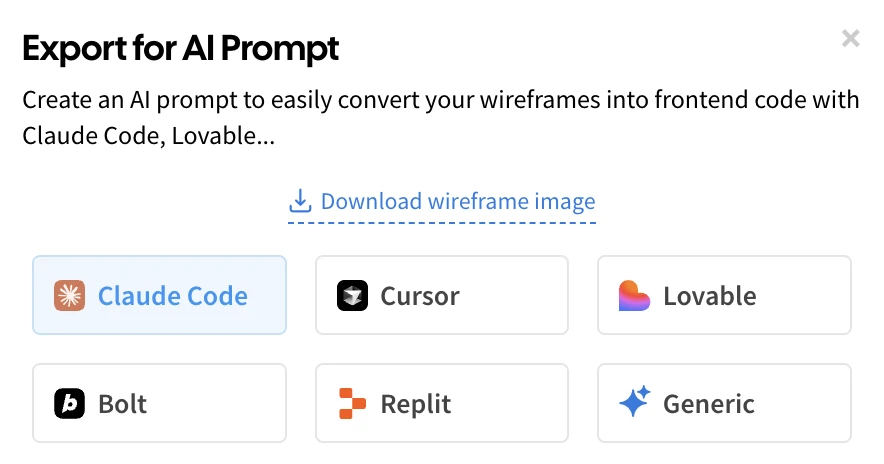
Converting your wireframes into production-ready front-end code just got significantly easier with Export to AI Prompt. This new feature lets you transform any wireframe into a structured, optimized AI prompt that can be directly used in modern agentic coding tools such as Claude Code, Codex, Cursor, Lovable, Bolt, and Replit.
With a single click, you can copy the generated prompt and paste it into your preferred AI coding platform to generate high-quality, pixel-accurate UI code for your existing or new projects without rewriting lengthy text prompts or manually explaining design intent.
Faster and Simpler than MCP-Based Workflows
Unlike MCP server setups that require configuration, authentication, and additional infrastructure, Export to AI Prompt works instantly with no setup required. You simply select any part of your design, whether it’s a section, frame, or specific content block and click Export to AI Prompt.
The generated prompt already includes all the necessary design context: layout structure, visual hierarchy, component relationships, and branding details. This allows AI coding tools to understand exactly what needs to be built, resulting in more accurate and consistent output with far fewer iterations.
Because it’s a direct copy-paste workflow, there’s no ambiguity around which part of the design is being referenced, no need to manage external servers, and no learning curve. Even non-developers can easily convert wireframes into functional UI prototypes to validate how their designs will look in real applications.
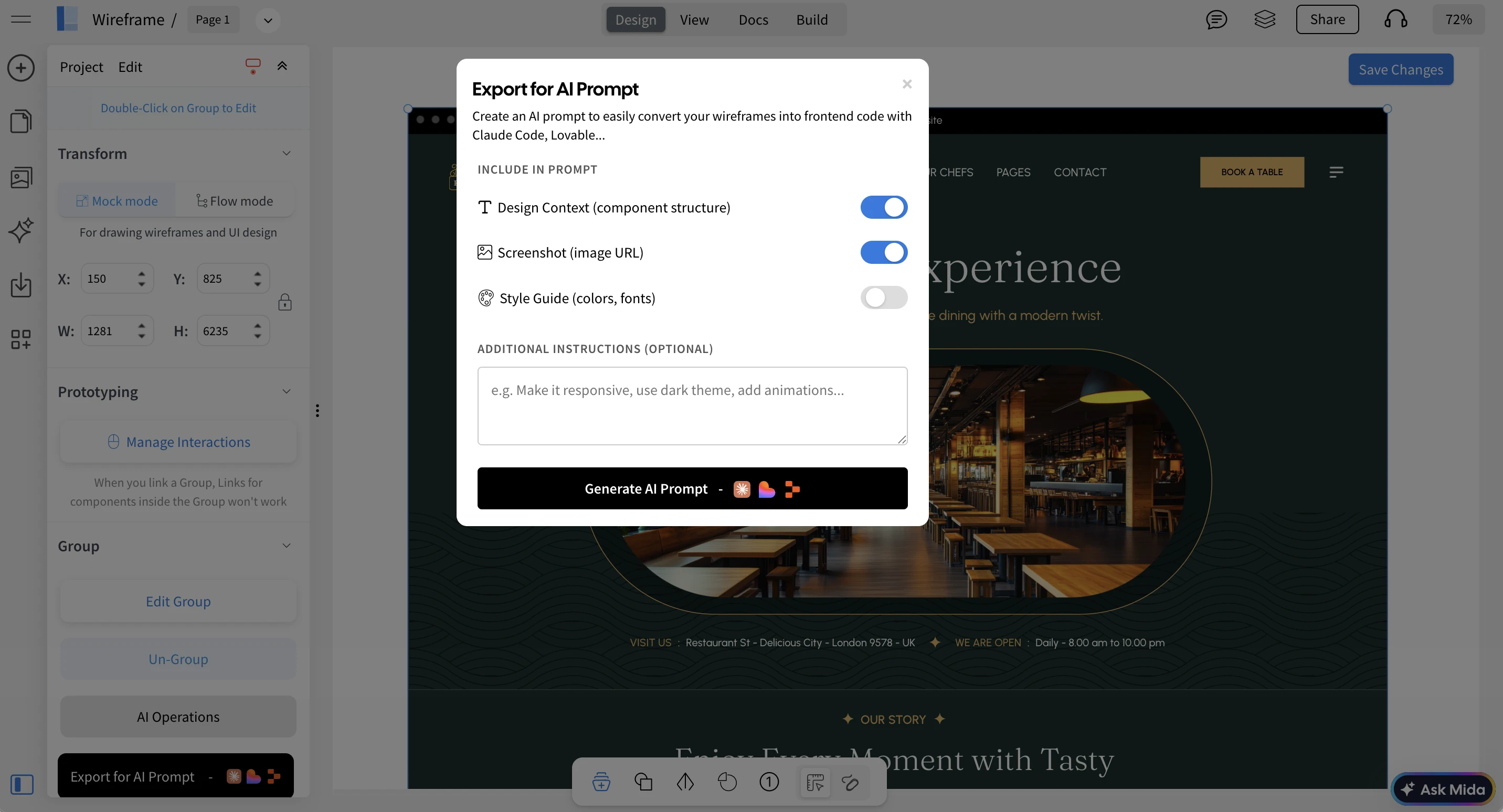
Supported AI Coding Platforms
Although the exported prompt can be used with virtually any AI coding tool, MockFlow optimizes prompts based on the capabilities and limitations of popular platforms, such as context length and image handling.
For best results, we recommend Claude Code, as it supports larger context windows and delivers more consistent UI generation. Other supported platforms include Codex, Cursor, Lovable, Bolt, and Replit.
Ideal for Vibe Coding with Visual Prompts
Export to AI Prompt is especially powerful for teams practicing vibe coding where ideas are explored visually instead of through long text instructions.
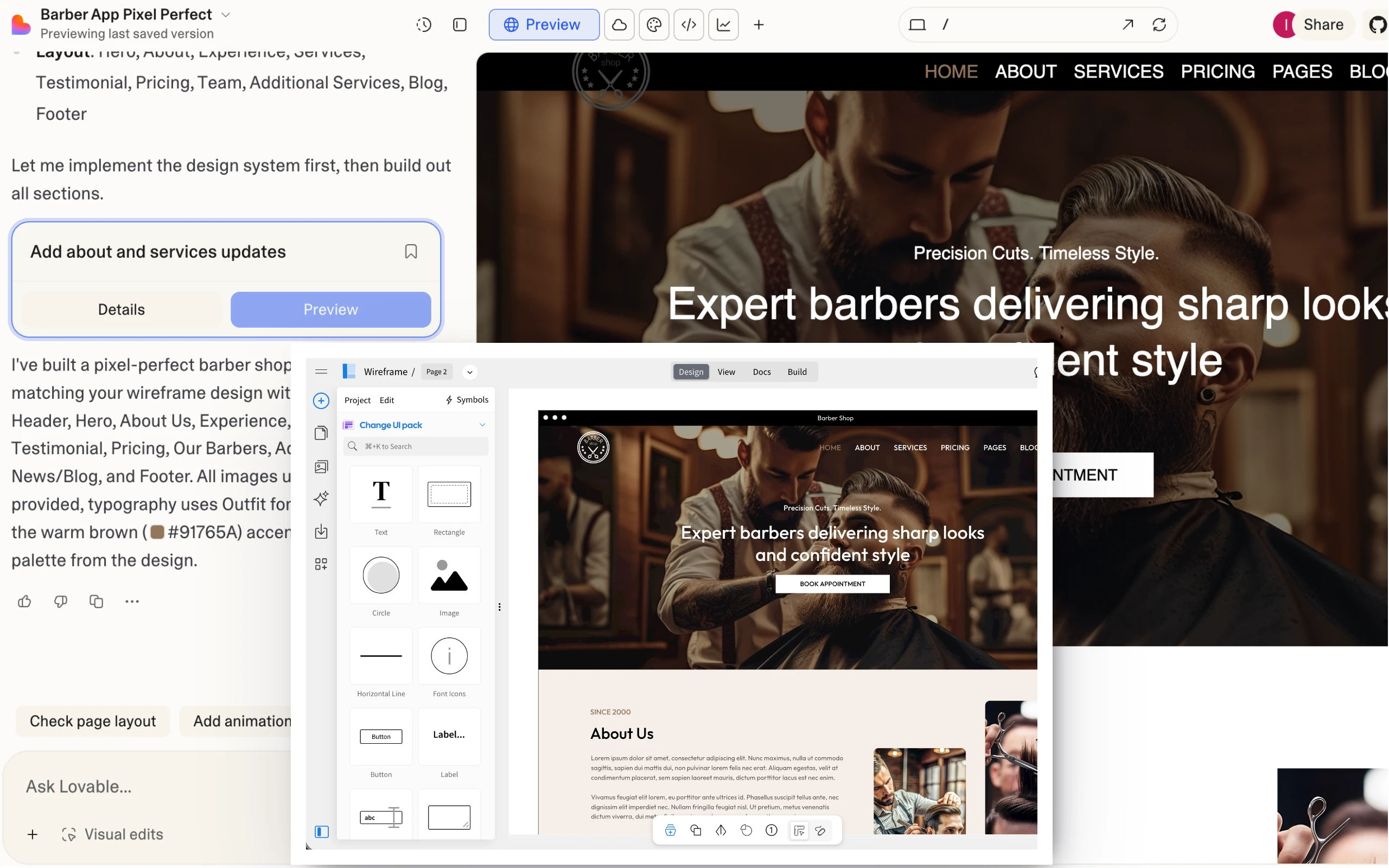
With MockFlow’s rapid wireframing, you no longer need to describe interfaces in paragraphs of text and hope the AI interprets them correctly. Instead, you can directly draw your idea and let MockFlow generate a visual AI prompt enriched with layout data, component structure, and brand guidelines.
This eliminates the gap between what’s in your mind and what the AI produces, enabling faster experimentation, better alignment, and more predictable results.
Export AI Prompt vs Build Mode in WireframePro
WireframePro already includes Build Mode, which converts wireframes into production-ready front-end code using built-in credits from your subscription. Build Mode is primarily designed for non-developers, such as product managers and designers who want to quickly generate working UI code for demos, reviews, and stakeholder approvals.
Export to AI Prompt, on the other hand, is designed for teams and developers who are already using AI coding tools. It acts as a visual bridge between MockFlow and your existing development workflow, allowing you to bring precise design context into your AI environment and build directly inside your own codebase.
Availability
Export to AI Prompt is available on paid plans (WireframePro and Bundle).
It’s a major time-saver for building front-end UIs with AI, helping you reduce unnecessary prompt iterations, avoid misinterpretations, and lower overall AI usage costs by starting with a clear, visual, and structured design prompt from MockFlow.
Improved Generation and New AI Features in WireframePro Mida
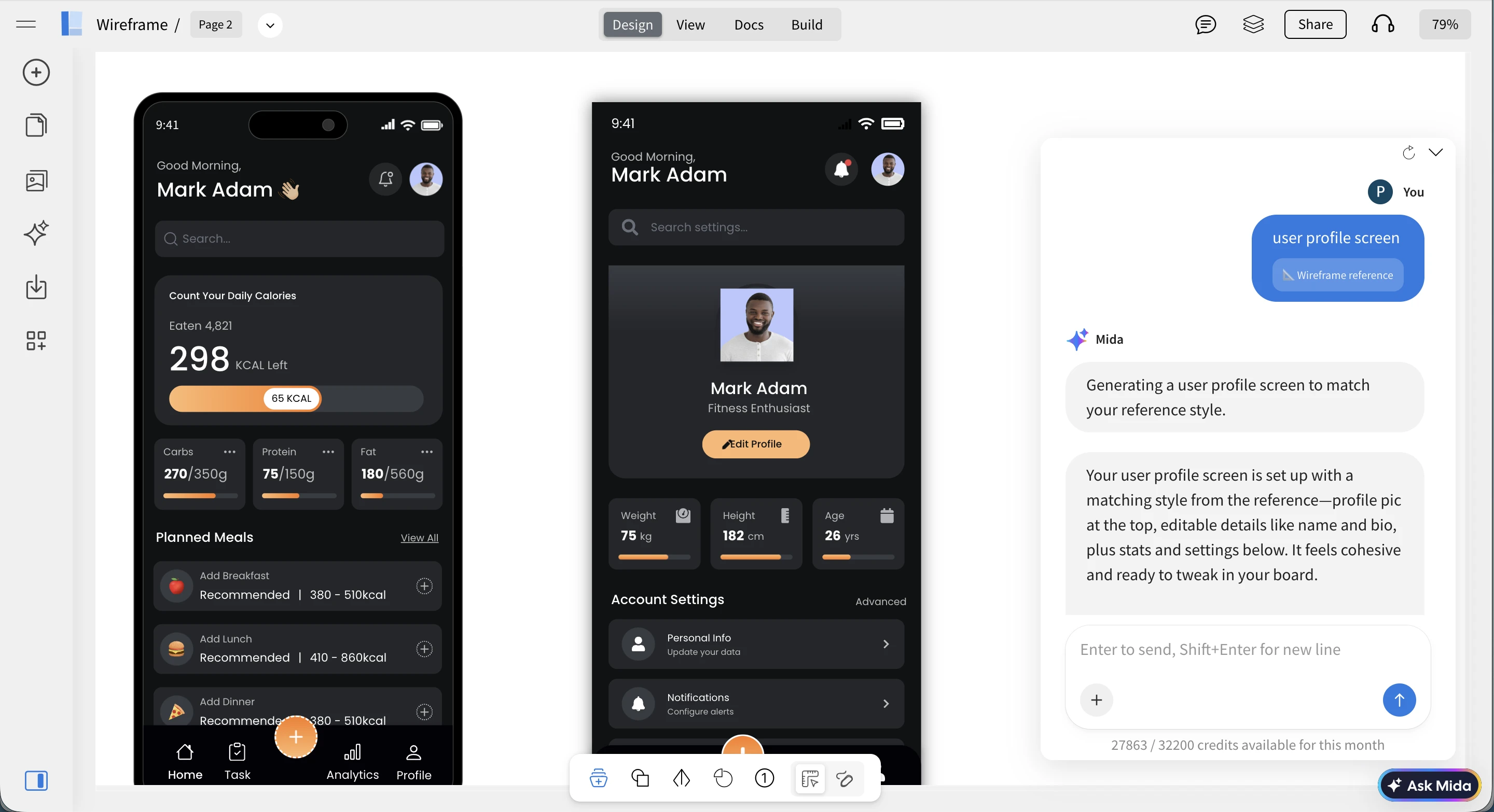
Brainstorming user interfaces with AI just got a major upgrade in WireframePro MIDA (MockFlow Intelligent Design Assistant). With reference styling, contextual generation, and a smarter screenshot-to-wireframe workflow, MIDA now helps you create faster, more consistent UI wireframes for websites and apps.
Smarter, More Conversational Mida
MIDA is now faster, more responsive, and more natural to interact with. You can describe your ideas conversationally and watch them turn into structured wireframes in seconds.
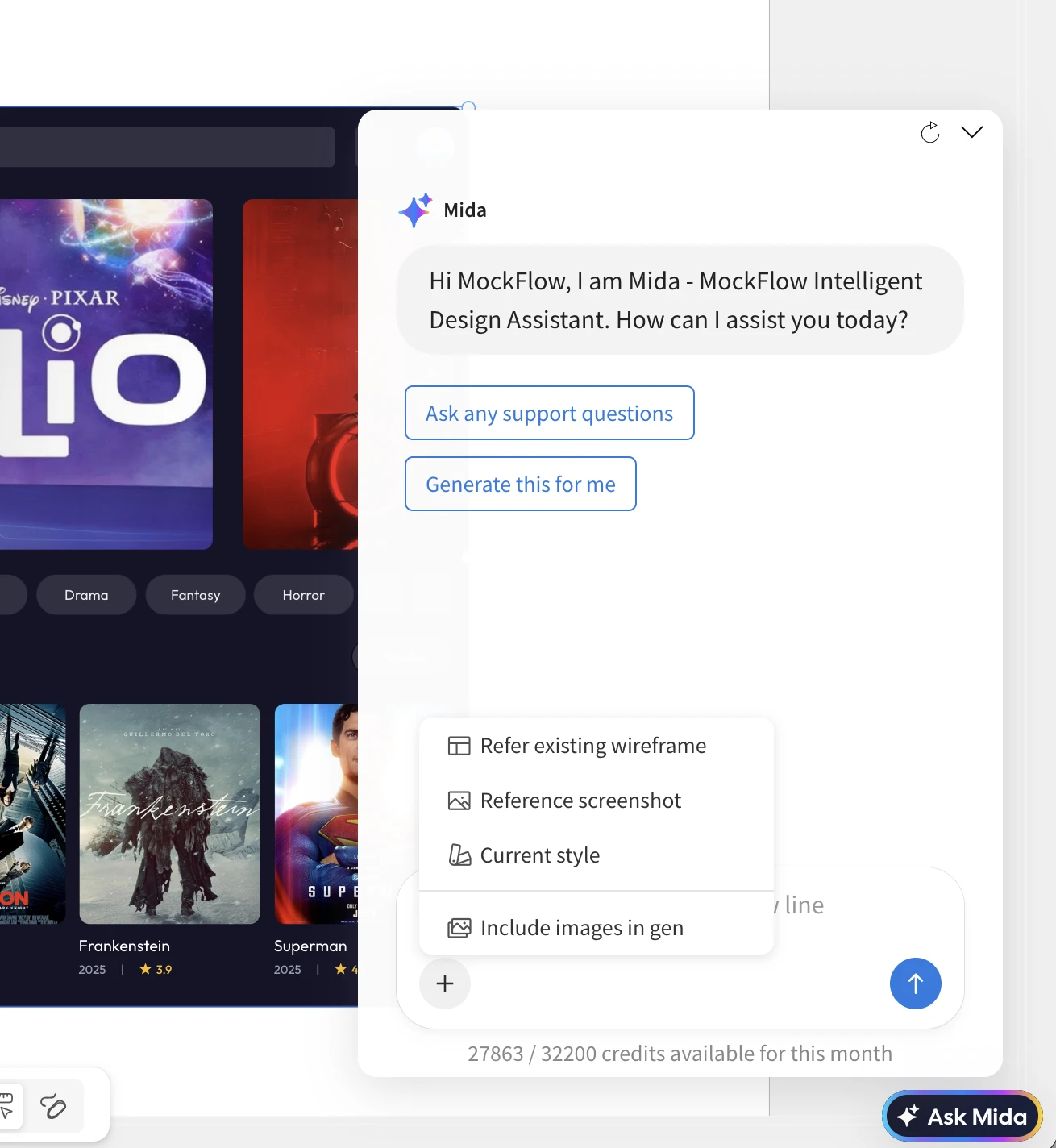
You can now start generation in multiple ways using the new Plus (+) button inside the MIDA input box—making it easier to explore, refine, and iterate on designs without breaking your flow.
Refer Existing Wireframes
You can now generate new screens based on an existing wireframe for visual and structural consistency.
There are two ways to use this:
- Right-click any selected area or wireframe and choose “Create like this.”
- Inside MIDA, select “Refer existing wireframe” before entering your prompt.
This ensures that newly generated pages match the branding, layout style, and content patterns of your existing designs.
For example, if you already have a landing page, you can quickly generate a pricing page that follows the same visual language and data style.
Consistent Styling Across Screens
Creating multi-screen wireframes with the same color palette and visual style is now easier than ever.
Enable the “Current style” option in the MIDA input box, and all generated wireframes will inherit the colors and styling from the existing designs on the page. This keeps your flows visually cohesive while still letting you iterate rapidly.
Guided Screenshot to Wireframe
The Reference Screenshot feature has been upgraded and fully integrated into MIDA.
Earlier, this was a standalone conversion tool. Now, you can:
- Upload a screenshot
- Then guide MIDA on how to generate from it
For example, you can ask it to:
- Add more users or data
- Modernize the theme
- Adjust layout or structure
This turns screenshot conversion into a flexible, AI-guided design workflow instead of a one-click static output.
Why Generate Wireframes with AI Instead of Full Code?
AI-generated wireframes let you move faster while staying focused on design intent.
They:
- Are quicker to generate and iterate, saving time and credits
- Focus only on the frontend experience, without code complexity
- Are easy to edit and refine using WireframePro’s editor
This makes wireframes the perfect frontend blueprint before you move into vibe coding or full development.
Export Wireframes as Interactive PDF with Clickable Navigation
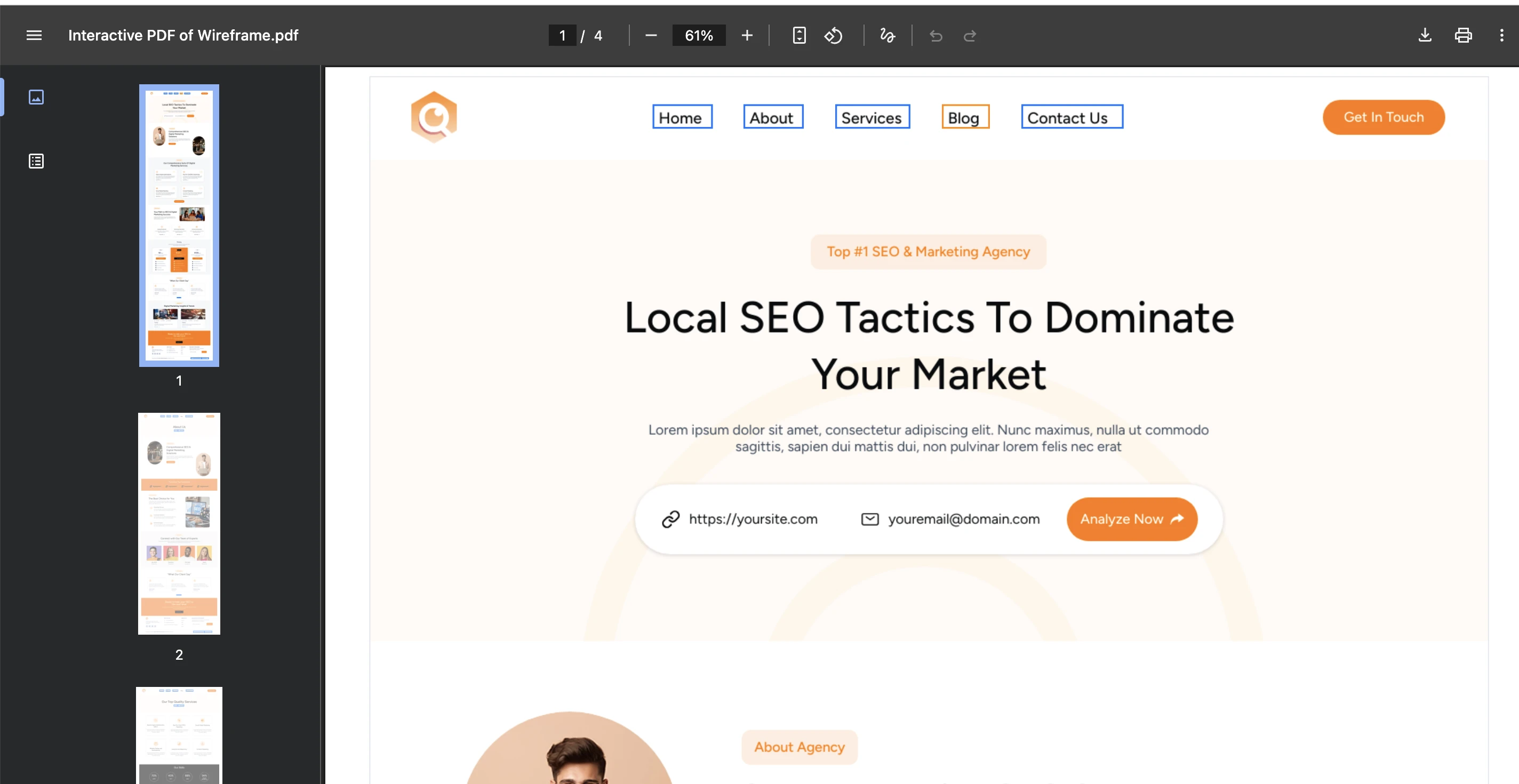
Export MockFlow wireframes as Interactive PDF documents with clickable page links, internal
navigation, and web links. Share interactive prototypes without external dependencies. Unlike static exports, Interactive PDFs allow reviewers and stakeholders to experience your wireframes in a more realistic, connected, and meaningful way.
Why Interactive PDF Export Matters
Wireframes serve as more than conceptual sketches, they're essential UI requirement documents that guide frontend development. Sharing, reviewing, and archiving them effectively is a critical part of the product development workflow.
MockFlow WireframePro already supports exporting wireframes in multiple formats, each designed for a specific purpose:
- Static PDF – for simple viewing and documentation
- Images – for quick sharing
- Specs Mode – for developer handoff
- PowerPoint (PPT) – for presentations
- Word (DOC) – for detailed project documentation
With this release, we’re adding a powerful new option: Interactive PDF Export.
Key Benefits
- No external dependencies — Works offline in any PDF reader
- Preserves navigation — Page links, hotspots, and web links remain clickable
- Easy sharing — Attach to emails, upload to cloud drives, or embed in documentation
- Better stakeholder reviews — Reviewers experience the flow, not just static screens
How to Create an Interactive PDF
1. Open Export Options from the left sidebar
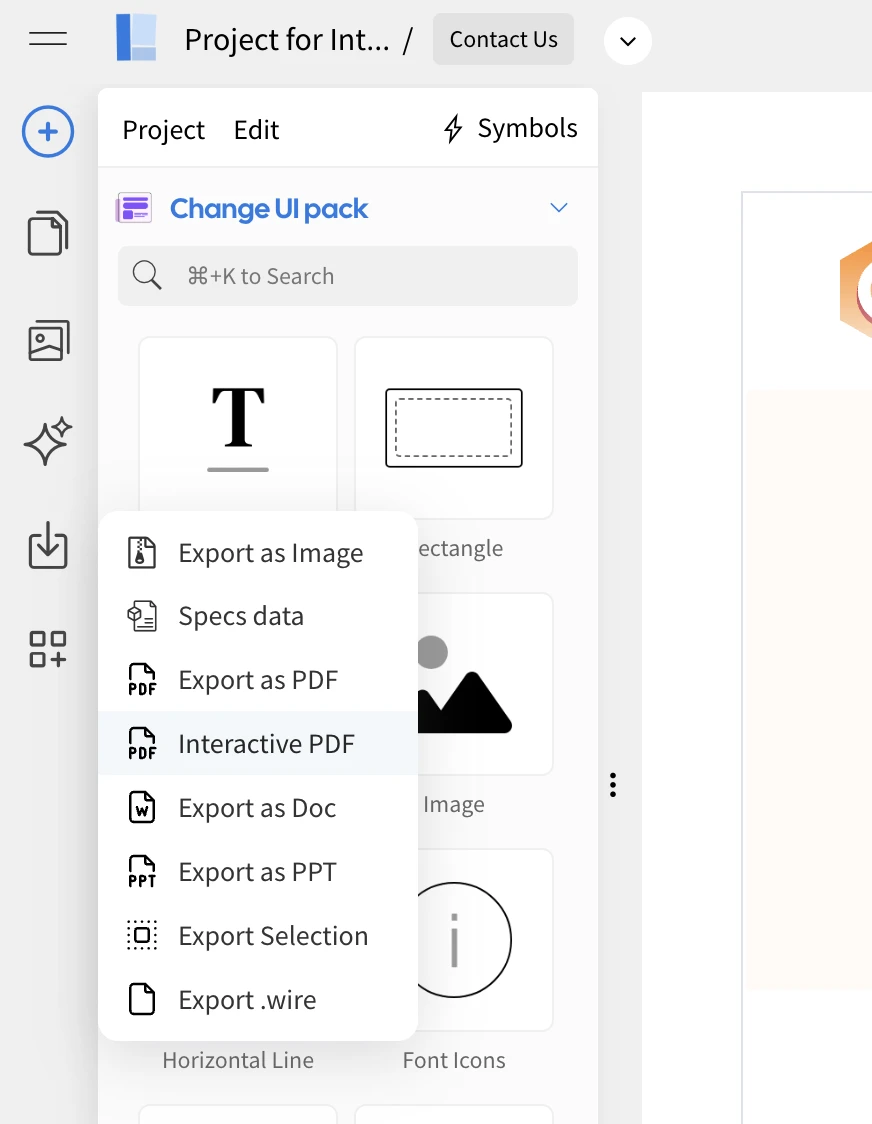
2. Select "Interactive PDF" as the export format
3. Add pages to include in the document
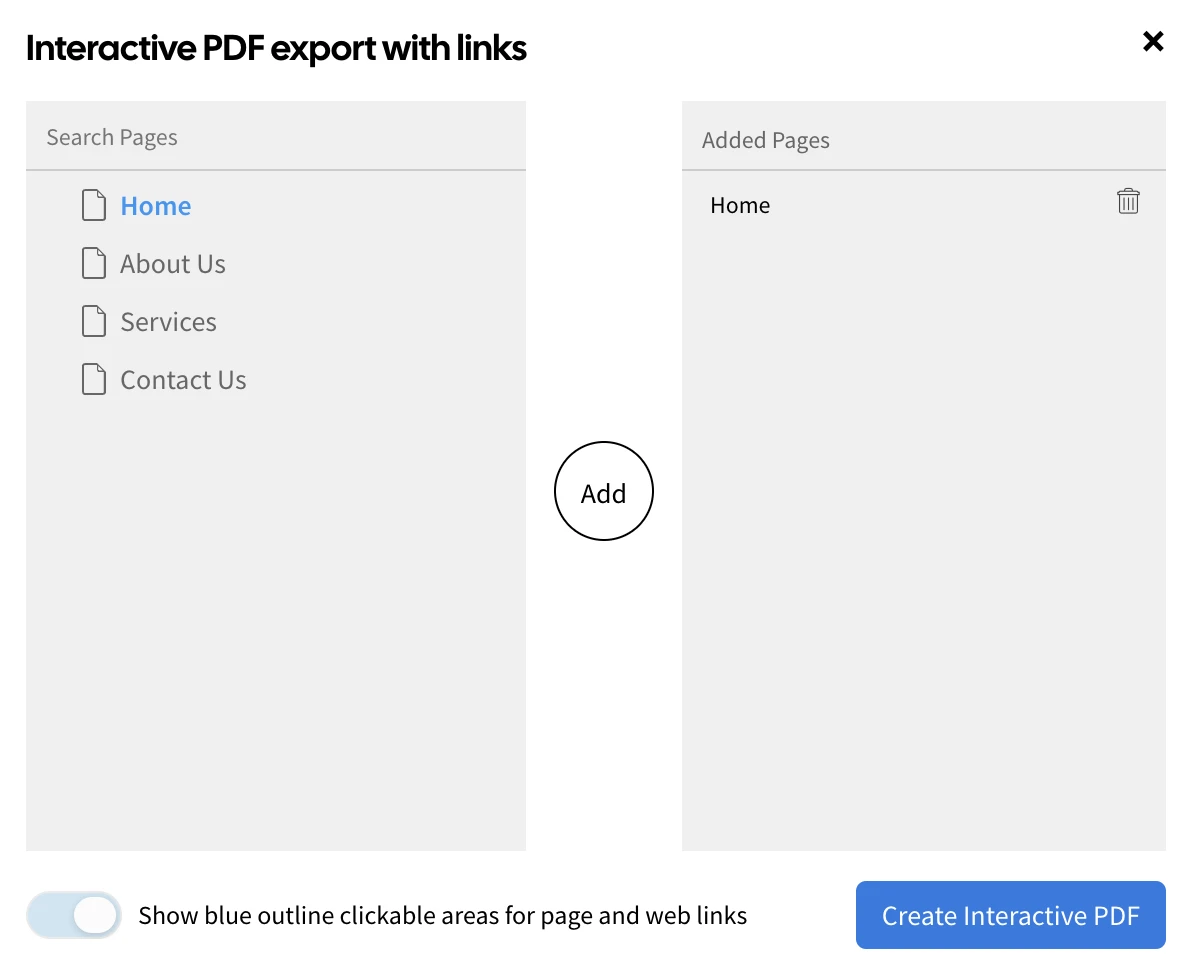
4. Toggle link annotations visibility (optional blue highlight rectangles)
5. Click Export and download your interactive wireframe
Wireframes are not just conceptual drawings but also act as requirement documents for UI. This is why exporting wireframes is important to share and archive for better frontend process. MockFlow supports this by enabling to export wireframes in multiple formats - static pdf, image, specs, ppt, doc. Each as its own use cases. like specs for developers, ppt for quick presentations in meetings, docs - for futher documentation using MS word. Now this release adds one more export type - "Interactive PDF". this preserves the navigation between pages, internal links and also links to external webpages. Which means it gives an wholesome interactive wireframe in a PDF document without any external servers or dependencies. Now easily share interactive wireframes as PDF in email attachments, cloud drives and more.
Availability
This feature is available exclusively to:
- WireframePro license users
- MockFlow Bundle license users
Sample PDF: http://cdn.mockflow.com/changelogfiles/interactivepdf_example.pdf
With Interactive PDF Export, WireframePro takes one more step toward making wireframe sharing, collaboration, and documentation smoother than ever.
Start exporting smarter today!
Auto-Generated Style Guide for Wireframes in Specs Mode
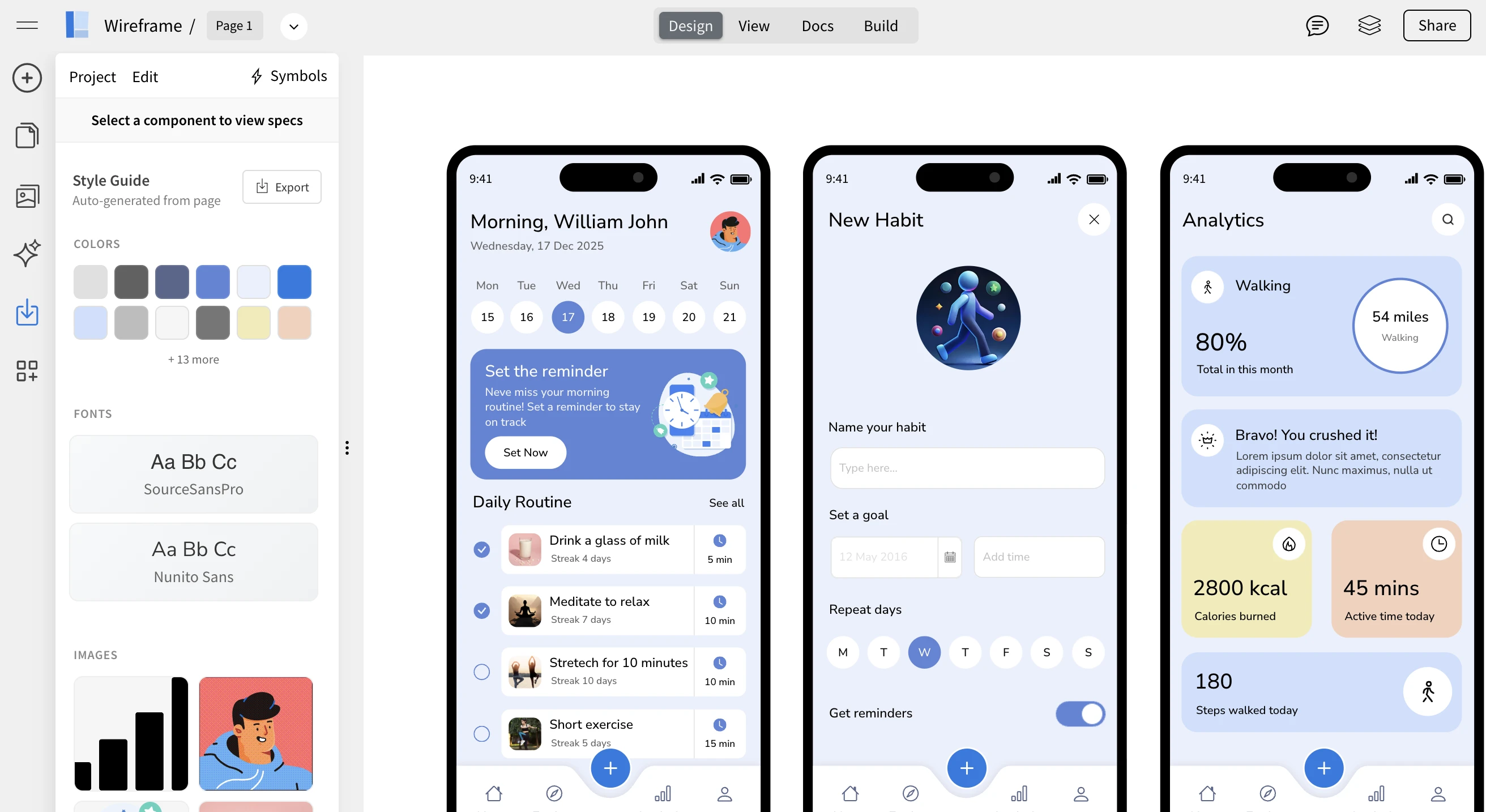
WireframePro now makes design handoff even easier with auto-generated style guides inside Specs mode. Your wireframes can automatically produce a structured style guide based on the colors, fonts, icons, and images used in your design, ready to be reviewed or exported for development.
This enhancement bridges the gap between early-stage wireframes and implementation-ready design documentation, without requiring extra setup or manual work.
From Wireframe to Style Guide — Automatically
Traditionally, teams start with a brand or style guide and then create wireframes based on those rules. In real-world workflows, however, wireframes often come first.
Wireframes are usually created early in the product lifecycle, often by product managers, founders, or non-designers who are focused on layout, flow, and functionality rather than visual styling. As the wireframe evolves into a more detailed and high-fidelity version, colors, fonts, and visual elements naturally start taking shape.
WireframePro now flips the traditional process by automatically generating a style guide from the wireframe itself. Instead of manually documenting styles afterward, Specs mode analyzes your design and extracts:
- Colors used across the wireframe
- Font families and text styles
- Icons and images
- Common visual patterns
This gives you a clear, structured overview of the visual system emerging from your wireframe.
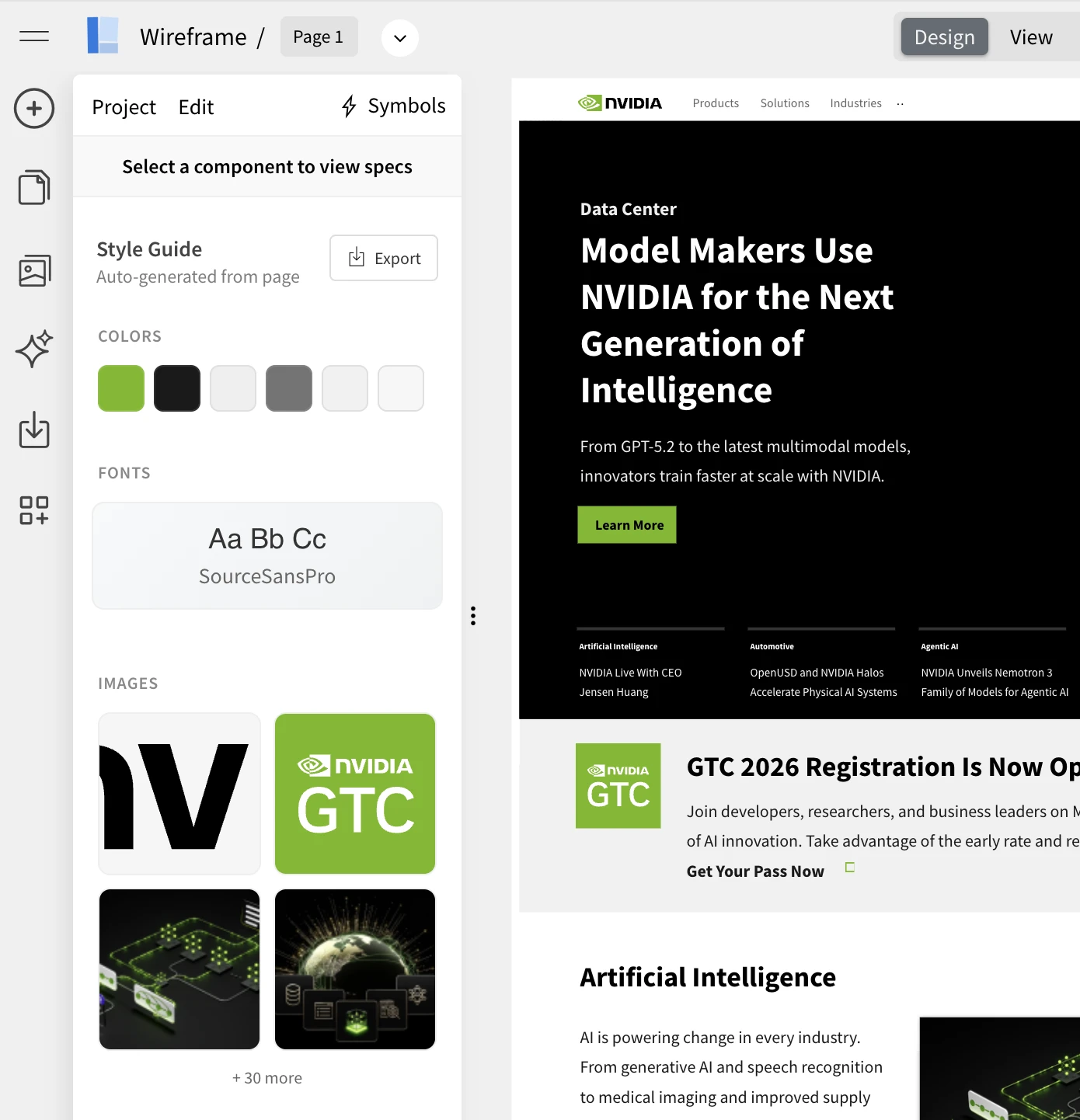
The above screenshot , shows nvidia.com homepage converted to wireframe using chrome extension and then its style guide extracted.
Why This Is Useful
The auto-generated style guide helps in multiple real-world scenarios:
- Simpler developer handoff – Developers get a ready reference of styles used in the wireframe.
- Better collaboration – Designers and engineers can quickly align on visual decisions.
- Clarity for evolving designs – As wireframes become more detailed, the style guide updates automatically.
- Ideal for non-designers – Teams can focus on ideas first, without worrying about formal style systems upfront.
- Faster transition to high-fidelity designs – The extracted styles act as a foundation for UI refinement.
Instead of manually documenting design tokens, WireframePro turns your working wireframe into a usable style reference instantly.
How to Auto-Generate the Style Guide
Generating the style guide is simple:
- Open your wireframe in WireframePro
- Switch to Specs mode (available in both Editor and View modes)
- The system automatically generates a complete style guide based on your wireframe
You’ll see a structured overview of colors, typography, icons, and other visual elements used — just like the example shown in the screenshot above.
No setup, no configuration, and no manual tagging required.
Export Formats Supported
The auto-generated style guide can be exported in multiple developer-friendly formats:
- CSS Variables – Ideal for web projects
- JSON (Design Tokens) – Useful for design systems and tooling
- Tailwind Config – Perfect for Tailwind CSS–based workflows
- These exports help teams directly plug design values into their codebase, reducing back-and-forth and speeding up implementation.
What’s Coming Next
This is just the beginning. Upcoming improvements to the auto-generated style guide will include:
- Editing and refining styles directly inside the style guide
- Applying updated styles back to the wireframe
- More control over tokens and grouping
- Expanded export options
The goal is to make the style guide not just a reference, but an active part of the design workflow.
The Auto-Generated Style Guide in WireframePro turns your wireframes into living design documentation helping teams move faster from concept to implementation, with clarity and consistency built in.
WireframePro Chrome Ext Update — Now wireframe redesigns faster
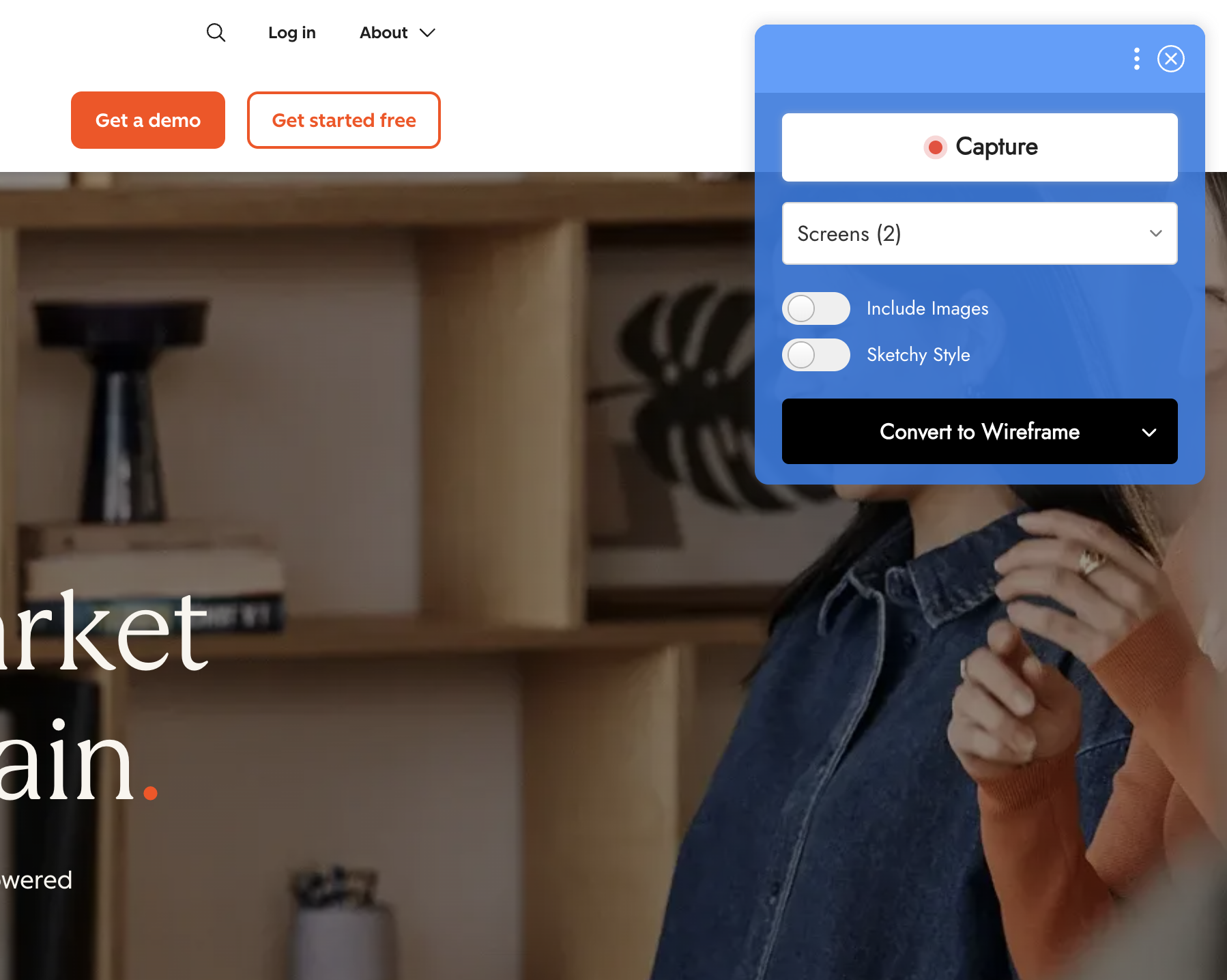

What’s New
A Refreshed Minimal UI
Multi-Screen Capture and Conversion
Free for All Plans
Live Presentations 2.0 in MockFlow — In-Sync View, Voice Support & Greater Control
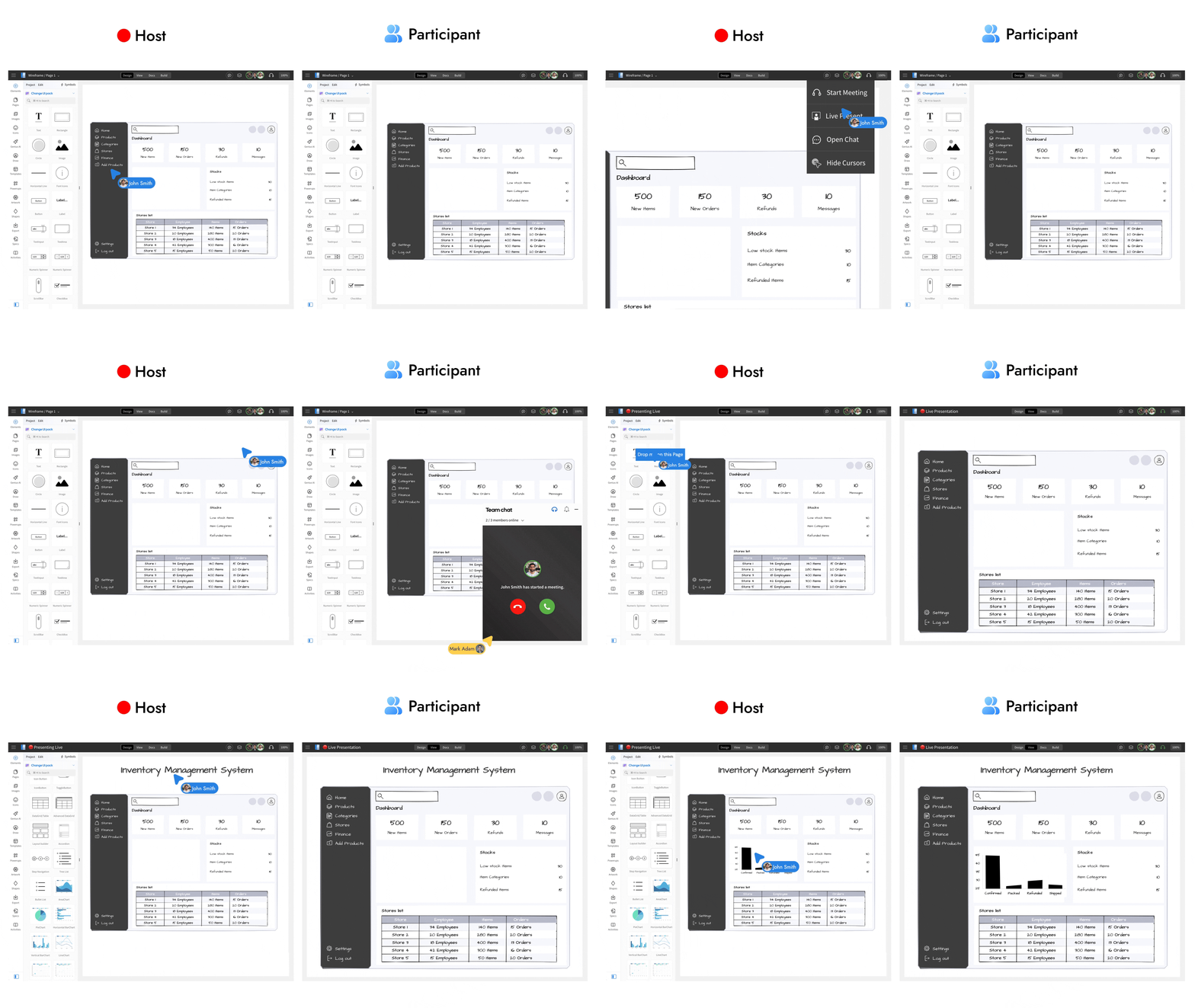
Enhance remote wireframing and brainstorming sessions with the all-new Live Present 2.0. This upgrade brings seamless in-sync navigation, built-in audio, easier access, and improved presentation flow for collaborative work.
What is Live Presenting in MockFlow?
Live Presenting allows you to share your wireframes or whiteboards with stakeholders such as clients, teammates, or investors in real time. Instead of screen sharing, everyone views the same project directly inside MockFlow, just as if they were gathered around the same screen. No downloads, installations, or browser extensions are required, collaborators simply open the shared link and join.
Easier access and joining experience
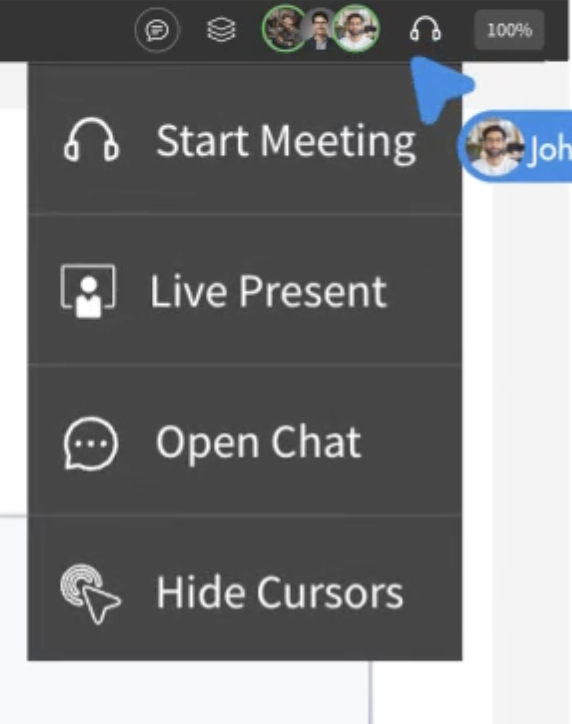
Starting a live presentation is now simpler. In both WireframePro and IdeaBoard, open the Collaboration menu and select Live Present from the top bar.
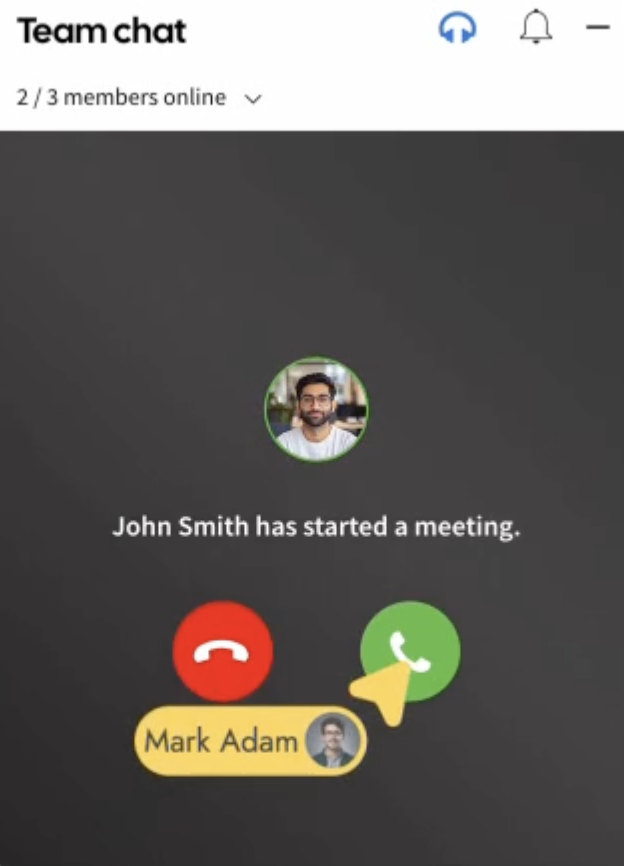
When collaborators have the project open or join midway they receive a visual alert with an audio chime, similar to an incoming call. One click on Accept brings them into the presentation instantly.
Clearer presentation state indicators
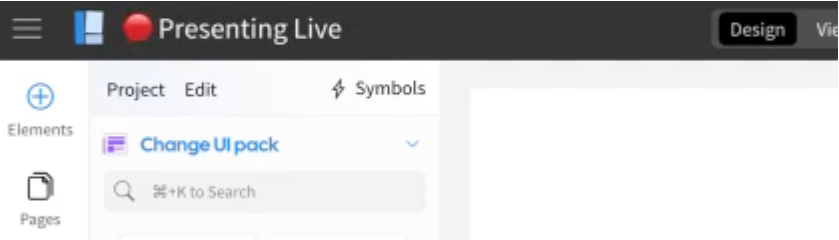
Live Present 2.0 introduces improved visual cues across the workspace. The header updates dynamically to show that a presentation is active, with separate states for presenters and audience. Hovering over the title provides more information about the session, ensuring every member understands whether they’re presenting or watching.
In-sync navigation
Once the session begins, the presenter controls navigation. Every scroll, zoom level, page change, or interaction is synchronized automatically across all viewers.
MockFlow adjusts positioning based on different screen resolutions and display densities so everyone sees the same content in the same way. This makes walkthroughs, non-linear navigation in IdeaBoard, and multi-page wireframe reviews fluid and intuitive.
Built-in audio and optional video
Live Presentations now start with the microphone enabled by default to keep presentations natural and conversational. Presenters can mute audio at any time and switch to in-app chat if needed.
Optional video can also be enabled from the collaboration bar to allow participants to see and hear the presenter, making remote sessions feel more personal and interactive.
A more connected and intuitive way to present
Live Present 2.0 delivers an upgraded remote collaboration experience that makes design reviews, brainstorming, and walkthroughs feel effortless and in-person — without screen sharing or meeting setup friction. This feature is available now for all paid plans in WireframePro and IdeaBoard.
Enhanced Data Editor for Charts in WireframePro
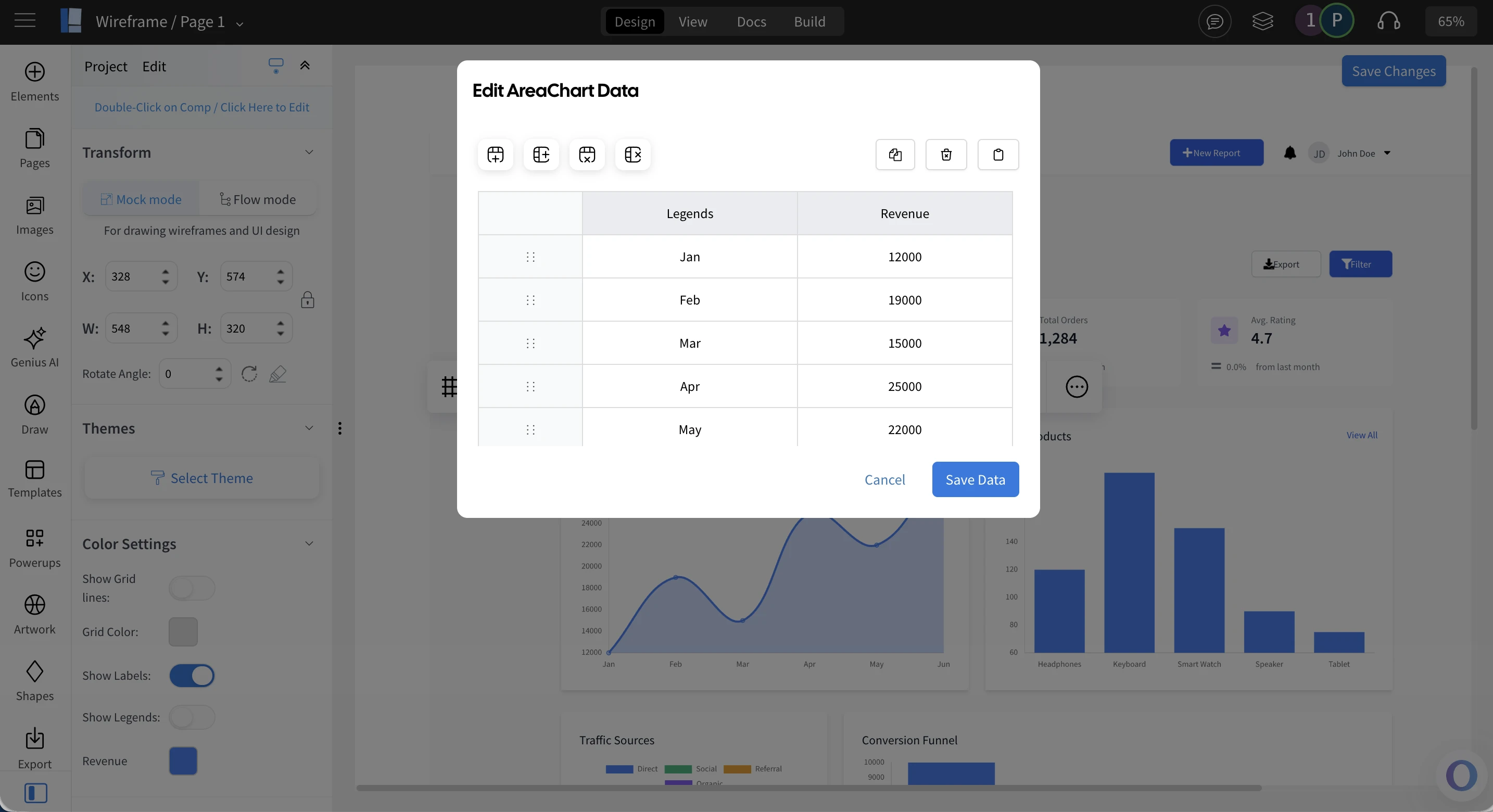
This update, makes editing chart data in WireframePro more intuitive, visual, and efficient helping you focus on design rather than data formatting. As Charts play a key role when wireframing dashboards, analytics, and insight-driven interfaces, this is very important.
A More Visual and Streamlined Chart Editing Experience
WireframePro offers a rich collection of built-in chart components including area, bar, line, radar, scalar, and bubble charts along with sketch style variants for hand-drawn wireframes.
Previously, editing chart data worked like modifying a CSV in a textbox. While convenient for quick copy-paste, it often felt tedious and error-prone, requiring extra effort to validate values manually. This experience didn’t align with our mission to keep UI ideation fast, simple, and friction-free.
With the new data editor, chart editing now feels as smooth as working in a spreadsheet dramatically improving accuracy, speed, and usability.
Introducing the New Chart Editor
The upgraded chart editor includes essential spreadsheet-like controls, tailored specifically for chart data. It intelligently adapts to different chart types and lets you:
- Add or remove rows and columns effortlessly
- Edit values directly with point-and-click interactions
- Sort data in one click
- Copy data or paste from Excel and CSV files
- Benefit from built-in validation to avoid formatting issues
Faster, Validated & Visual Chart Editing
Whether you're wireframing business dashboards, analytics screens, or data-rich reports, the new chart editor helps you shape your ideas faster and more accurately.
Try it today and give your wireframes cleaner, more realistic charts without sacrificing speed or creativity.
Introducing Mini-Mode in WireframePro: A Smarter, Faster Way to Wireframe
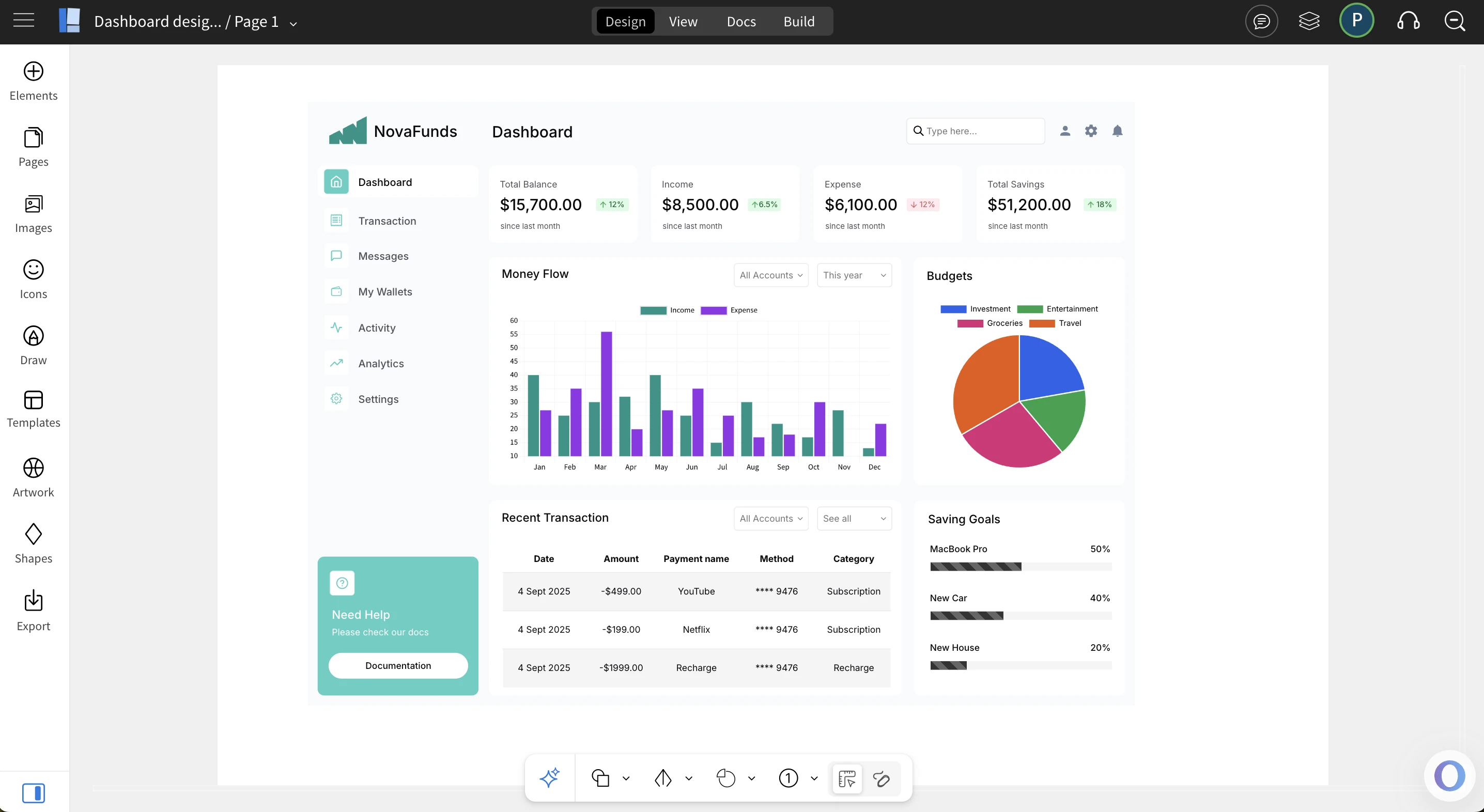
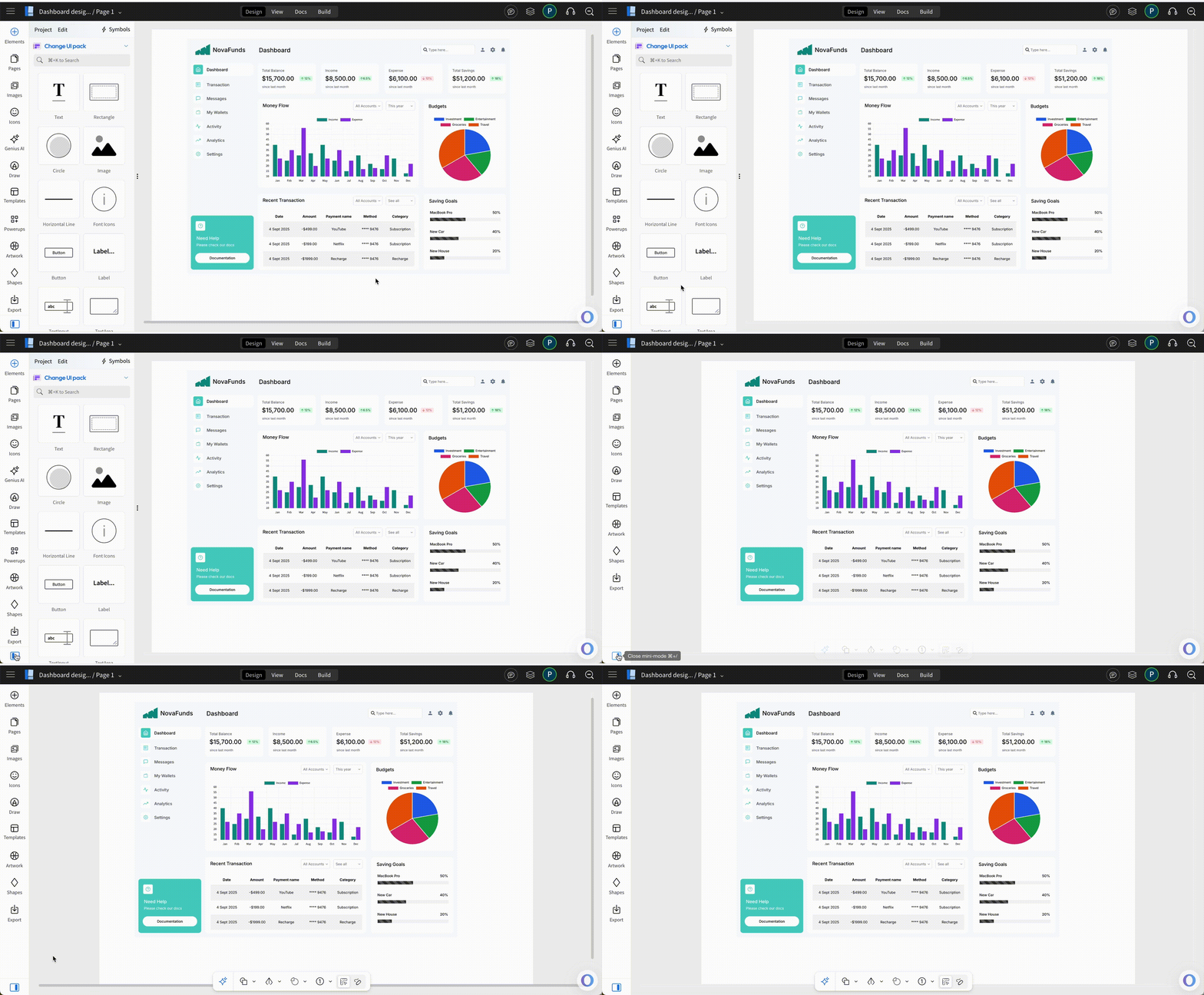
New Mini-Mode in WireframePro streamlines your workspace by reducing clutter, keeping key tools within reach, and giving you more canvas space for rapid, intuitive wireframing.
If you've been following our recent WireframePro updates, you’ll know we’ve introduced a host of invaluable features to MockFlow such as Build Mode for converting concepts into code, powerful AI tools, and expanded wireframing libraries. While these advancements are essential, wireframing should also feel like a natural extension of the designer’s thought process. To achieve this, creating UI concepts needs to resemble sketching on a real whiteboard clean, spacious, and free from unnecessary distractions. At the same time, designers must have quick access to the essential tools required to bring their ideas to life. The new Mini-Mode balances both, giving you more whitespace to think and the right functions at your fingertips
Backstory
This is how Mini-Mode was born. It’s not just a simplified version of the editor UI, but a carefully designed experience shaped by analyzing millions of heatmaps and wireframing usage patterns. The data revealed a clear trend: the more interface elements an editor displays, the less ergonomic the workflow becomes a challenge familiar to users of UI-heavy tools like Office or Photoshop. On the other hand, going too minimal can overwhelm users as they struggle to locate essential functions. Mini-Mode strikes the right balance, delivering a streamlined interface that enhances ergonomics while keeping the core functionality within easy reach.
Quick launcher
Mini-Mode delivers the right balance of UI by hiding non-essential elements while still keeping nearly 95% of WireframePro’s functionality instantly available without switching back to regular mode. It works by collapsing the sidebar into a smart overlay with related functions, while introducing a new always-on mini bottom bar featuring the most-used components. The result is a cleaner workspace that frees up significant whitespace, making both designing and viewing wireframes more seamless.

Shortcuts
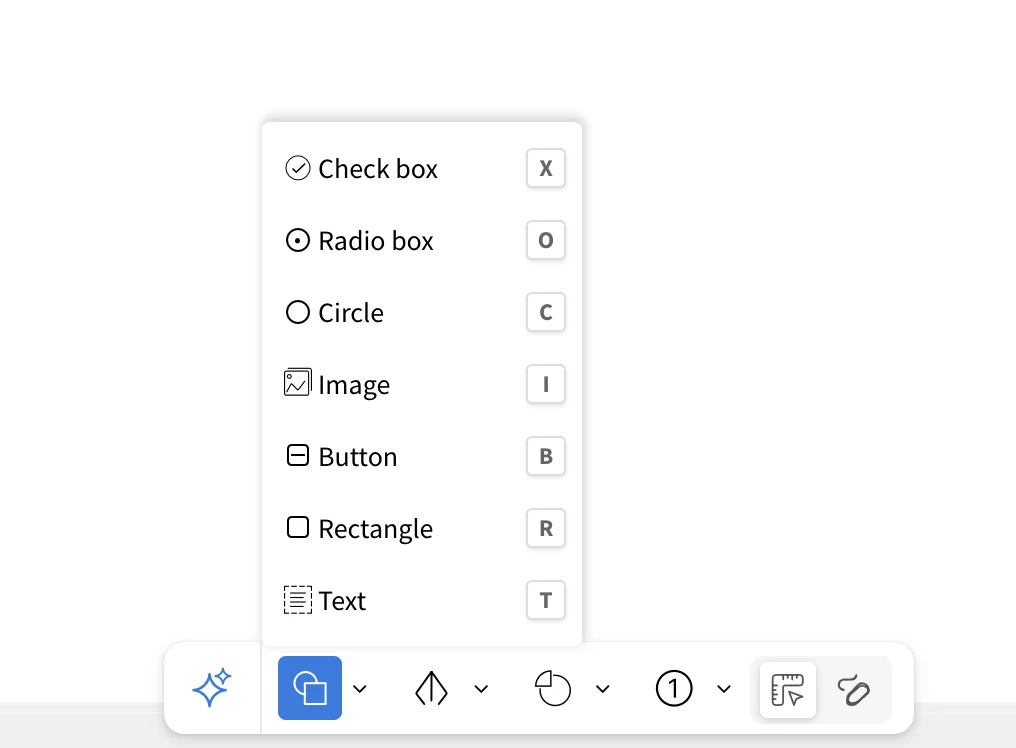
Mini-Mode also introduces handy shortcuts for AI features, drawing components, and even switching between Mini and Regular modes. The new slim bottom bar is the icing on the cake styled like a subtle notch, it stays out of the way while giving instant access to your most-used components in both wireframe and sketchy styles. And of course, Mida remains in the bottom-right corner as your always-on design assistant, now enhanced to deliver not only text responses but also image-based answers, 24/7
Our analysis shows that Mini-Mode is a clear success as it delivers the majority of WireframePro’s features within a minimal, distraction-free interface, enhanced by faster shortcuts. The result: users can focus less on navigating the UI and more on bringing their concepts to life. This is the future of WireframePro. We’re also proud to share that some of these ideas were inspired by our sister product, IdeaBoard, reinforcing our commitment to building tools that make visual design more natural and intuitive
Quick access to AI
AI is now at the forefront of modern software, and with Mini-Mode, it takes center stage in WireframePro. A new mini AI input box is built right into the bottom bar, giving you instant access to powerful commands. Simply type requests like generate wireframes, tables, diagrams, cloud architecture flowcharts, or even images and AI will bring your ideas to life within seconds. It’s speed, simplicity, and creativity combined.”

The Future
Clean, intuitive, and rapid that's what MockFlow stands for when it comes to designing UI concepts. With the new Mini-Mode, you can wireframe at the speed of your thoughts. Use Ctrl/Cmd / shortcut to toggle mini mode anytime.
New Keyboard Shortcuts for Faster Wireframing and Whiteboarding in MockFlow
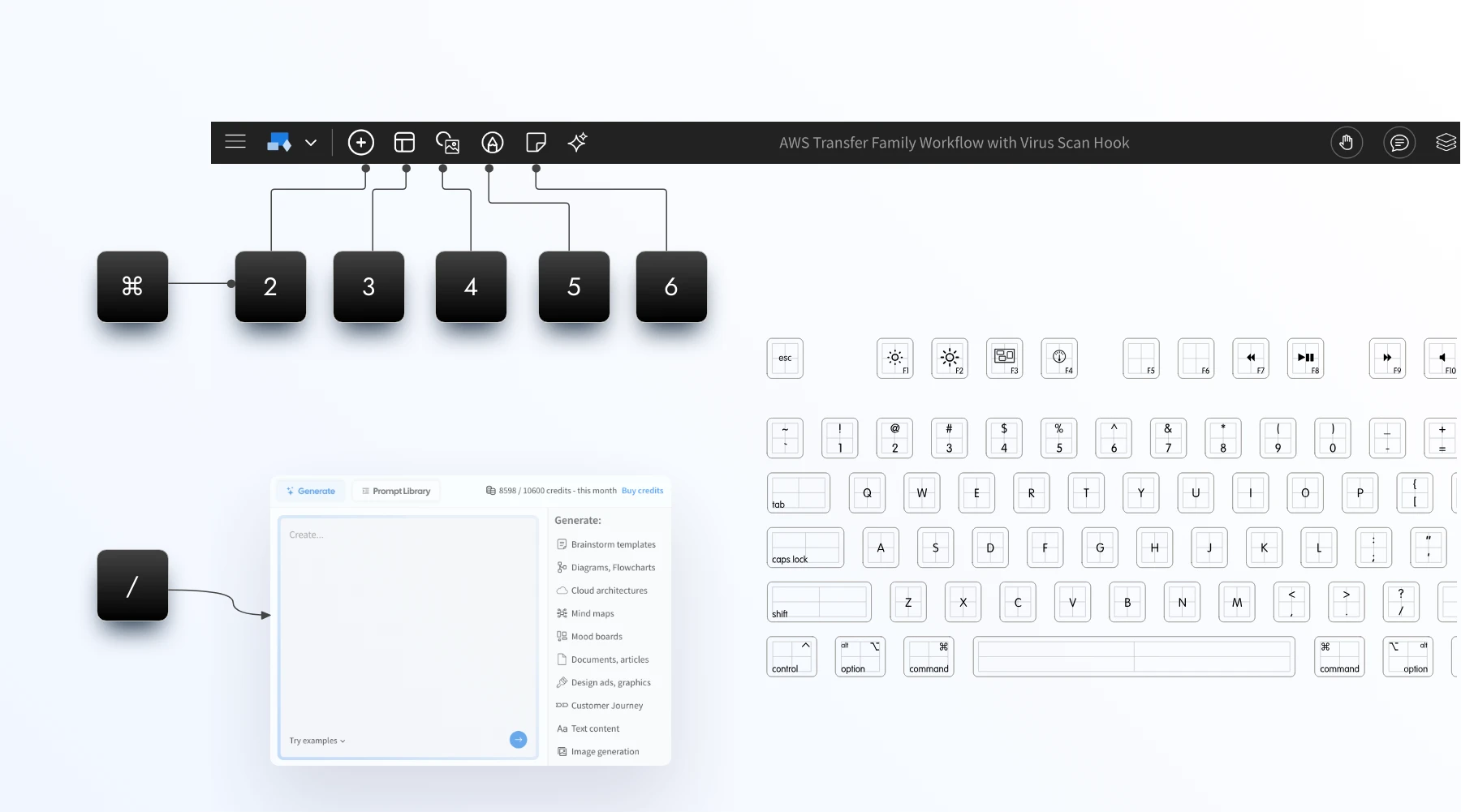
With the new shortcuts everything is in your finger tips, press '/' anytime to bring AI assist in WireframePro or IdeaBoard. Use Cmd + 2,3,4,5 to switch main tabs.
Type '/' to bringup AI toolbox:
Smarter design with AI is now just a slash away. In the editor, simply press ‘/’ to open AI tools instantly. Enter your prompt and generate wireframes, dashboards, mind maps, flowcharts, diagrams, images, or text whenever and wherever you need them.
⌘ + J = Mida Chat
Open Mida assistant inside editor for support, doubts, reporting issues, or even performing actions in both WireframePro and IdeaBoard.
⌘ + 2,3,4,5
Navigate your editor at lightning speed with new keyboard shortcuts. Use Cmd (Mac) or Ctrl (Windows) with numeric keys to instantly cycle through the main operations.
- In WireframePro, quickly switch between Components, Pages, Images, and Icons.
- In IdeaBoard, move seamlessly across Components, Templates, Library, Draw Mode, and Stationery.
This update saves clicks, reduces distractions, and keeps you focused on creating.
Contextual right-click menus
Alongside the new keyboard shortcuts, this release also introduces improved right-click menus when you select a blank canvas. These context-aware menus surface the most relevant options instantly, helping you add, organize, and design without breaking your flow.
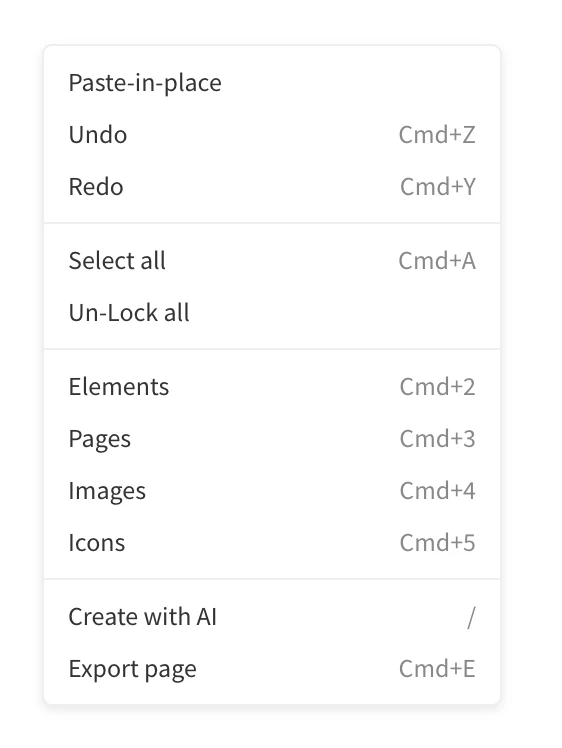
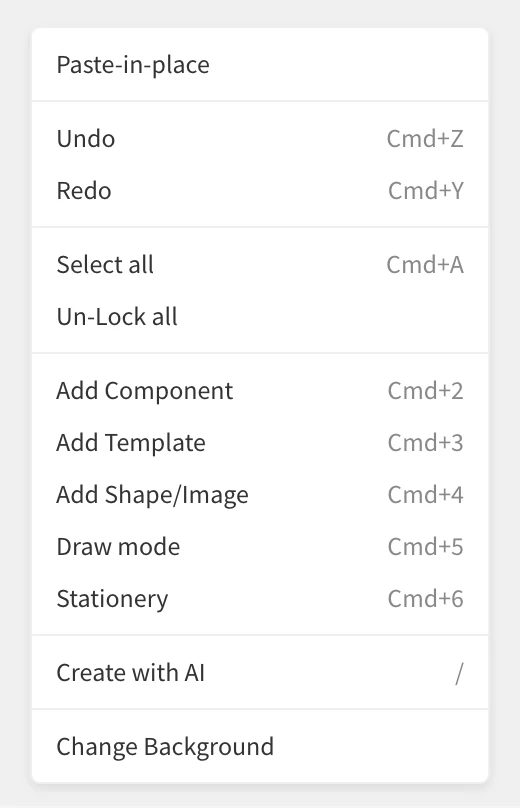
The above changes are now available in both web and desktop apps.
Generate dashboards, analytics, chart based wireframes with AI
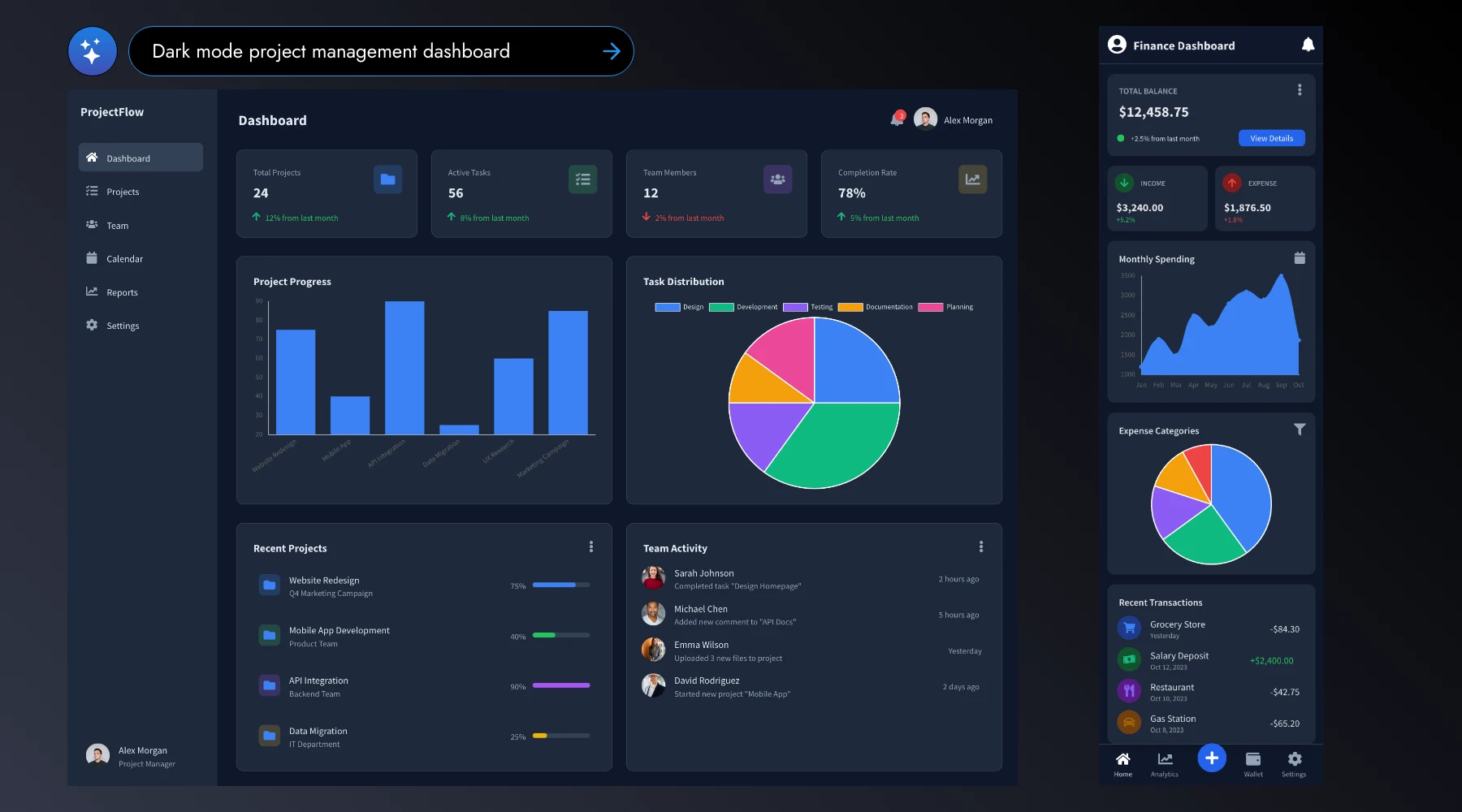
MockFlow AI just got smarter: wireframes generated with AI can now include real charts, analytics, and data visualizations. This makes it easier than ever to design dashboard wireframes and UIs that showcase graphs, reports, and insights.
Prompt-to-Wireframe creation in MockFlow continues to evolve with new features, fixes, and smarter generation. Today’s update is a major step forward, especially for wireframing business apps.
MockFlow has long supported native chart components to help teams brainstorm UIs with graphs. Now, this capability is extended to AI. With just a text prompt, you can instantly generate wireframes for dashboards, analytics, metrics, mobile charts, and more, making it easier to visualize complex data-driven interfaces.
For added flexibility, MockFlow AI also supports sketchy chart generation. By simply adding the keyword ‘sketchy’ to your prompt, you can create hand-drawn style wireframes that are perfect for early-stage brainstorming.
Prompt: CRM dashboard
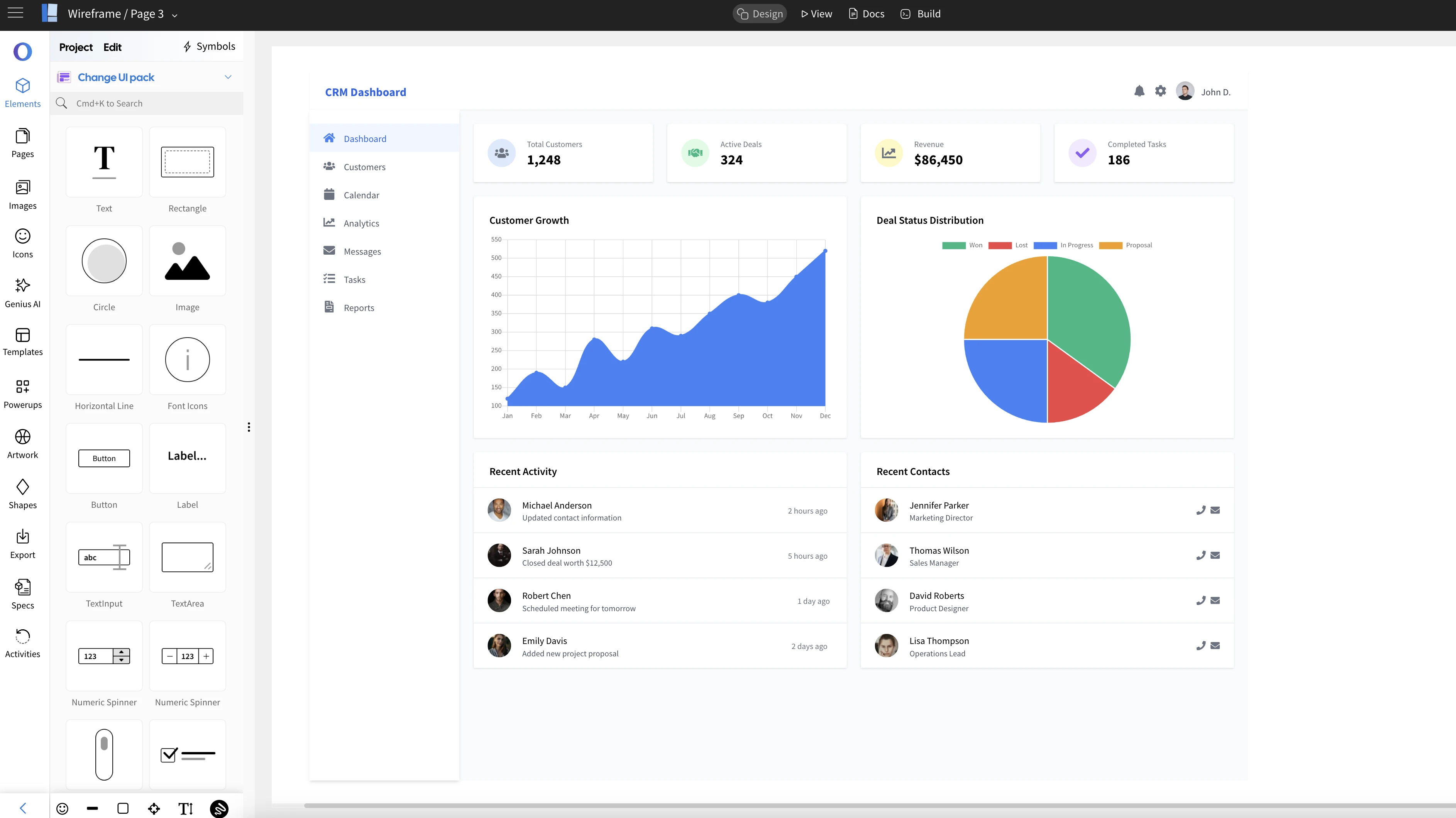
Prompt: Mixpanel like dashboard
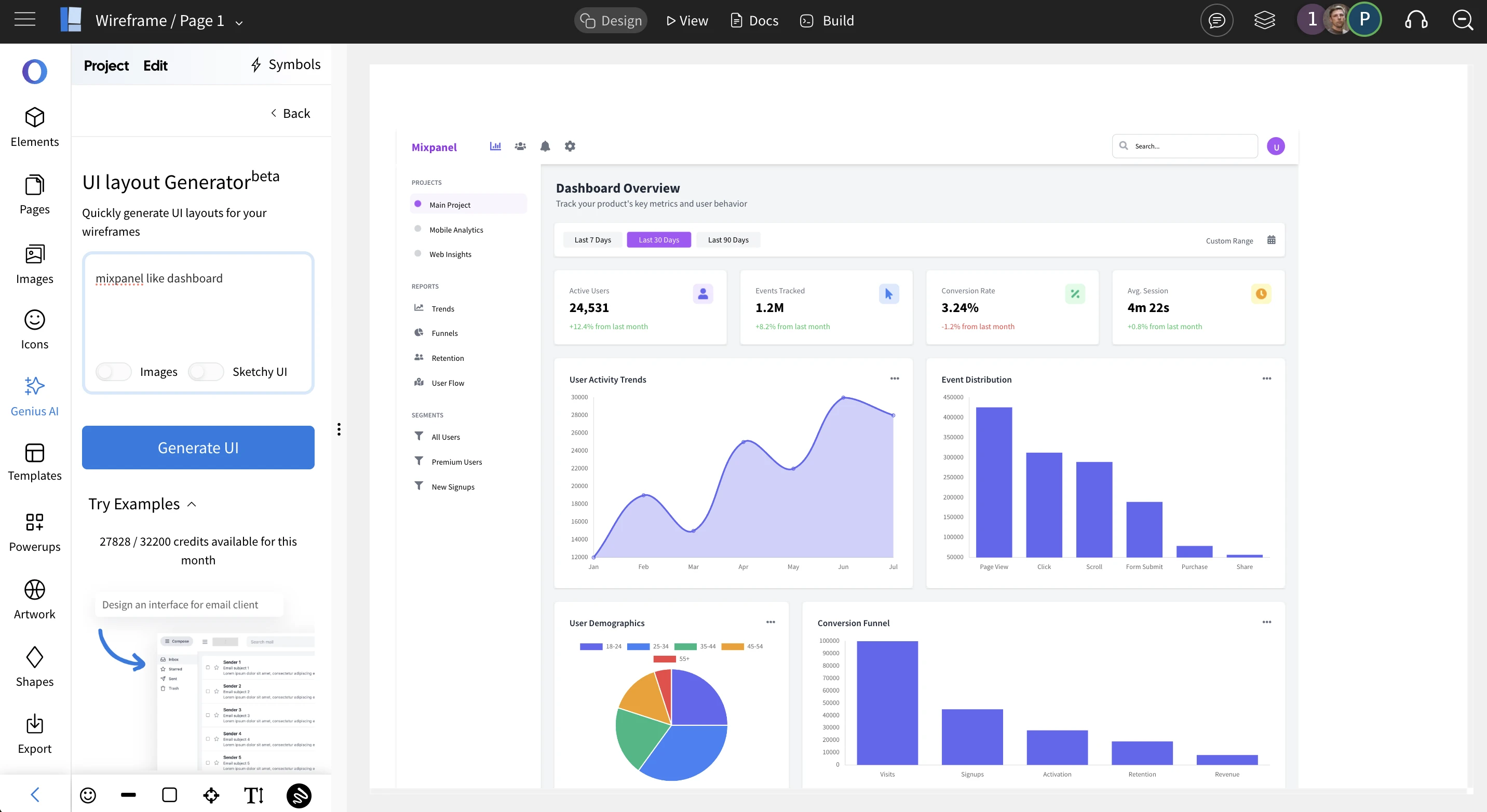
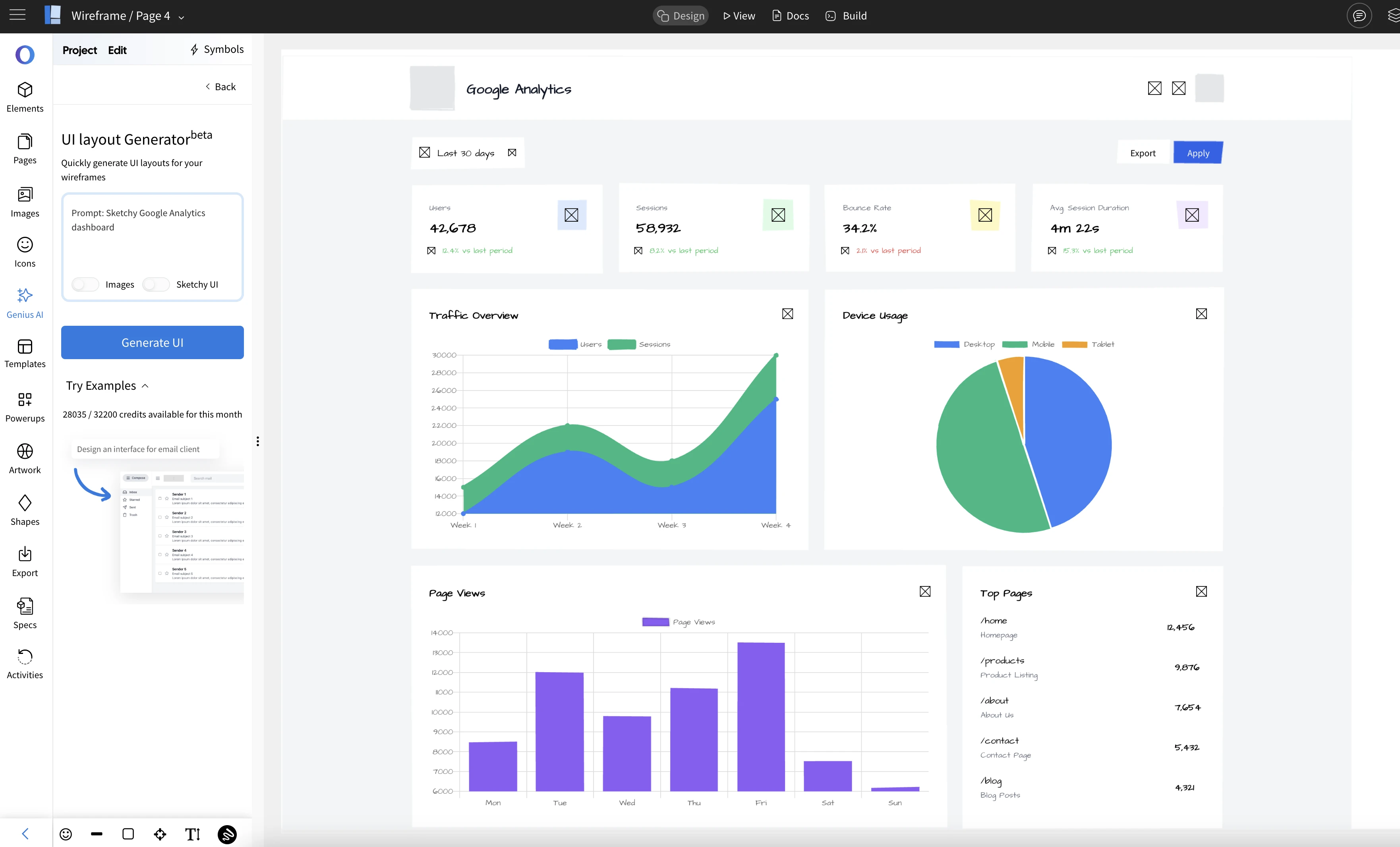
Prompt: Sketchy Google Analytics dashboard
Prompt: Mobile app - Storage analytics
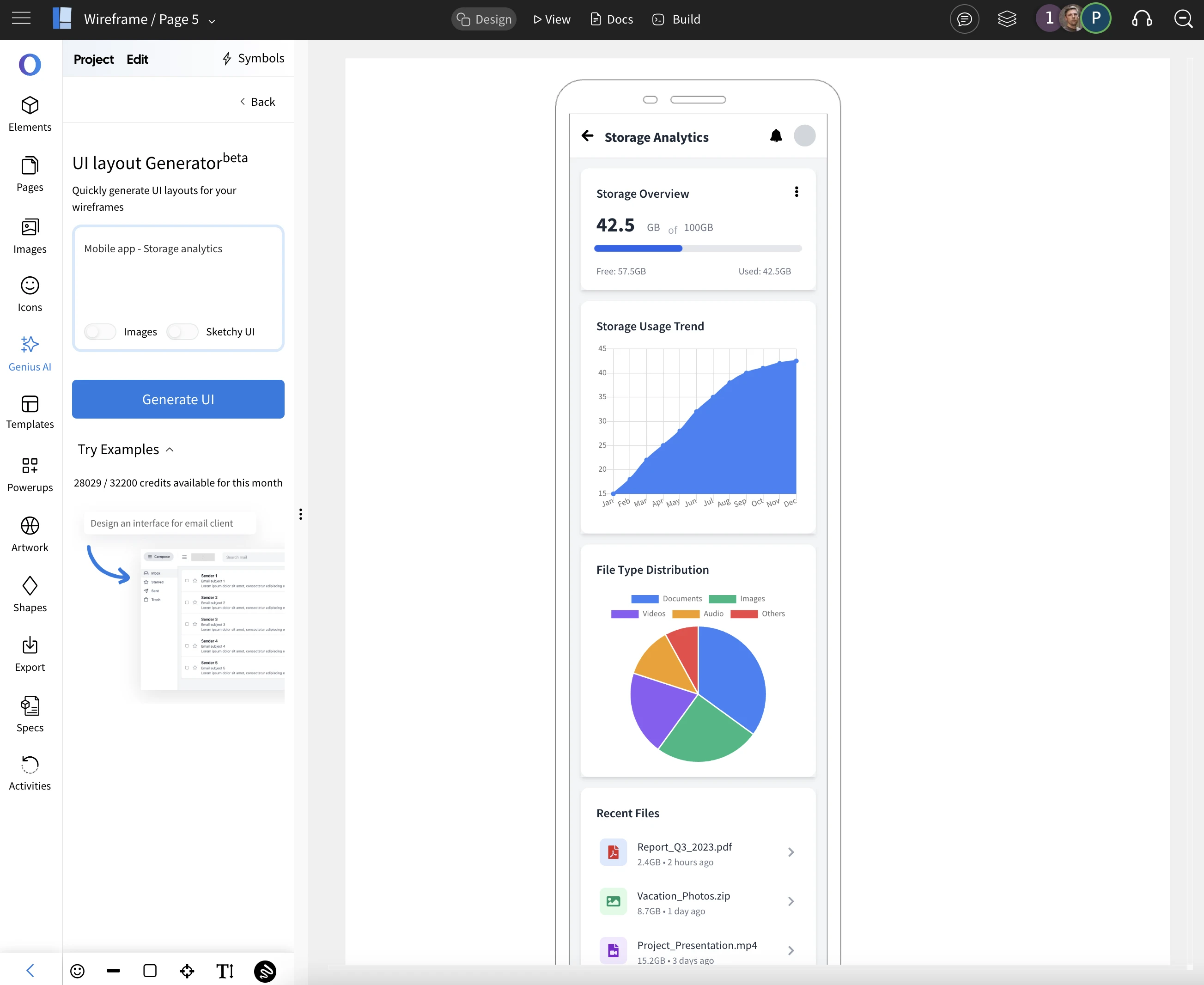
In this release, MockFlow AI now supports all built-in chart components—including Bar Chart, Line Chart, Area Chart, Pie Chart, Bubble, Scatter, and Radar. This means your AI-generated wireframes can instantly visualize a wide variety of data layouts. Coming soon, we’re also adding AI support for more native visualizations like Gauge and Treemap to make your dashboard wireframes even more powerful
Since AI is included in all plans, you can start exploring this feature right away. Simply generate wireframes with prompts like ‘Finance dashboard’, ‘CRM analytics’, or ‘Football club metrics’. You can also experiment by adding themes, modes, or specific visualizations you’d like to see in your design. Just bring your idea as a prompt and WireframePro will instantly turn it into a wireframe now even if it involves charts.
New: Visual prompting for generating code in Visual Studio
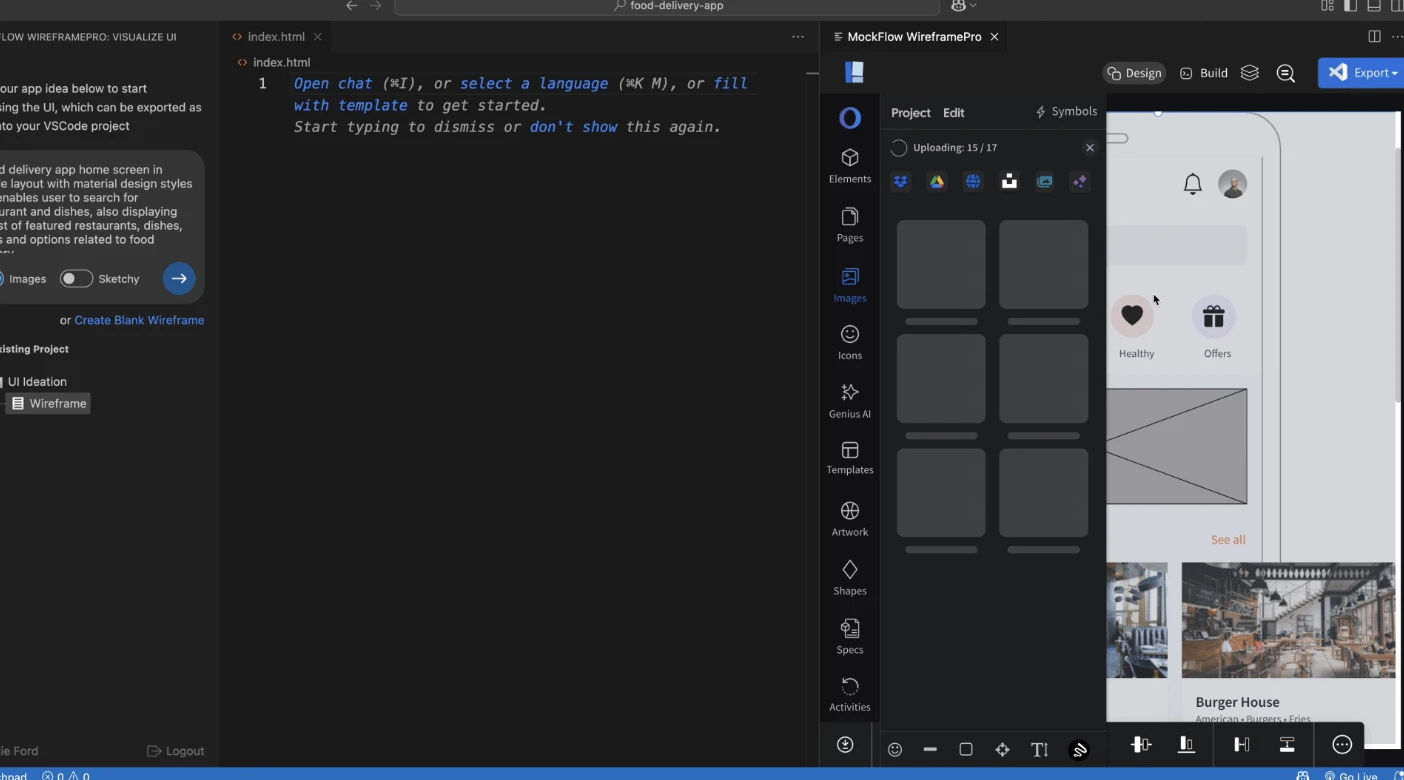
With the new MockFlow WireframePro extension for Visual Studio Code, you can instantly generate UI code through visual prompting. Simply draw your wireframes or leverage AI to bring your ideas to life, then convert them into production ready code in a click.
Bring ideas to life inside Visual Studio Code
MockFlow for Visual Studio Code lets you brainstorm and design UI ideas directly inside your favorite IDE. Use the built-in prompt box to have AI instantly generate your interface layout, or quickly sketch it yourself using the fastest visual UI design tool available.
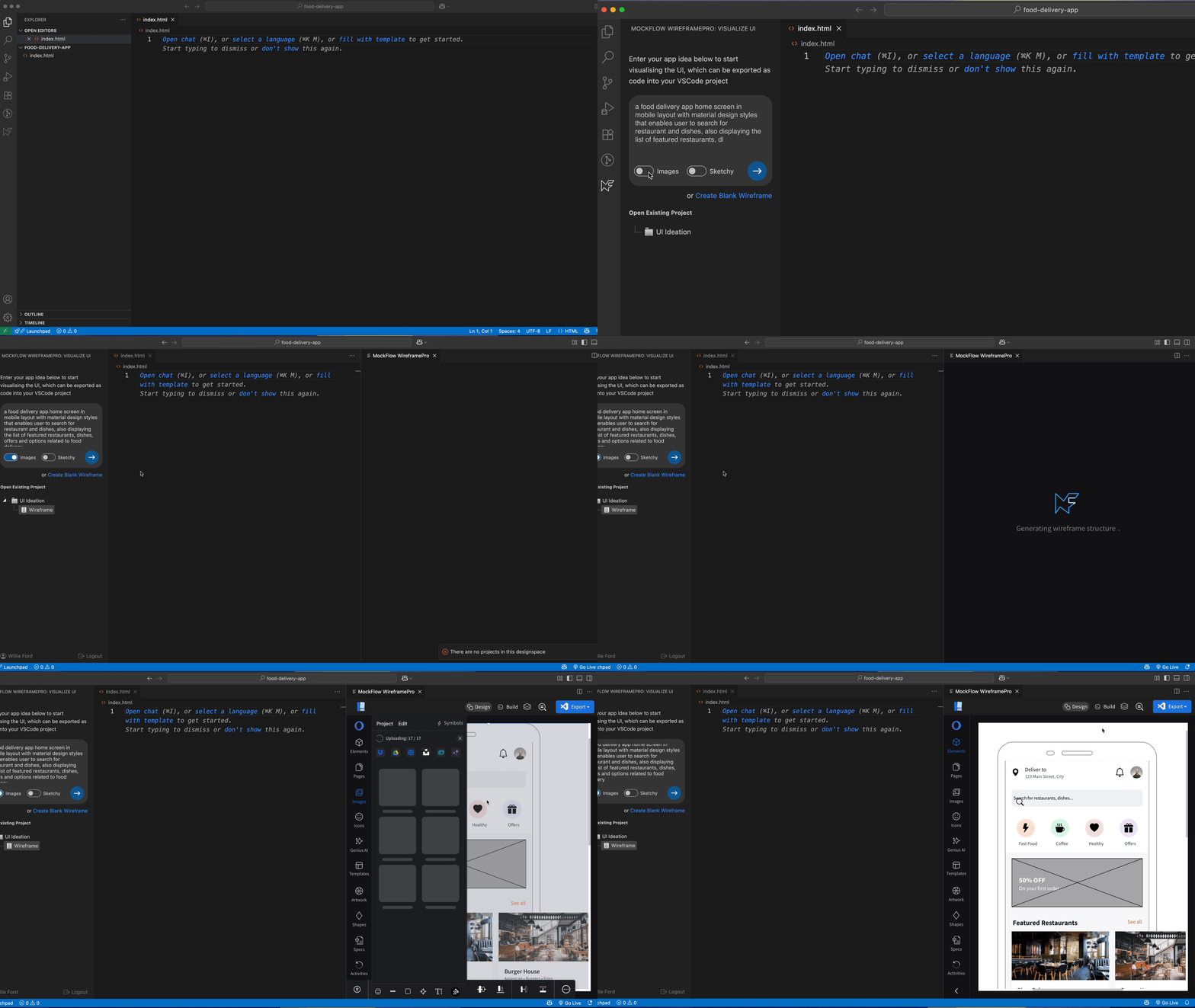
Tailored version for Visual Studio code
This extension integrates seamlessly with your Visual Studio Code IDE through a built-in MockFlow project sidebar, allowing you to create new wireframes or open existing ones. It also features a streamlined version of the WireframePro editor, ensuring a lighter, less cluttered editing experience inside Visual Studio Code.
Turn wireframes into actual code
With the integrated Build Mode in the MockFlow WireframePro extension, take your designs further by converting wireframes into clean, ready-to-use code and inserting it directly into your Visual Studio Code project files.
Build Mode lets you export any part of your wireframe whether it’s a single component, a section, or an entire page, into code. It supports all major frameworks in multiple versions, ensuring seamless integration with your project’s requirements.
Why brainstorming your UI is important
Wireframing is like sketching your ideas on a whiteboard, only better. It helps you brainstorm layouts, refine them quickly, and make changes before development begins. With rapid wireframing and code export, you can accelerate your workflow and save valuable development time.
Unlike other app builders, WireframePro extension only focuses on the UI that means it easily integrates with any new or existing Visual Studio projects and can be used as required.
The extension is available for Free in Visual Studio marketplace. Download and try now.
Introducing the Android 16 UI Kit for Wireframing – Now Available
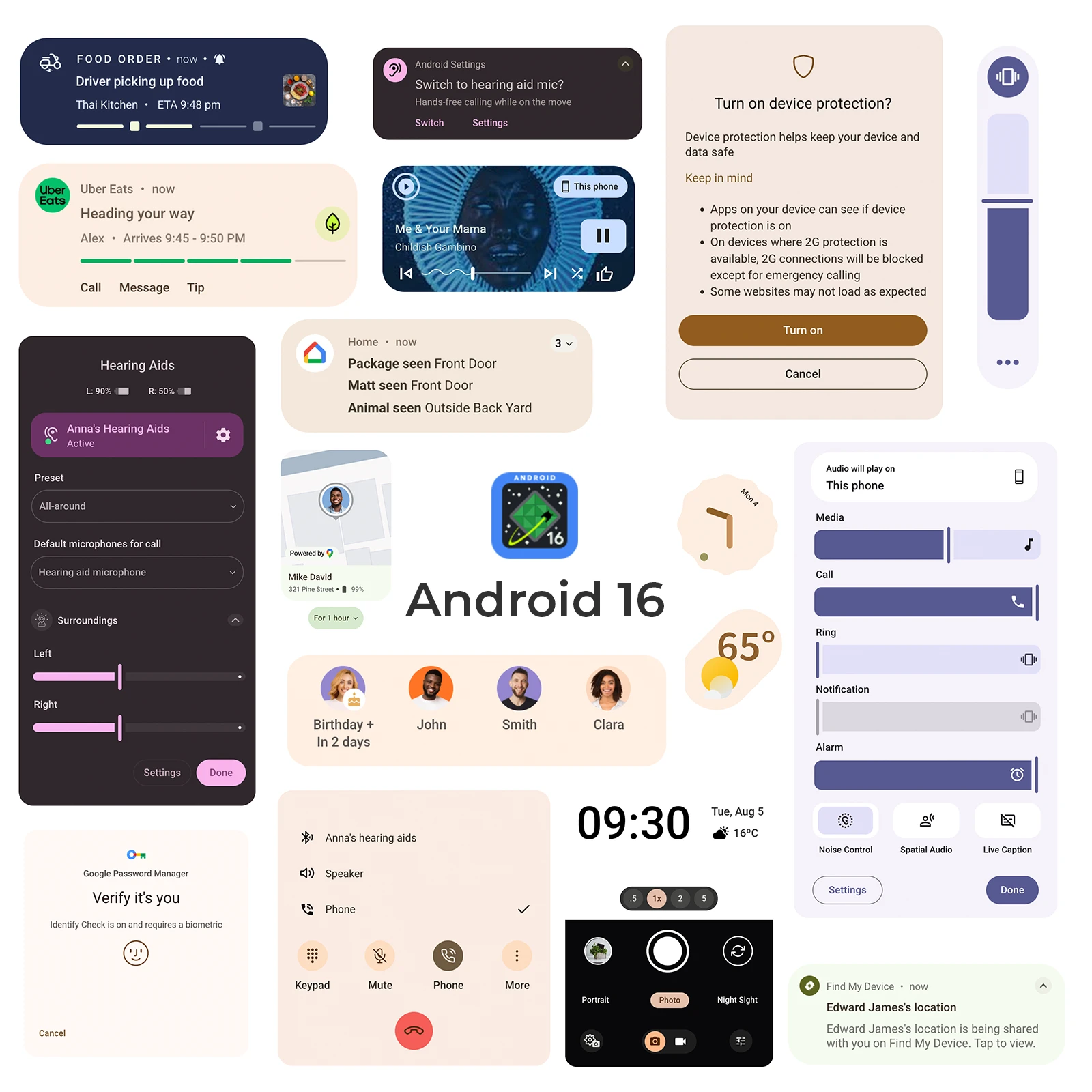
Now ideate apps for Android 16 at lightning speed with this new wireframing UI-kit. With over 120 components and templates, brainstorming apps for Android 16 look and feel is now a breeze.
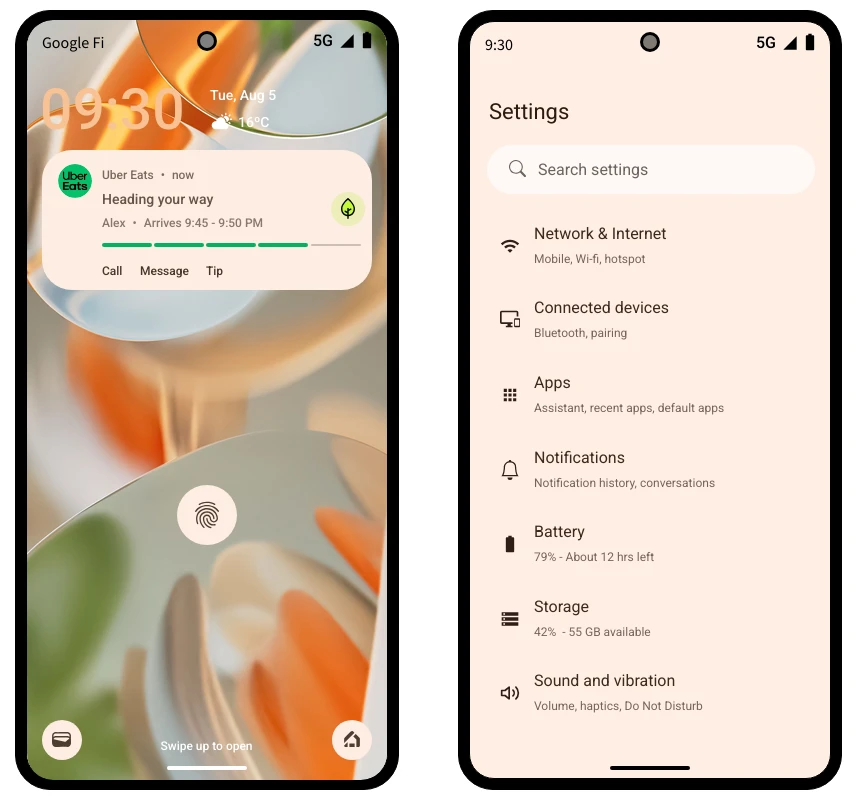
With the recent release of Android 16 and its shift to the new 'Material 3 Expressive' design standard, the Android user interface has undergone a significant visual and structural overhaul. To help you keep pace, our latest UI kit for WireframePro is tailored for wireframing apps that follow this new design language. It includes a wide range of components across multiple categories, making it easier to plan and prototype Android 16 apps with precision
- Frames
- Keypad
- Widgets
- Navigation
- Forms
- Buttons and Icons
- Tabs and sliders
- Templates
Before diving into advanced prototyping or development, it's essential to visualize your Android app ideas using the native design theme. With this Android 16 wireframe UI kit and MockFlow’s intuitive editor, you can quickly sketch app screens with no learning curve required. Effortlessly iterate your designs, explore different layouts, and communicate UI concepts more effectively, all while accelerating your development process.
Free UI kits for MacOS 26, iPadOS 26, and watchOS 26 now available in MockFlow
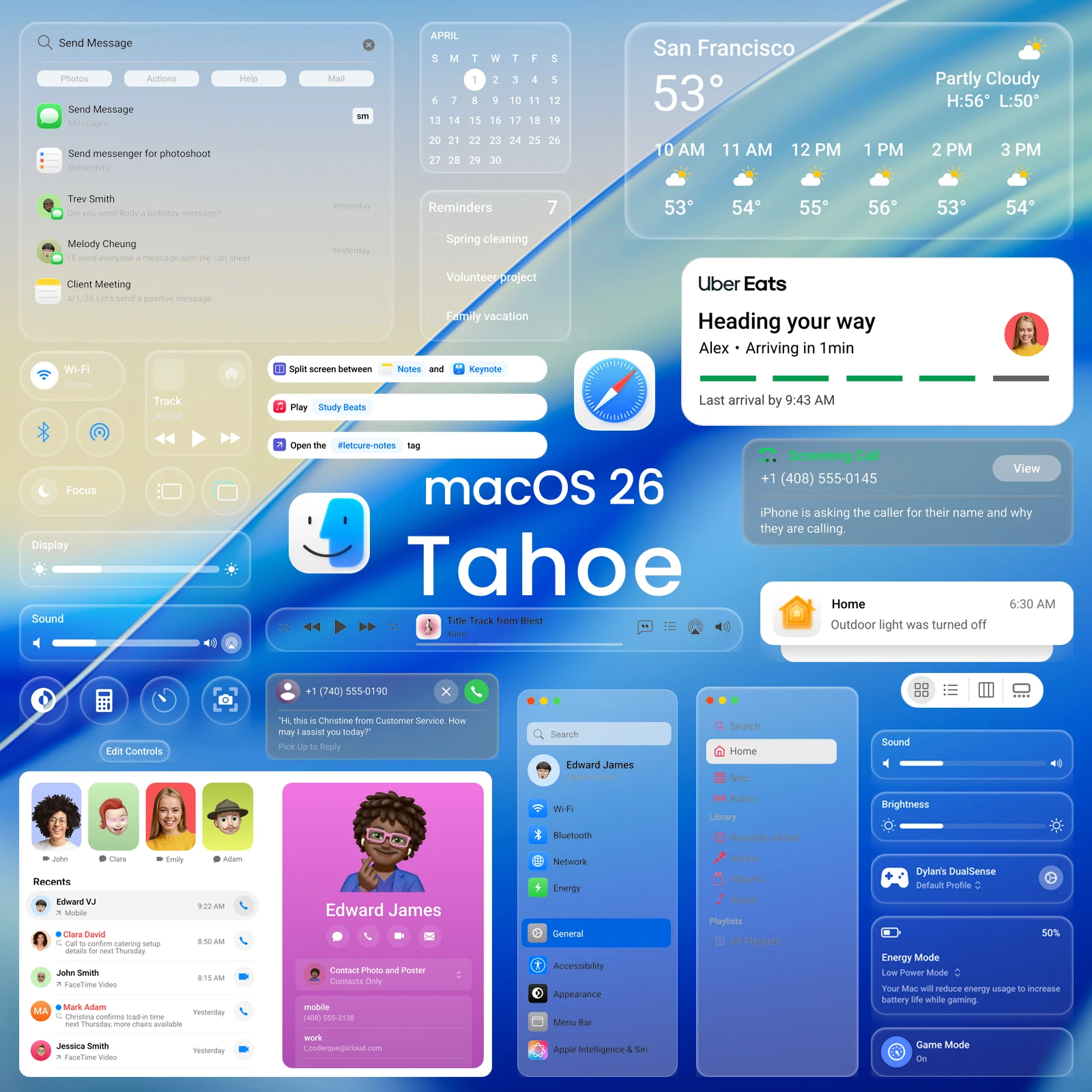
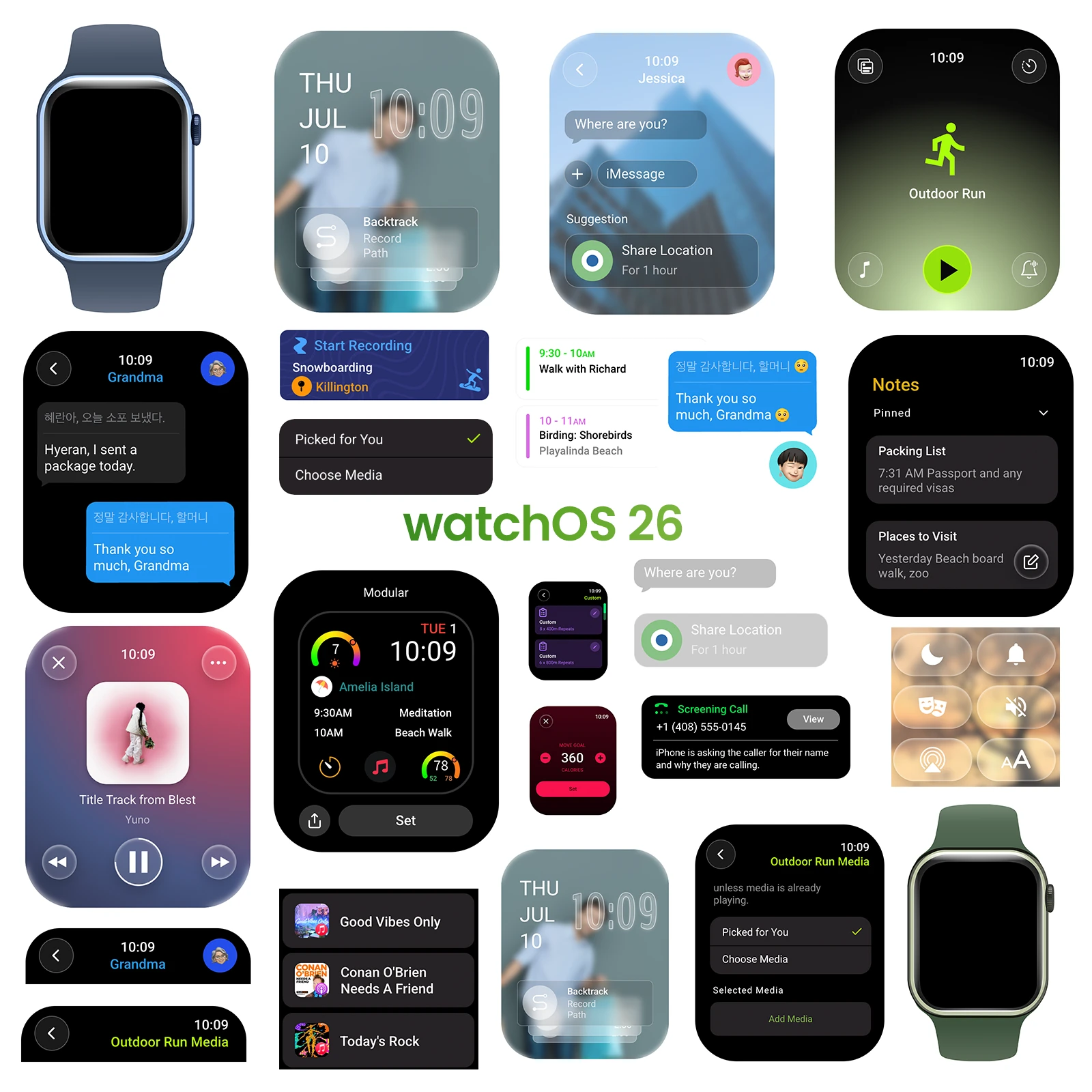
The latest UI kits are now available for MockFlow WireframePro users, featuring approximately 143 components for macOS 26, over 160 components for iPadOS 26, and a complete UI kit for the new watchOS 26.
Following our recent release of the iOS 26 UI kit designed for brainstorming iPhone apps with the new Liquid Glass theme, we’re excited to officially launch UI kits for the latest major versions of macOS, iPadOS, and watchOS.
Each UI kit also includes ready-made templates that showcase how the components come together in real app scenarios. What sets MockFlow apart from other UI design tools is its zero-learning curve and speed, it’s like sketching on a whiteboard, but with real, functional components. This makes it incredibly easy to iterate quickly and communicate UI ideas visually, while staying true to the original design theme—in this case, Liquid Glass.
WatchOS 26 wireframe component set preview
iPadOS 26 wireframe component set preview
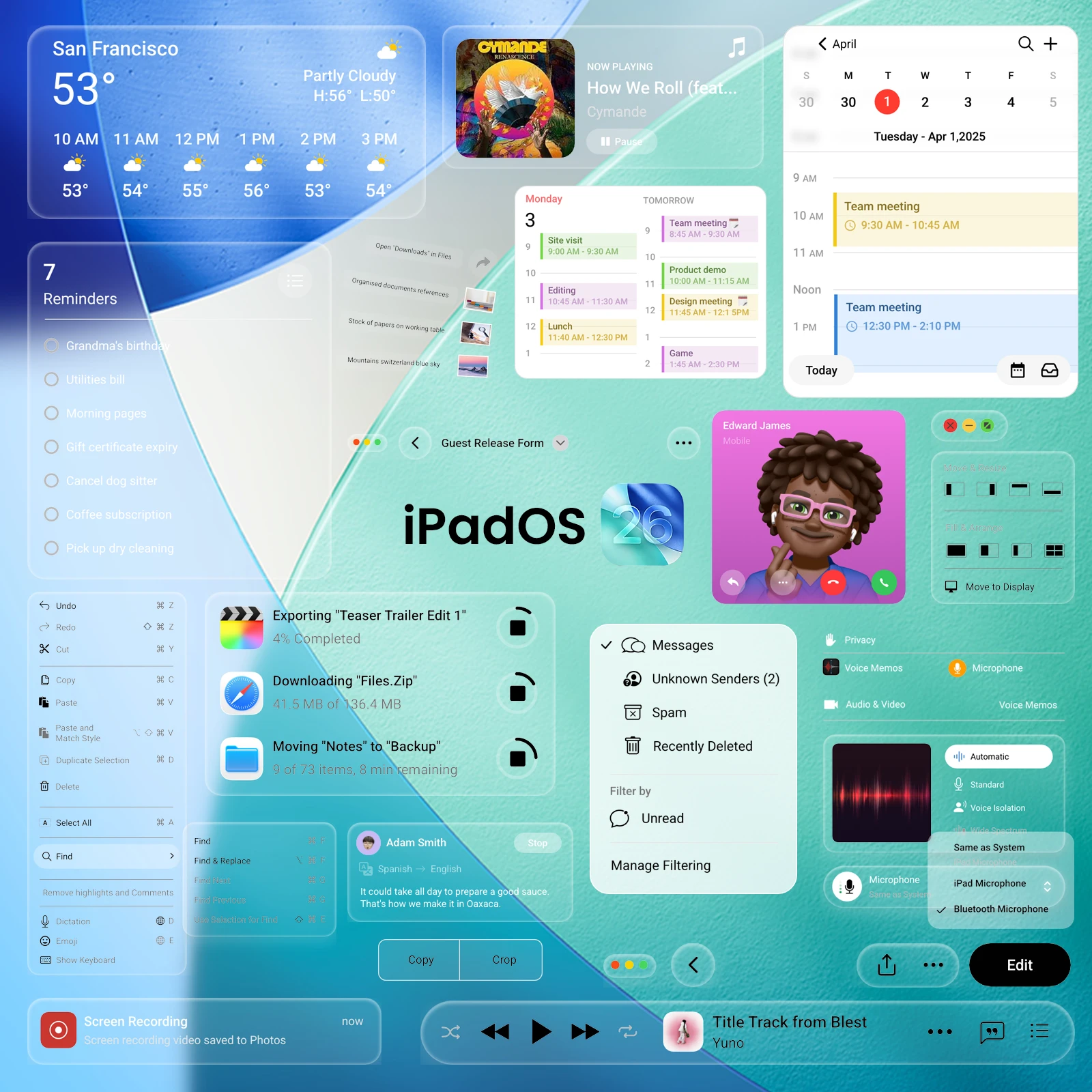
All UI packs are available for free in all MockFlow plans including basic.
Free wireframe kit for ideating iOS 26 liquid glass apps for iPhone

Brainstorm UI your future iPhone apps with the upcoming iOS 26 liquid glass concept. The UI kit comes with over 190 components in 15 categories along with wireframe templates.
Apple recently unveiled the beta of iOS 26 at WWDC, introducing a groundbreaking UI design language called Liquid Glass. Much like the early skeuomorphic design era and the later shift to flat UI, Liquid Glass marks a significant evolution in user interface design for iPhone apps.
This new aesthetic emphasizes translucency, fluid motion, and a glass-like visual texture that subtly blends UI elements into the background by allowing content to take center stage. It introduces a minimalistic approach to UI components, encouraging clarity, focus, and modern visual hierarchy.
Wireframe iOS 26 apps
Introducing the Complete Liquid Glass Wireframing Solution: 190+ Premium Components for iOS 26 Development

We're proud to announce the launch of our comprehensive wireframing component library, specifically designed for liquid glass application development. This powerful toolkit seamlessly integrates MockFlow's industry-leading wireframing platform with an extensive collection of 190+ pre-built liquid glass UI components, enabling designers and developers to accelerate their design workflow significantly.
Key Features & Benefits:
Our advanced wireframing solution empowers teams to rapidly prototype and visualize UI concepts, streamlining the design-to-development process. The intuitive interface facilitates quick iterations, allowing you to refine and finalize your design concepts before entering the development phase, ultimately reducing project timelines and costs.
Enhanced Development Workflow:
The integrated WireframePro build mode introduces seamless iOS SDK export functionality, providing developers with production-ready code that further accelerates development cycles. This feature bridges the gap between design and implementation, ensuring consistency and reducing manual coding requirements.
Availability & Access:
The complete Wireframe UI Kit for iOS 26 is now available at no cost to all users, making professional-grade wireframing tools accessible to teams of all sizes. Start designing your next liquid glass application today with our comprehensive component library.
Ready to transform your wireframing process? Access your free toolkit and begin creating exceptional user experiences.
Wireframe UI kit for Tailwind v4 released for websites and webapps

MockStore now offers 300+ wireframe components for Tailwind v4 website designs and over 200 components tailored for Tailwind v4 web app wireframing.
There’s no doubt that Tailwind has become the most popular frontend CSS framework for building modern websites and web apps. If you’re developing with Tailwind, fast design iteration is essential. The new Tailwind v4 UI kit offers dedicated UI kits for both websites and web apps, giving you a huge range of components across multiple categories. This allows you to jumpstart your UI ideas and focus on functionality, without getting bogged down by styling from scratch.
Why it matters ?
If you’re a non-technical user or a manager, MockFlow now makes it effortless to visualize your layout ideas in Tailwind with no coding or prior experience required. You can easily create and experiment with UI designs, making the process as simple and accessible as possible.
Convert to code
Pair this with our Build Mode in WireframePro, and you can instantly convert your wireframe designs into ready-to-use Tailwind frontend code with just a single click.

Wireframe Components available in Tailwind v4 for website UI kit:

Its free for all
As with all UI kits in MockFlow, this release reflects our commitment to supporting the community. The Tailwind v4 Wireframe UI Kits are available to all users including those on the free basic plan, so you can start designing right away without any barriers.
New in Build Mode: Select framework version during code export

Now easily export wireframes as code with build mode in the exact framework version you need—like Tailwind 4 , 3 or iOS SDK 17,16 , for seamless integration into your projects.
Why framework version matters?
Different versions of frameworks like Tailwind or iOS SDK or Android or Bootstrap can have changes in syntax, available components, and supported features. When you're working on an existing project, it's important that the generated code matches the exact version you're using otherwise, it can lead to broken styles, missing components, or compatibility issues.
By allowing you to choose the framework version in BuildMode during code export, WireframePro ensures that the generated code fits perfectly into your current setup. This eliminates the need for manual adjustments and helps you move faster from wireframe to production code with full confidence.
Expanded Framework with Version Support in Build mode
This release expands WireframePro’s capabilities with support for multiple versions of existing frameworks as well as entirely new ones. No matter which language or framework your project uses, you can now export wireframes into production-ready frontend code that fits right in. Just visualize your UI—WireframePro handles the rest.
Current Code Export Support in MockFlow
You can now convert your wireframe designs into frontend code across a wide range of frameworks and platform SDKs. Supported options include:
- Tailwind CSS: Versions 4, 3, 2
- Bootstrap: Versions 5, 4, 3, 2
- Material Design: Versions 3, 2
- Shadcn UI
- Bulma
- Ant Design
- React
- Vue.js
Platform SDKs:
- iOS: Versions 17, 16, 15
- iPadOS: Versions 17, 16, 15
- Android: Versions 34, 33, 32, 31
- Flutter: Versions 3, 2
- watchOS: Versions 10, 9, 8
- macOS: Versions 14, 13, 12
- Windows: Versions 11, 10
MockFlow continues to expand support to ensure your wireframes can be seamlessly translated into code that matches your tech stack.
New! Build mode - Convert wireframes into production code

