
8 Brainstorming Rules for Productive and Creative Idea Generation
Introduction
Brainstorming can be one of the most exciting parts of any project. It’s the chance to share ideas, get creative, and build something new. But let’s be honest, it doesn’t always go as planned.
Without a bit of structure, brainstorming sessions can easily go off track, with people dominating the conversation or, worse, no one speaking up at all. That’s where a few simple rules can make all the difference.
Having guidelines in place helps everyone feel comfortable contributing, ensures that ideas don’t get shut down too quickly, and gives the session the focus it needs to stay productive. Whether you’re brainstorming solo or with a team, these rules can unlock creativity and keep things moving forward.
In this guide, we’ll cover the essential brainstorming rules that will help you get the best out of every session, along with the tips to implement them effectively. Let’s dive in.
Why Are Brainstorming Rules Important?
Brainstorming rules are essential for driving creativity and fostering collaboration within teams. These guidelines provide structure while encouraging diverse, innovative ideas. By suspending judgment, prioritizing quantity over quality, and using visual aids, brainstorming sessions can yield better outcomes.
Implementing these rules helps maintain focus, ensures inclusivity, and sparks new perspectives. Whether in-person or remote collaboration, following effective brainstorming rules empowers teams to think freely, work together, and develop actionable ideas.
Here are some key reasons why brainstorming rules are vital for a productive session:
- Encourage Diverse Ideas: Clear rules foster an environment where all kinds of ideas are welcomed, no matter how unconventional they may seem at first. This diversity sparks creativity and helps generate fresh solutions.
- Prevent Groupthink: By encouraging independent thinking and withholding judgment, you reduce the risk of groupthink, where participants simply agree with the first idea that’s presented.
- Keep the Session Focused: With the right rules in place, the session stays on track, ensuring that time isn’t wasted and ideas are more likely to be relevant and actionable.
- Promote Equal Participation: Brainstorming guidelines create a safe space where everyone feels comfortable contributing, ensuring that no one is left out of the conversation.
- Enhance Collaboration: By building on each other's ideas, participants can collaboratively develop concepts that are far stronger than any one person could come up with alone.
Implementing these rules creates an environment where ideas can evolve and lead to better, more innovative outcomes. When people feel empowered to share freely and are given a clear direction, brainstorming can truly unlock the creativity within a team.
According to Gallup, only 15% of employees worldwide are engaged in their work, highlighting the need for environments where people feel motivated to participate and contribute fully.
8 Essential Brainstorming Rules for Effective Collaboration
To ensure that your brainstorming sessions are as productive and creative as possible, it's important to follow some key rules. These essential brainstorming rules help you structure the session, maintain focus, and encourage a diverse range of ideas.
Below are eight guidelines that can elevate your brainstorming process.
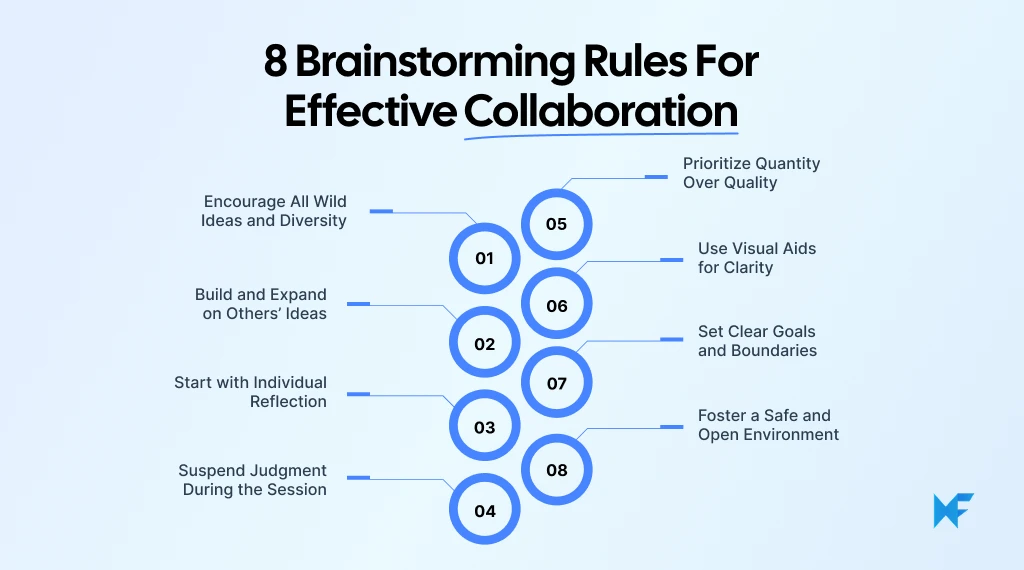
1. Encourage All Wild Ideas and Diversity
Encouraging wild ideas and diversity in brainstorming allows for creative breakthroughs. It promotes an open environment where participants feel comfortable sharing unconventional ideas. By embracing diverse perspectives, the group can generate a wider range of ideas, leading to innovative solutions.
To implement this, set clear expectations that all ideas are welcome, regardless of how unconventional they may seem. Encourage everyone to contribute and actively push for diverse input. This ensures the session remains open and creative.
You can start with a brainstorming template that encourages diverse input, like the Lotus Diagram template available on IdeaBoard, a visual brainstorming platform. This helps structure ideas in a way that allows for exploration of both wild and practical suggestions, encouraging everyone to add their own twist.

Customize this lotus diagram template on IdeaBoard
2. Build and Expand on Others’ Ideas
Building on others’ ideas creates a collaborative environment that refines and improves concepts. Instead of just presenting isolated thoughts, participants should listen and enhance the ideas of others. This leads to deeper exploration and stronger solutions.
This rule helps refine ideas, adding depth and perspective that may not have been possible from one person alone. It strengthens teamwork and increases idea quality.
To implement this, encourage participants to listen actively and suggest ways to expand on or enhance the ideas presented. You can use a starbursting template to expand on every presented idea by asking critical questions (who, what, when, where, why, and how) before moving forward with a solution.
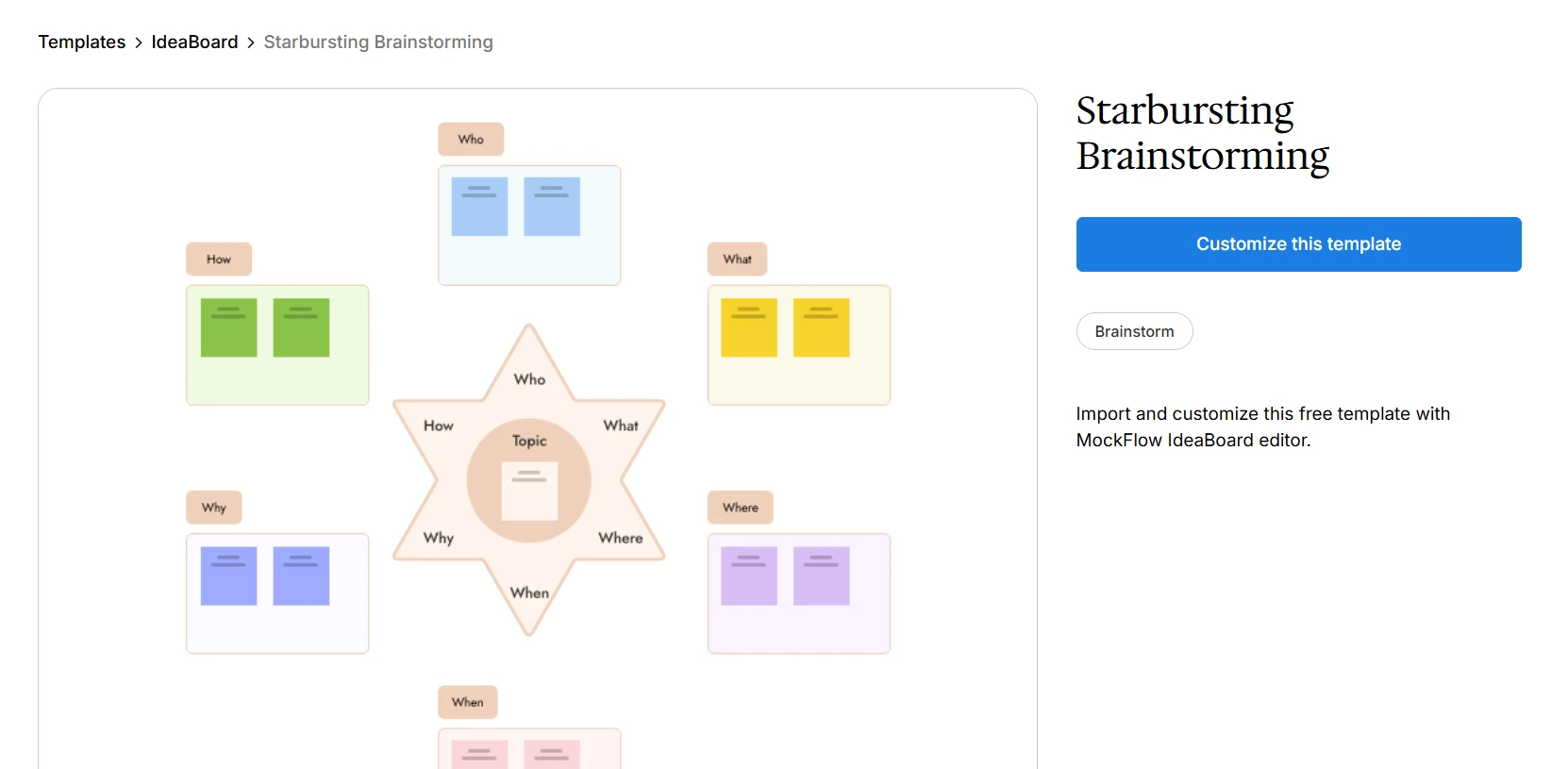
Customize this starbursting template on IdeaBoard
3. Start with Individual Reflection
Starting with individual reflection ensures that everyone contributes their own thoughts before group influence takes over. This prevents dominant voices from overshadowing quieter participants and encourages independent thinking.
To implement this, allocate time at the beginning of the session for each person to write down their ideas individually.
You can start with a Brainwriting template, which encourages participants to write down their thoughts individually before sharing them with the group. This method ensures that every participant’s voice is heard and encourages independent thinking.
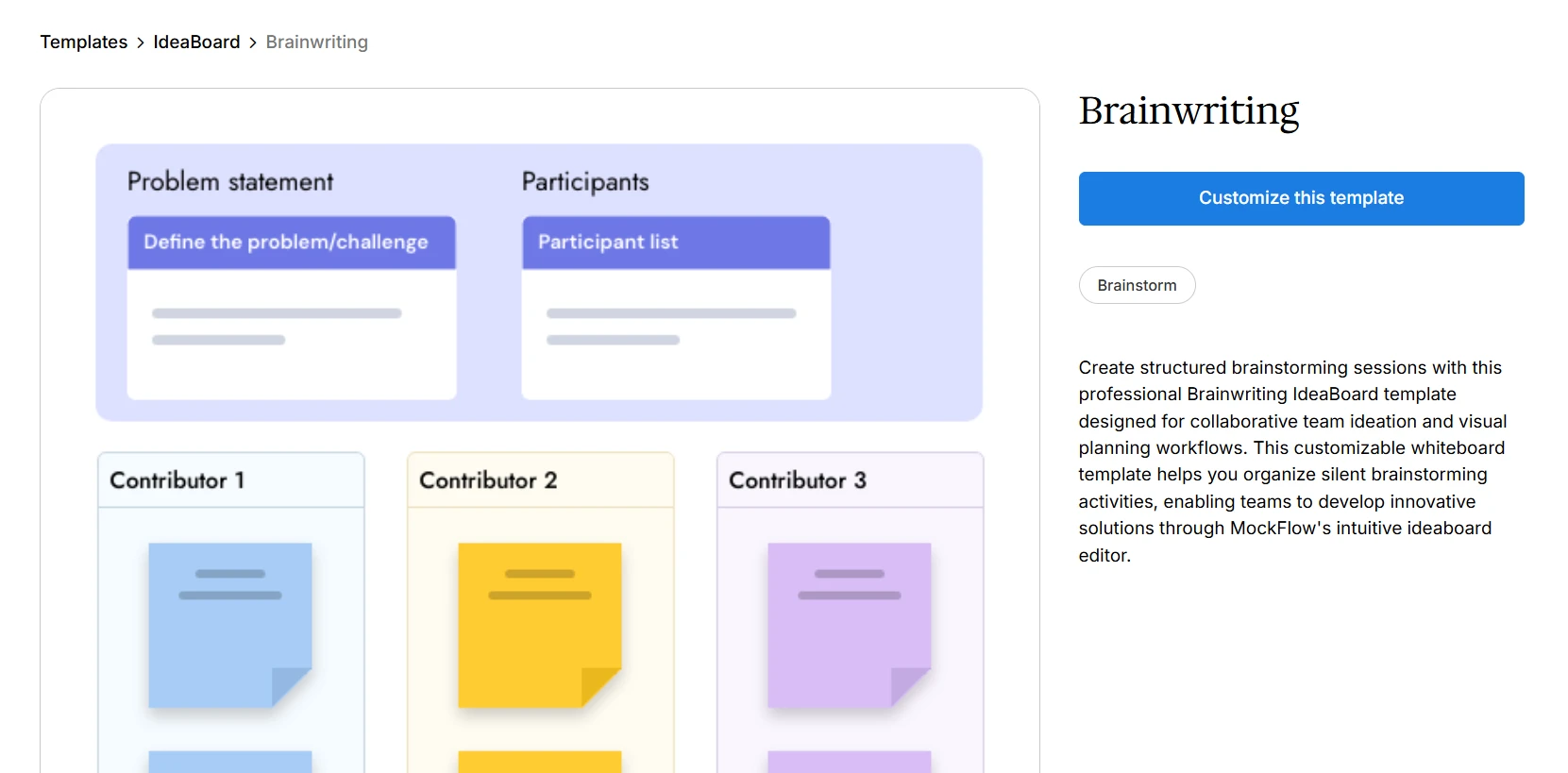
Customize this brainwriting template on IdeaBoard
4. Suspend Judgment During the Session
This rule is key to creating a free-flowing, open environment. It ensures that all ideas, no matter how unconventional, are given a chance to be heard and explored before being evaluated. If ideas are immediately critiqued, it discourages creativity and can prevent participants from sharing their true thoughts.
To implement this, set the expectation upfront that no idea will be dismissed during the session. Encourage participants to focus on idea generation first, leaving judgment and evaluation for later in the process. This creates a safe space for everyone to contribute freely.
5. Prioritize Quantity Over Quality
In brainstorming, the focus should be on generating a large number of ideas rather than perfecting individual ones. The goal is to get as many ideas on the table as possible, knowing that the best ideas will emerge from a large pool. This helps keep the session moving quickly and reduces pressure on participants.
To implement this rule, encourage everyone to contribute as many ideas as possible, even if they seem unrefined. Remind participants that the goal is to generate a wide variety of ideas, which can then be narrowed down and refined later. This prevents overthinking and allows for rapid idea generation.
6. Use Visual Aids for Clarity
Visual collaboration helps organize and clarify ideas during brainstorming. By mapping out thoughts using whiteboards, mind maps, or digital tools, participants can see connections between ideas more clearly and build upon them effectively. Visuals also keep everyone on the same page, especially in remote sessions.
To implement this, use tools like IdeaBoard, which offers infinite canvases for ideation, allowing ideas to evolve freely. With a library of brainstorming templates, like reverse brainstorming, teams can quickly structure their sessions and focus on generating ideas. The intuitive drag-and-drop interface ensures everyone can contribute, while real-time collaboration keeps the session dynamic and aligned, even in remote settings.
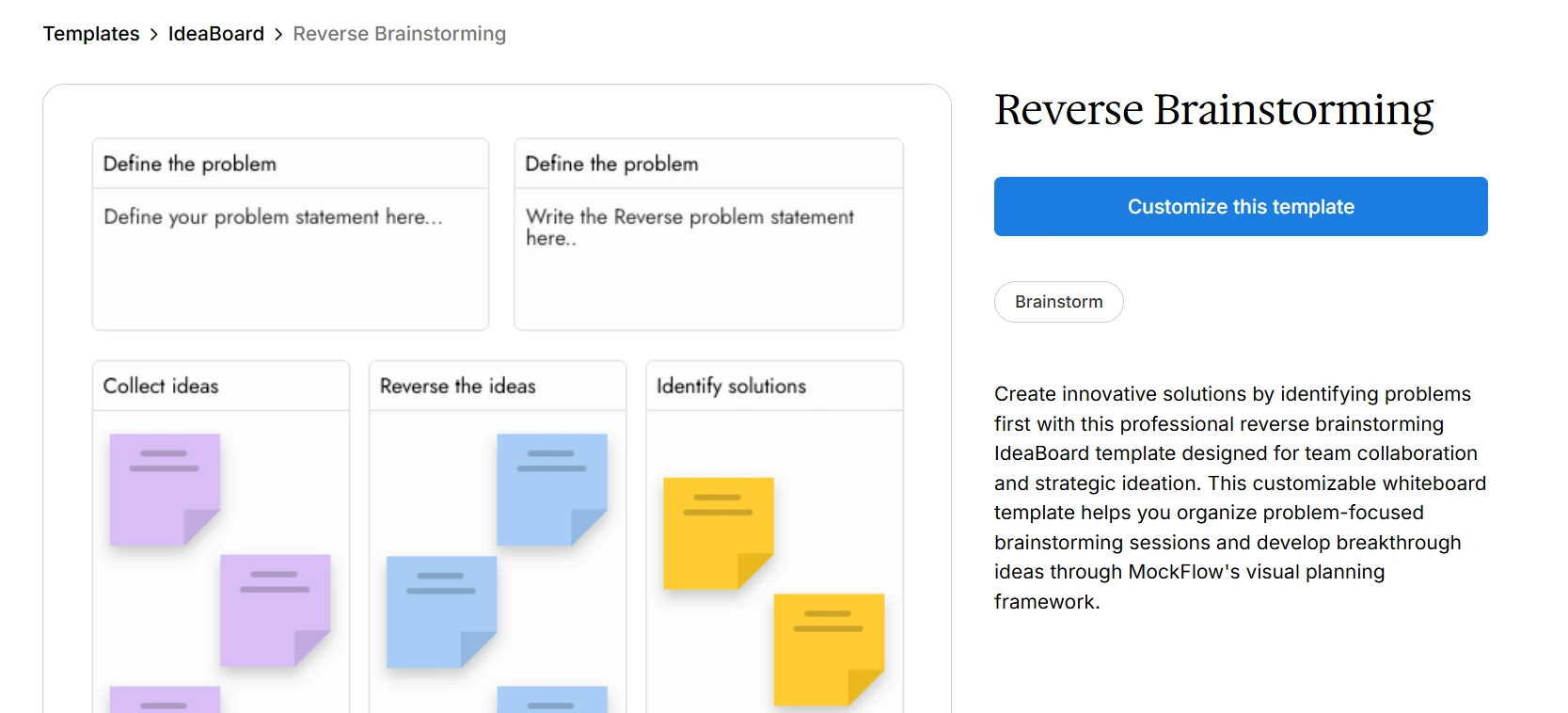
Customize this reverse brainstorming template on IdeaBoard
According to a report by DataIntelo, the global remote work collaboration tool market is projected to grow at a CAGR of 14% from 2021 to 2027, reflecting the increasing relevance and reliance on digital platforms for effective visual team collaboration.
7. Set Clear Goals and Boundaries
Setting clear goals and boundaries is crucial for keeping the brainstorming session focused. Without specific objectives, the session can easily drift into unrelated areas or become too broad to yield actionable ideas. Clear goals provide direction, ensuring that the brainstorming session stays on track and remains productive.
To implement this, define the purpose and scope of the session at the start. Clarify what you’re trying to solve or achieve and set boundaries around the scope of the discussion. This ensures that the team stays aligned and that time is spent generating ideas that are directly relevant.
8. Foster a Safe and Open Environment
Creating a safe and open environment is vital for effective brainstorming. Participants need to feel that their ideas will be respected and considered, without fear of judgment or ridicule. When people feel safe, they are more likely to contribute their best and most creative ideas, leading to more innovative outcomes.
To implement this, ensure that the environment, whether physical or virtual, is welcoming. Set the tone by encouraging openness and respect for all contributions. Remind participants that all ideas are welcome and that the goal is to generate as many diverse ideas as possible.
Harvard Business Review reports that virtual brainstorming has been shown to produce 40% more ideas than in-person sessions, emphasizing the power of structured, remote brainstorming environments.
Keeping the group to one conversation at a time is a simple habit that pays off. When side conversations or parallel threads start, ideas get lost and quieter participants get talked over, undermining the safe environment you've worked to build. To implement this, gently redirect the group back to a single shared thread whenever side conversations start branching off, so every idea stays visible to the whole group instead of getting buried in overlapping chatter.
Tips for Implementing Brainstorming Rules Effectively
To make sure your brainstorming sessions are productive, it’s important to integrate the key rules effectively. Here are some practical tips for doing so:
- Establish Ground Rules Upfront: At the start of each session, clearly explain the purpose of the brainstorming rules to participants. Setting expectations upfront ensures everyone understands the guidelines and the goals of the session.
- Create a Welcoming Space: Whether in a physical or virtual setting, make sure the environment encourages open communication. A welcoming space helps participants feel comfortable sharing their ideas without fear of judgment.
- Keep Sessions Structured: Timebox the session to stay focused while allowing enough room for ideas to flow. Having a clear timeframe keeps the group on track and ensures that every participant stays engaged throughout the process.
- Encourage Diverse Perspectives: To enrich the brainstorming process, include people from various backgrounds and roles. This diversity brings different viewpoints and experiences, which leads to more well-rounded ideas.
- Review and Refine Ideas Later: Once the session ends, take the time to review and prioritize the ideas. Avoid rushing this process; instead, give the ideas the attention they deserve and evaluate them thoughtfully.
- Leverage Brainstorming Tools: Using digital whiteboards or mind mapping tools like MockFlow IdeaBoard can help visually organize ideas in real time.
A study by Forbes found that 77% of executives say communication tools directly impact employee productivity, reinforcing the importance of using the right platforms for effective collaboration.
IdeaBoard allows for seamless real-time visual collaboration, helping teams track and expand ideas more effectively. Additionally, the AI toolbox inside its editor, along with an editable library of prompts, can generate custom brainstorming layouts instantly, making it easier to structure the session and enhance creativity.

By following these tips, you can ensure that your brainstorming sessions are more focused, inclusive, and productive.
Conclusion: Mastering Brainstorming for Better Ideas
Brainstorming is a vital tool for sparking creativity and generating actionable ideas. Having correct strategies and rules in place not only help refine your ideas but also create a more dynamic and collaborative environment where creativity can truly thrive.
By implementing these eight essential rules, you'll see a noticeable improvement in the quality of your team’s brainstorming sessions, ensuring that everyone’s voice is heard and every idea has the chance to evolve. This leads to better solutions, stronger teamwork, and a more successful creative process.
Ready to enhance your brainstorming sessions? Try IdeaBoard for free and see how its intuitive tools can help organize and expand your ideas in real-time. Start collaborating effectively and watch your team’s creativity soar.
FAQs about Brainstorming Rules
1. What are brainstorming rules?
Brainstorming rules provide a structured approach to idea generation, encouraging creativity, diversity, and collaboration. These rules promote an open, inclusive environment, ensure a focus on quantity over quality, and discourage judgment during sessions. By following these guidelines, teams can foster innovative ideas and productive discussions.
2. How do brainstorming rules improve idea generation?
Brainstorming rules enhance idea generation by creating a safe, inclusive space where participants feel encouraged to contribute bold and unconventional ideas. Rules like suspending judgment, prioritizing quantity, and using visual aids help facilitate a dynamic flow of ideas, ultimately leading to more creative and actionable solutions.
3. What are the most effective brainstorming rules for teams?
The most effective brainstorming rules include encouraging wild ideas, building on others’ suggestions, starting with individual reflection, suspending judgment, and prioritizing quantity over quality. These rules create a collaborative, inclusive environment that enhances the creativity and productivity of brainstorming sessions.
4. How can I implement brainstorming rules for creative sessions?
To implement brainstorming rules effectively, establish ground rules upfront, ensure a welcoming space for participants, keep the session structured, and encourage diverse perspectives. Visual tools and digital platforms like whiteboards or mind maps can also help organize ideas and keep the session on track.
5. What are the best practices for structuring a brainstorming session?
Best practices for structuring a brainstorming session include setting clear goals and boundaries, starting with individual reflection, and using visual aids to organize thoughts. Timeboxing the session helps maintain focus while allowing flexibility for idea generation. Encouraging all participants to contribute equally fosters collaboration and inclusivity.
6. How can brainstorming rules foster collaboration and innovation?
Brainstorming rules foster collaboration and innovation by encouraging diverse ideas, promoting open communication, and ensuring that every participant’s voice is heard. Rules like building on others’ ideas and prioritizing wild ideas can lead to unexpected solutions and spark fresh thinking, driving innovation within teams.

UX Design Tools by Stage: How to Choose the Right Type
TL;DR Choose UX design tools by workflow stage, not popularity. Use whiteboarding tools for ideas and mapping. Use wireframing...

Design Collaboration: How Teams Work Better From Idea to Handoff
Introduction Design rarely moves forward because one person has the perfect idea. It moves forward when the right people...

How to Run a Structured & Productive Brainstorming Session
Introduction Ever been in a brainstorming session that felt busy but not useful? No strong ideas stood out. No decisions felt...
