
Sprint Retrospective Ideas to Run Better Agile Meetings
Sprint retrospectives are often treated as a routine agile meeting at the end of a sprint. However, the value of a retrospective comes from the quality of the conversation it creates.
When teams use the right sprint retrospective ideas, these sessions become a space for honest reflection, shared learning, and practical improvement.
This guide explores different sprint retrospective ideas, activities, formats, and questions teams can use to make retrospective meetings more effective.
What makes a sprint retrospective effective?
An effective sprint retrospective gives teams a structured way to reflect on their work and decide what to improve next. It helps teams turn feedback into clear insights, action items, and changes they can apply in future sprints.
A 2026 systematic review analyzing 44 empirical studies identified retrospective meetings as one of the Agile practices that support team learning and adaptation, reflecting the importance of retrospectives for better team performance.
The most effective sprint retrospective ideas usually include:
- A safe environment for honest feedback: Team members should feel comfortable sharing concerns, challenges, and ideas without worrying about blame. Psychological safety helps teams discuss real issues instead of only surface-level observations.
- A focus on improvement, not fault-finding: Discussions should focus on processes, collaboration, and possible improvements rather than identifying who caused a problem.
- Balanced reflection on the sprint: A good retrospective covers different perspectives, including what went well, what didn't go well, and what can be improved.
- Specific and achievable action items: A retrospective should end with clear next steps. Action items work best when they are realistic, assigned ownership, and connected to a specific improvement goal.
- Follow-up on previous improvements: Reviewing earlier action items helps teams understand whether changes are working. It also keeps continuous improvement as an ongoing practice instead of a discussion that ends when the meeting is over.
Sprint retrospective ideas and activities teams can try
Here are six practical retrospective activities teams can use to structure better team discussions.
1. Start, Stop, Continue retrospective
The Start, Stop, Continue retrospective is one of the most popular agile retrospective formats because it gives teams a simple structure for reviewing their sprint. It works especially well for teams that want a straightforward way to begin improving their processes without adding unnecessary complexity.
The activity divides feedback into three areas:
- Start: Practices, behaviours, or processes the team should introduce in future sprints. These could include trying a new collaboration approach, improving documentation, or changing how tasks are managed.
- Stop: Habits, processes, or actions that create friction and slow the team down. This helps identify activities that no longer support the team’s goals.
- Continue: Things the team is already doing well and should maintain. These could include effective communication habits, successful workflows, or practices that support productivity.
During the retrospective meeting, team members can add ideas under each category and discuss patterns that emerge. Some useful retrospective questions for this format include:
- What should we start doing next sprint?
- What should we stop because it slows us down?
- What should we continue doing because it works well?
If you want to run this activity without setting up the framework from scratch, use IdeaBoard’s Start, Stop, Continue Retrospective template. The three sections are already laid out, so team members can move straight into adding their observations and comparing what should change or stay the same in the next sprint.
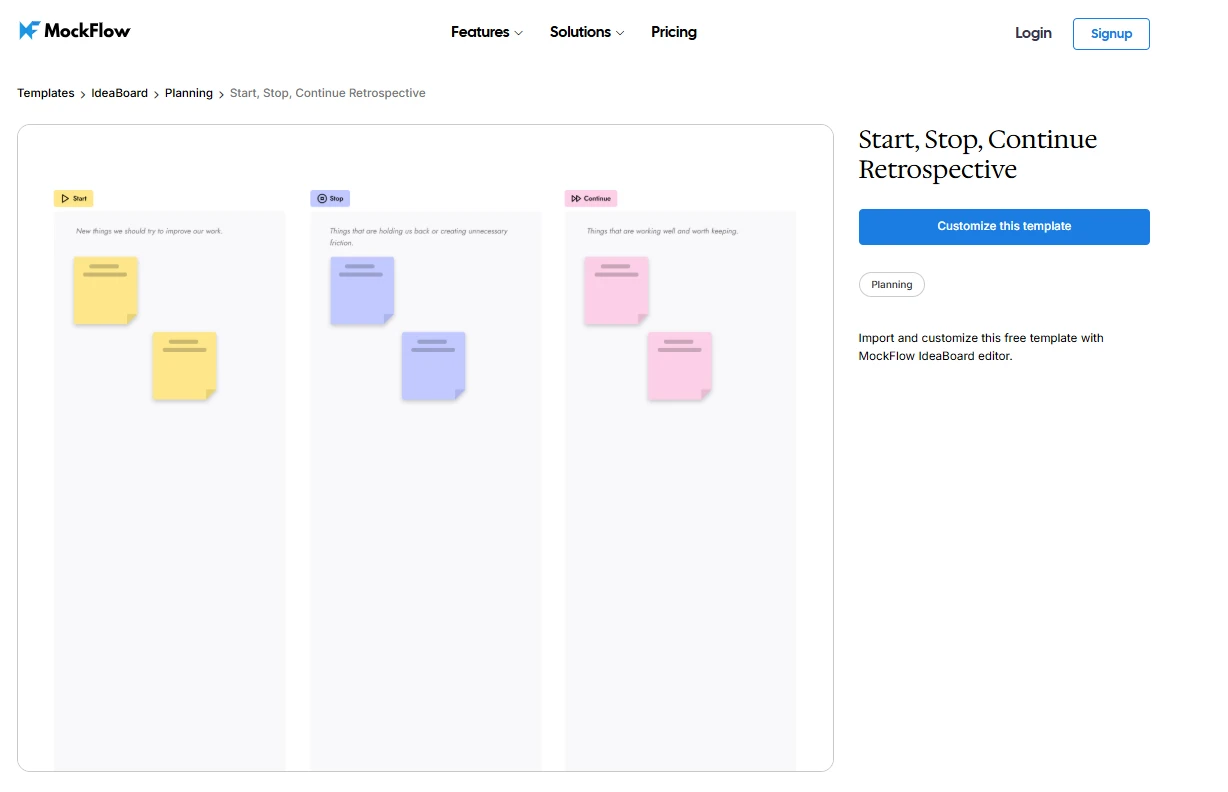
Customize this Start, Stop, Continue Retrospective template on IdeaBoard
2. What went well, what didn't go well, what can we improve?
This sprint reflection activity is a simple retrospective format that works well for teams at any experience level. It creates a clear structure for discussing the sprint by looking at achievements, challenges, and opportunities for growth.
The discussion focuses on three areas:
- What went well: Successful outcomes, helpful decisions, and practices that supported progress during the sprint.
- What didn't go well: Blockers, unexpected challenges, or areas where the process created difficulties.
- What can we improve: Changes teams can test in future sprints to make their workflow more effective.
Example retrospective questions for this activity include:
- What helped us achieve our sprint goals?
- Which challenges affected our progress?
- What is one change that could make our next sprint better?
This format helps teams create balanced conversations instead of focusing only on problems. By recognizing successes alongside challenges, teams get a clearer view of their sprint experience and can identify practical improvements that support continuous improvement.
3. Sailboat retrospective
The Sailboat retrospective is a visual metaphor-based activity that helps teams reflect on the factors moving their work forward and the challenges slowing them down. Instead of reviewing the sprint through a standard list of questions, the team uses a shared visual story to explore their journey.
It typically uses four key elements:
- Boat: This represents the team or project journey and gives the group a way to reflect on where they are and how they have progressed.
- Wind: It signifies the factors helping the team move forward. These could include supportive collaboration, effective processes, useful tools, or decisions that helped the sprint succeed.
- Anchors: These denote blockers or challenges slowing progress, such as unclear requirements, communication issues, technical limitations, or process problems.
- Destination: It represents the team’s sprint goals or desired outcomes and helps connect the discussion back to what the team is trying to achieve.
You can use a ready-made structure like IdeaBoard’s Sailboat Retrospective template to set up this activity quickly.
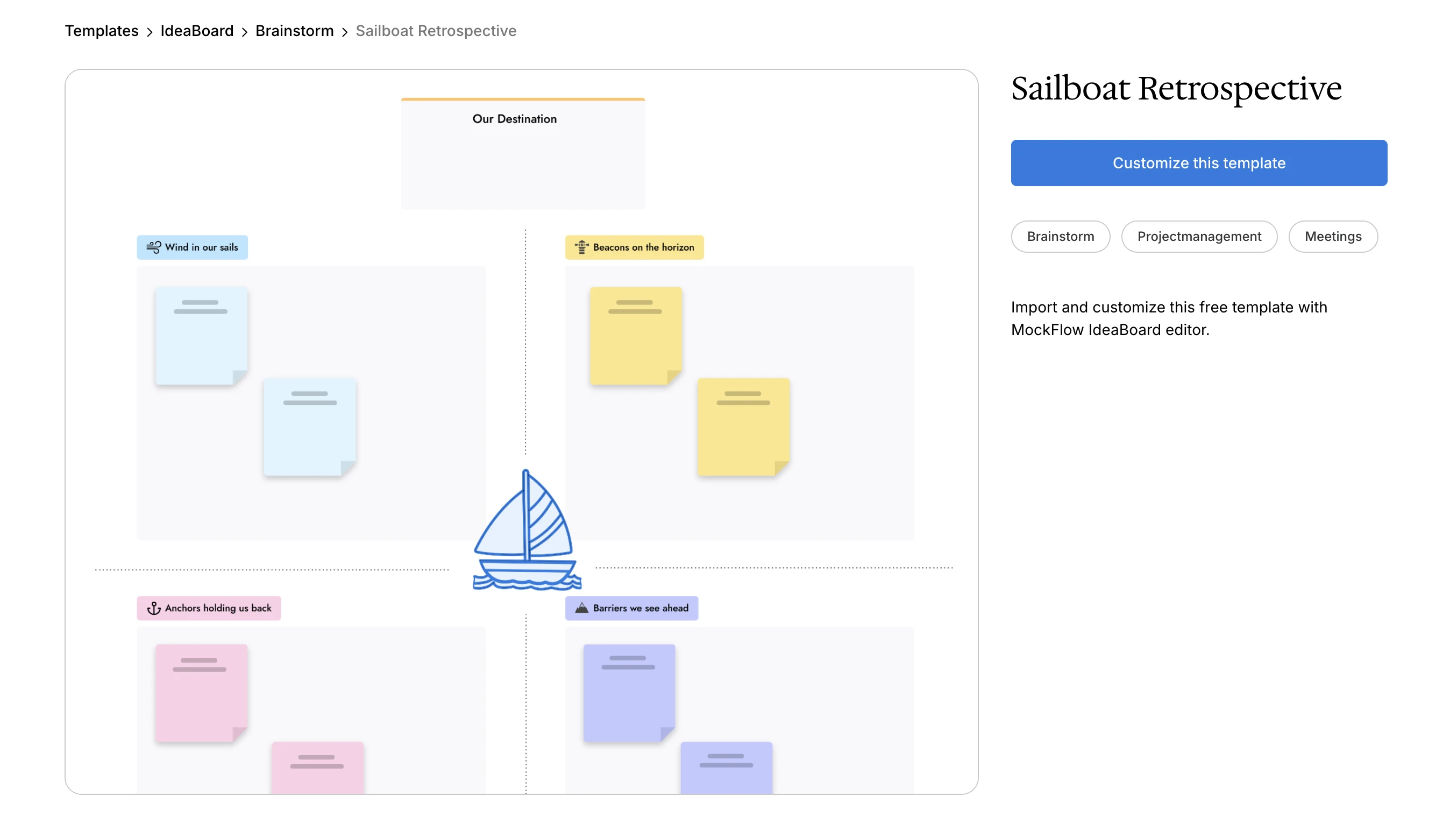
Test the Sailboat Retrospective template by IdeaBoard to map out your team’s journey
Teams use this retrospective activity to identify obstacles, recognize helpful factors, and discuss improvements that can make future sprints smoother. The visual nature of the format encourages participation because team members can point to specific parts of the journey instead of explaining challenges in abstract terms.
4. Mad, Sad, Glad retrospective
The Mad, Sad, Glad retrospective focuses on the emotions and experiences team members had during the sprint. It creates space for honest feedback by helping teams discuss moments that created positive experiences, frustration, or significant challenges.
This method divides feedback into three categories:
- Glad: Things that created positive experiences during the sprint. This could include successful collaboration, helpful decisions, or moments when the team worked especially well together.
- Sad: Things that caused disappointment, frustration, or difficulty. These might include missed expectations, unclear communication, or situations where the team needed more support.
- Mad: Things that created major issues or negatively affected the team’s progress. These could include repeated blockers, process problems, or challenges that require attention.
Teams can start with a Mad, Sad, Glad retrospective template to organize reactions into the three categories before the discussion begins. This gives everyone a clear space to contribute and makes it easier to compare experiences, spot recurring frustrations, and identify positive patterns worth carrying into the next sprint.
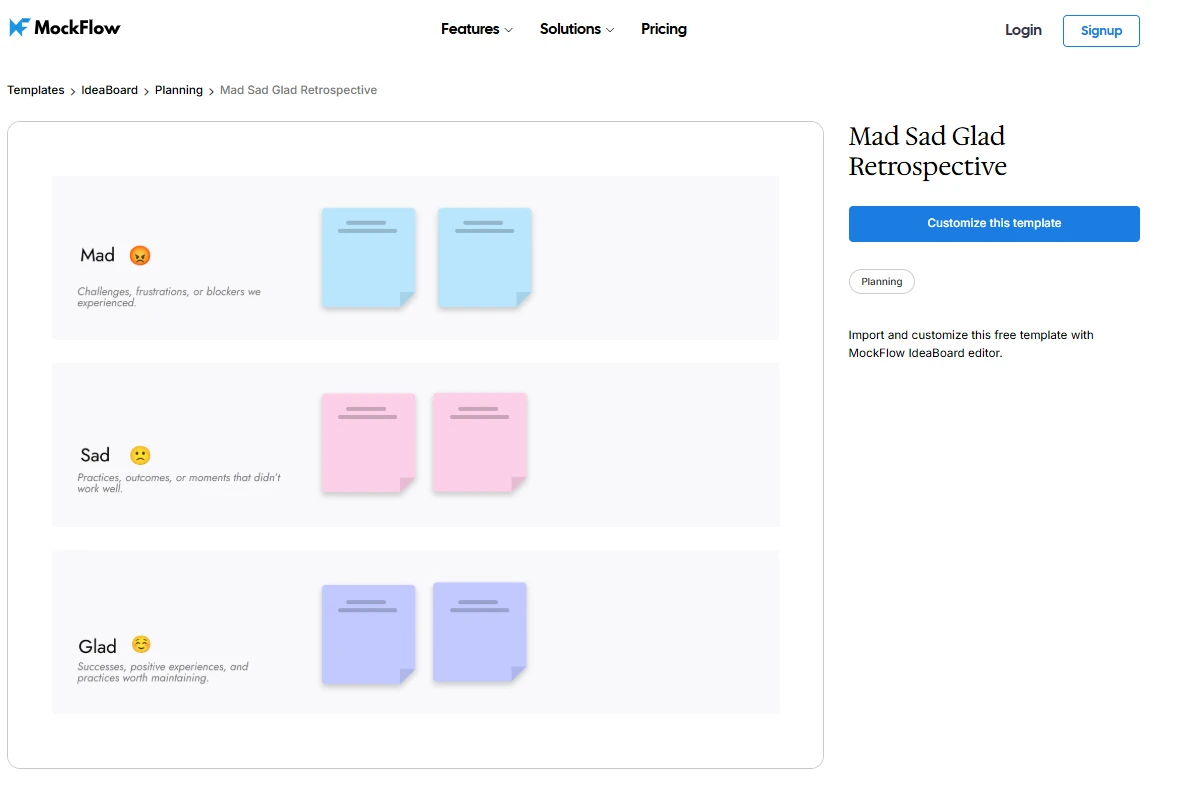
Customize this Mad, Sad, Glad retrospective template on IdeaBoard
5. 4Ls retrospective (Liked, Learned, Lacked, Longed For)
The 4Ls retrospective is a deeper reflection exercise that helps teams explore both positive experiences and areas where they need support. It encourages broader conversations by looking beyond what happened during the sprint and focusing on what the team gained, missed, and hopes to improve.
It is divided into four categories:
- Liked: Positive experiences, successful approaches, or moments the team appreciated during the sprint.
- Learned: New insights, discoveries, or lessons the team gained from the work completed.
- Lacked: Missing resources, information, support, or processes that affected the team’s ability to work effectively.
- Longed For: Things the team wished had been different, such as better collaboration, improved communication, or additional support.
Teams can use a ready-made structure like the 4Ls Retrospective template in IdeaBoard to organize reflections across these four categories.
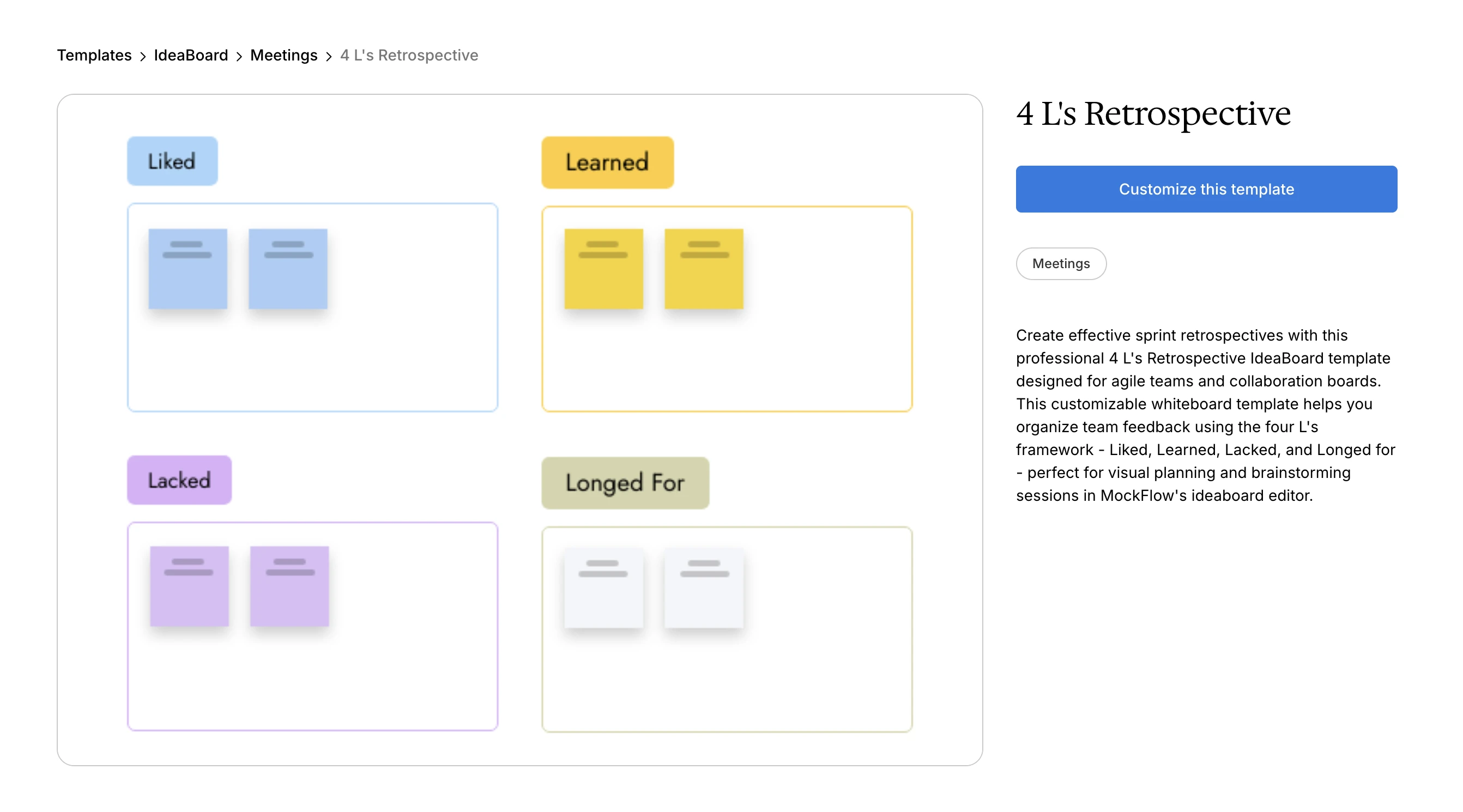
Try IdeaBoard’s 4 L’s Retrospective template for collaborative reflection
This retrospective method works well after major milestones, complex projects, or challenging sprints where teams need more time for thoughtful reflection. It helps teams capture valuable lessons while identifying improvements that can support future work.
6. Rose, Thorn, Bud retrospective
The Rose, Thorn, Bud retrospective is a simple format for balanced sprint reflection. It helps teams recognize positive moments, discuss challenges, and explore future possibilities in one structured conversation.
As per the name, the activity uses three categories:
- Rose: Positive moments, achievements, or successes from the sprint. These could include completed goals, effective teamwork, or practices that supported progress.
- Thorn: Problems, challenges, or obstacles that made the sprint more difficult. These insights help teams identify areas that may need attention.
- Bud: Future opportunities, ideas, or possibilities the team can explore. These often become starting points for improvements in upcoming sprints.
This retrospective activity works well for teams that want a quick but meaningful discussion. It provides enough structure to guide the conversation while leaving room for team members to share different perspectives and identify practical next steps.
Creative retrospective formats to make sprint meetings more engaging
Running the same retrospective format every sprint can make discussions feel predictable over time. Teams can make sprint meetings more engaging by experimenting with different retrospective formats based on their current goals, team energy, sprint challenges, and the level of participation needed. For example, some Agile practitioners suggest switching from standard formats to timeline-based or theme-based retrospectives to uncover different perspectives.
Game-based retrospective formats
Game-based retrospective formats help teams bring more energy into sprint meetings while keeping discussions focused on improvement. They use simple activities, prompts, and participation exercises to make reflection feel more interactive.
Teams can experiment with:
- Themed activities to help team members reflect from a fresh perspective.
- Voting exercises for important wins, blockers, or improvement areas before deciding what to discuss.
- Encouraging members to share key moments from the sprint and what they learned from them.
- Interactive prompts to guide conversations and uncover ideas that may not surface in a regular discussion.
IdeaBoard can support these sessions with interactive boards where teams can add responses, group feedback, and discuss ideas together. For example, teams can use a Round Robin Brainstorming board to collect input from every participant before moving into a deeper discussion.
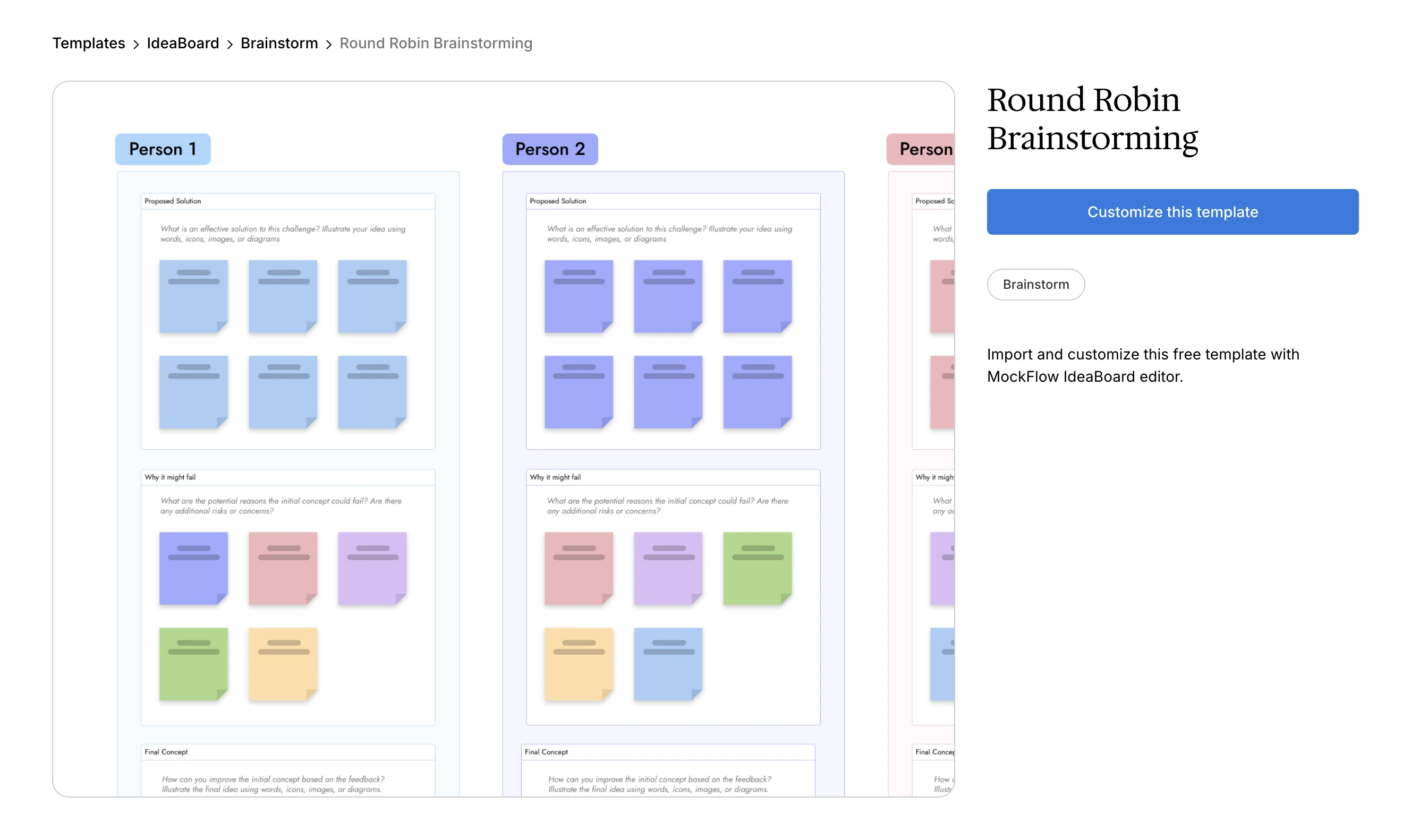
Click on the image to check out IdeaBoard’s Round Robin Brainstorming template
Question-driven retrospective formats
Question-driven retrospective formats use structured prompts to guide deeper team reflection. Instead of letting conversations move in different directions, these formats help teams focus on important areas such as what went well, what didn't go well, and what can be improved.
Teams can use retrospective questions to explore:
- Successes: What helped the team achieve its sprint goals?
- Challenges: What slowed progress or created friction?
- Improvement opportunities: What changes could make the next sprint better?
- Action items: What specific steps should the team take moving forward?
This format works well because good questions create better discussions. They help teams move beyond general feedback and uncover insights that can lead to practical improvements.
Visual retrospective formats
Visual retrospective formats help teams organize sprint feedback in a way that makes patterns easier to spot. Instead of reviewing scattered comments, teams can see connections between events, challenges, and improvement opportunities.
Common visual approaches include:
- Reviewing key moments from the sprint in sequence to understand what happened and when.
- Mapping the team’s progress as a journey to highlight successes, obstacles, and turning points.
- Metaphor-based formats like Sailboat or Speedboat retrospectives to represent progress, blockers, and goals.
- Collecting feedback using sticky notes, categories, and groups to identify common themes.
For example, an Affinity Diagram can help group sprint feedback into common themes and highlight areas that need attention. With customizable layouts, sticky notes, and a collaborative canvas, teams can organize feedback visually and adjust the board based on their retrospective format.
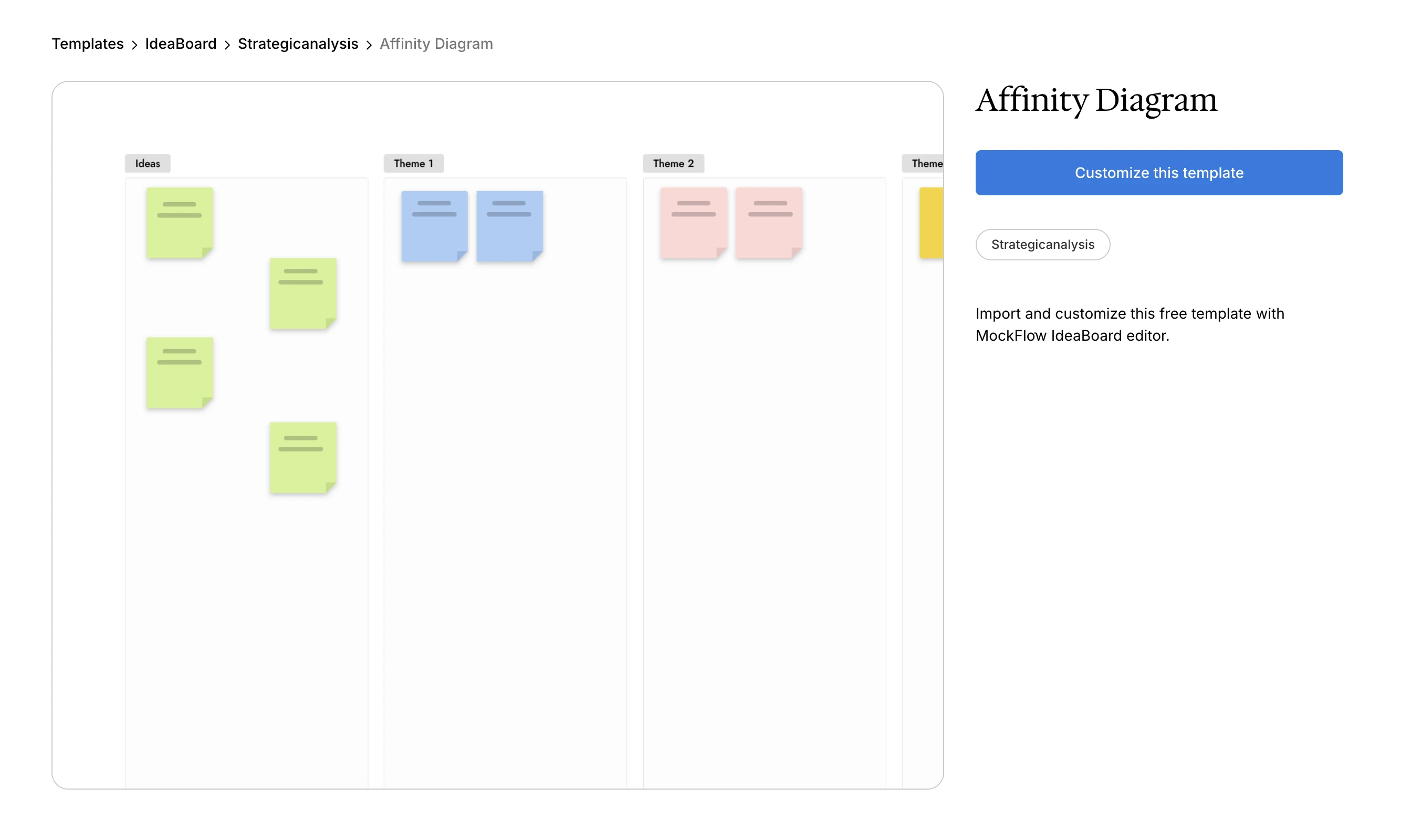
Try the Affinity Diagram template by IdeaBoard for visual formats
Remote retrospective formats
Remote and hybrid teams need retrospective formats that make participation easy across different locations. Without a shared structure, remote retrospective meetings can make it harder to collect feedback evenly or keep discussions focused.
In fact, Scrum practitioners frequently highlight the need for digital boards that support templates, collaboration, and tracking improvements after the meeting.
A 2024 review of virtual teams found that digital collaboration can improve team performance through better access to information and resources, while also creating challenges related to communication, relationships, and technology use.
To solve those, teams can use remote-friendly approaches such as:
- Asynchronous feedback collection to share thoughts before the meeting so everyone has time to reflect.
- Shared digital retrospective boards where teams can add ideas using comments, voice notes, and videos to review feedback together.
- Live activities where members contribute, discuss ideas, and collaborate in real time.
Digital retrospective formats help distributed teams create a similar experience to in-person meetings by giving everyone visibility into the discussion. They also make it easier to document feedback and track improvement ideas over time.
Also read → 10 Best Remote Collaboration Tools for Hybrid and Remote Teams in 2026
15+ retrospective questions to encourage better team discussions
Good retrospective questions help teams move beyond simple feedback and uncover insights they can act on. The right prompts encourage honest conversations, highlight patterns, and make it easier to identify meaningful action items for future sprints.
Questions about successes
- What went well during this sprint?
- What helped us achieve our goals?
- Which process or practice should we continue?
- What was one moment where the team worked especially well together?
Questions about challenges
- What didn't go well?
- What slowed our progress?
- What blockers affected the team?
- Were there any recurring issues we should address?
Questions about collaboration
- How well did we communicate during the sprint?
- Where can we improve teamwork?
- Did everyone have enough support to complete their work?
- What could help us collaborate more effectively?
Questions about improvement
- What is one thing we should change next sprint?
- What action item would create the biggest impact?
- How can we make our next sprint smoother?
- What is one small improvement we can test right away?
How to choose the right retrospective technique for your team?
To choose the best retrospective technique, assess what your team needs from the discussion. A format that works well for a new team may not be the right choice for an experienced team dealing with a complex sprint challenge.
Consider these factors while making your choice:
- Team experience:
- New teams may prefer simple formats like Start, Stop, Continue to build a consistent reflection habit.
- Experienced teams may benefit from creative retrospective activities that encourage deeper discussions and new perspectives.
- Sprint situation:
- Difficult sprint: Use reflection-focused formats that help uncover blockers, challenges, and areas that need attention.
- Successful sprint: Use improvement-focused formats to understand what worked and identify ways to keep improving.
- Desired outcome:
- Identify blockers that are affecting progress.
- Improve communication and collaboration within the team.
- Generate clear action items for future sprints.
You can also give multiple retrospective methods a try over time; it helps teams keep meetings fresh and discover which formats create the most valuable conversations. The aim should remain to choose activities that help the team reflect, learn, and improve together.
Also read → Virtual Team Building Games: 14 Ideas for Remote & Hybrid Teams
Improve Your Next Sprint Retrospective
MockFlow’s IdeaBoard can help teams run more collaborative retrospective sessions by providing a shared visual workspace for collecting feedback, organizing ideas, and discussing improvement opportunities.
Teams can use customizable boards, sticky notes, and collaborative features to structure their retrospective discussions and keep everyone aligned.
If you're ready to make your sprint retrospectives more engaging and collaborative, try IdeaBoard with a free demo and create a workspace that helps your team reflect, learn, and improve together.
FAQs
1. What are some good sprint retrospective ideas?
Good sprint retrospective ideas include Start, Stop, Continue, Sailboat, Mad Sad Glad, 4Ls, and Rose Thorn Bud formats. These activities help teams reflect on successes, challenges, and improvement opportunities while creating more engaging retrospective meetings.
2. How do you make a sprint retrospective more fun?
Teams can make sprint retrospectives more engaging by using creative formats, themed activities, visual boards, voting exercises, and interactive prompts. These approaches encourage participation, make discussions less repetitive, and help teams uncover more meaningful feedback.
3. What are the best retrospective techniques for agile teams?
The best retrospective techniques depend on the team’s goals and experience level. Popular agile retrospective methods include Start, Stop, Continue, Sailboat, 4Ls, and Mad Sad Glad. Each format helps teams explore feedback from a different perspective.
4. What questions should be asked in a sprint retrospective?
Useful sprint retrospective questions include: What went well during this sprint? What didn’t go well? What slowed our progress? What should we continue doing? What is one improvement we can make in the next sprint?
5. How often should teams conduct sprint retrospectives?
Agile teams typically conduct sprint retrospectives at the end of every sprint. Regular sessions help teams review their processes, discuss team feedback, track action items, and continuously improve how they collaborate and deliver work.
6. What is the difference between a sprint retrospective and a Scrum retrospective?
A sprint retrospective and Scrum retrospective generally refer to the same practice within Scrum. Both focus on reviewing the completed sprint, discussing what worked and what did not, and identifying improvements the team can apply in future sprints.

6 Best AI Storyboard Generators for 2026: Compare Features & Pricing
Introduction When the script is ready, but turning it into scenes, frames, camera directions, and visual flow takes time, teams...

18 Design Thinking Activities for Every Stage of Your Workshop
Design thinking exercises can help teams turn user insights into ideas they can explore and test. Teams often have plenty of...

8 Best Mural Alternatives for Whiteboarding and Remote Teams
Introduction: Why Look for Mural Alternatives? Teams rely on digital whiteboards to fuel creativity and keep workshops moving...
