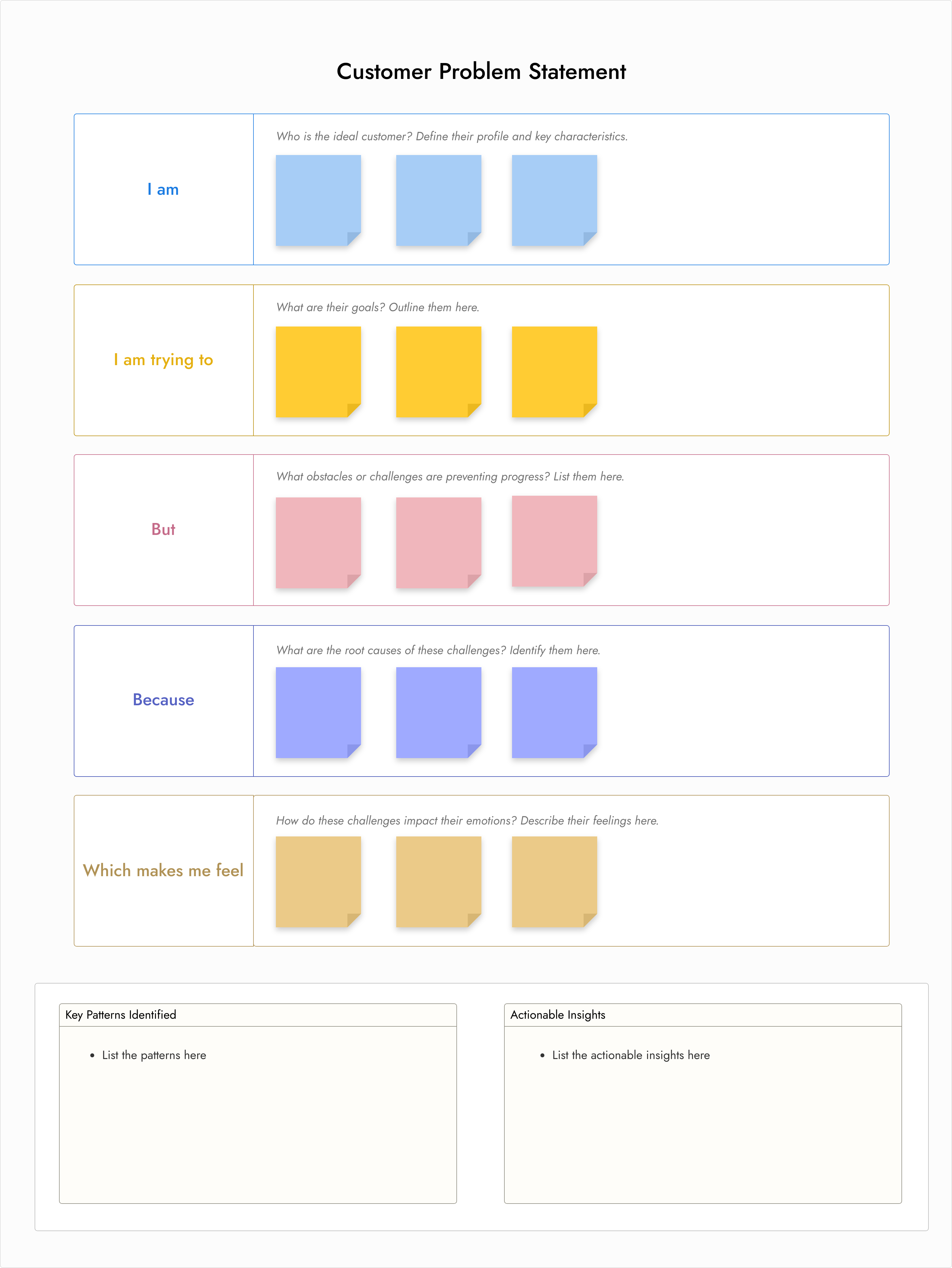
Understanding your customers starts with empathy—knowing who they are, what they’re trying to achieve, and what’s getting in their way. The Customer Problem Statement template helps you uncover this critical information by guiding you through a structured, human-centered thinking process.
Whether you're building a product, designing a user journey, or refining your messaging, this template will help you clearly articulate customer pain points and convert them into actionable insights.
What is a Customer Problem Statement?
A customer problem statement defines the gap between what your ideal customer is trying to achieve and what’s preventing them from succeeding. It considers both rational challenges and emotional reactions, helping teams build solutions that are both effective and empathetic.
This template is built around the “I am, I am trying to, but, because, which makes me feel” structure to reflect the customer’s voice.
Who Should Use This Template?
This template is ideal for:
- Product Managers – To align feature development with real customer pain points
- UX Designers & Researchers – To uncover user frustrations and improve experiences
- Marketing Teams – To write resonant copy and craft compelling value propositions
- Startup Founders – To validate problem-solution fit early on
- Customer Success Teams – To understand pain points and improve retention
How to Use the Customer Problem Statement Template
We’ve organized the template into five guided sections, plus a summary area to synthesize insights. Here’s how to use it effectively:
Step 1: I am (Customer Profile)
Start by describing who your customer is. What’s their role, job title, background, or context? Define their characteristics as if you're stepping into their shoes.
📌 Example: I am a small business owner managing everything from operations to marketing.
Step 2: I am trying to (Goals)
Define what your customer is trying to achieve. What are their main objectives or desired outcomes?
📌 Example: I’m trying to grow my online presence and attract more customers without hiring a full-time marketer.
Step 3: But (Challenges & Obstacles)
Identify the frustrations or barriers getting in the way of progress. These could be technical, resource-based, or process-related.
📌 Example: But I don’t have the time or expertise to manage social media and SEO consistently.
Step 4: Because (Root Causes)
Dig deeper into the why. What are the underlying reasons behind the obstacles? This helps teams address the true cause rather than just surface-level symptoms.
📌 Example: Because I lack proper tools, guidance, and my budget is too tight to hire help.
Step 5: Which makes me feel (Emotions)
Capture the emotional impact. How do these frustrations affect your customer’s mindset or decision-making?
📌 Example: Which makes me feel overwhelmed, stuck, and anxious about my business growth.
Step 6: Summarize Patterns & Extract Insights
At the bottom of the template, you’ll find two areas:
- Key Patterns Identified – Look for recurring issues across different personas or interviews
- Actionable Insights – Translate those patterns into product or service improvements
📌 Tip: These summaries help bridge the gap between customer discovery and business strategy.
When to Use This Template
- During customer discovery interviews
- While crafting personas and user journeys
- Before defining features or product roadmaps
- When repositioning your marketing strategy
- As part of design sprints or UX research
Start Understanding Your Customers with IdeaBoard – It’s Free!
This Customer Problem Statement template helps you connect with your audience on a deeper level and build solutions that truly matter. Whether you’re brainstorming in a team or researching solo, it brings clarity to what your customers need most.
👉 Sign up for MockFlow and start using the Customer Problem Statement template for free today!













 Support
 Videos