100+ Check-In Questions for Meetings to Start Better Conversations
Many meetings begin with the same pattern: someone shares updates, the agenda starts, and the team moves straight into tasks. But a simple check-in meeting creates a small moment to pause before jumping into the work.
Check-in questions for meetings can be as straightforward as asking about someone’s energy, current priority, recent win, or what is on their mind. These opening questions do not need to feel like a formal activity or take up a large part of the meeting.
In this guide, we’ll explore quick, fun, creative, weekly, remote, wellbeing, and project-focused check-in questions, along with simple ways to make them more engaging.
Why Small Check-Ins Make Better Meetings
A short team check-in can help create a better starting point for conversations by giving everyone a chance to contribute before the agenda takes over.
Gallup research found that 67% of hybrid workers with a formal collaboration plan use regularly scheduled team check-in meetings as part of their collaboration practices. Teams that regularly discuss how they work together also report stronger collaboration and higher employee engagement.
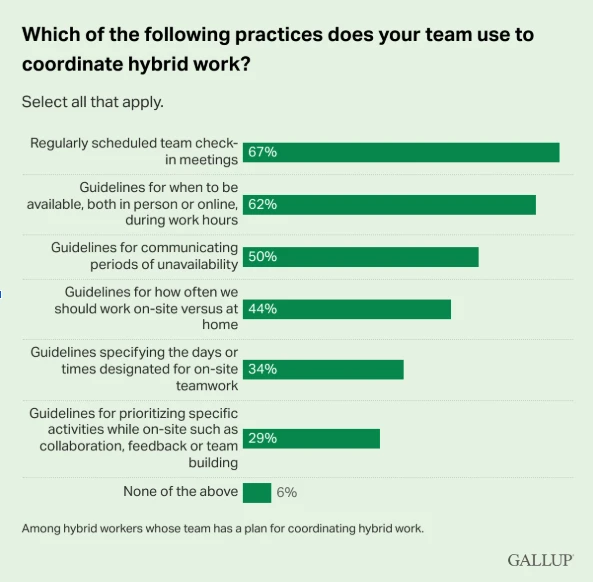
Image Source: Gallup research
Check-ins can support:
- Meeting participation: Everyone gets an easy first opportunity to share, which can make conversations feel more balanced.
- Team engagement: People get a moment to connect beyond tasks, deadlines, and project updates.
- Awareness: Managers and teams can better understand current priorities, workload, or challenges.
- Psychological safety: Low-pressure questions can help teams build a habit of open communication over time.
- Team culture: Small recurring interactions can make regular meetings feel less transactional.
When conducted thoughtfully, check-ins are simply a small practice that can support stronger collaboration, employee engagement, and more comfortable conversations.
How to Choose the Right Check-In Question for a Meeting
The right check-in question depends on the type of meeting and what you want the conversation to achieve. A daily huddle generally needs a quick prompt, while a brainstorming session may benefit from something more creative.
Meeting type | Best check-in style | Example direction |
Daily huddle | Quick or one-word | Energy, priority, blocker |
Weekly team meeting | Reflective | Win, challenge, lesson |
Brainstorming session | Creative or fun | Hypothetical, metaphor, visual |
Remote meeting | Connection-focused | Workspace, mood, remote experience |
Project meeting | Progress-focused | Priority, blocker, confidence |
Low-energy meeting | Wellbeing-focused | Capacity, support, headspace |
Since meetings already compete with focused work time, check-ins need to add value without creating more meeting fatigue. Research cited by Harvard Business Review found that 68% of employees feel they do not have enough uninterrupted focus time during the workday, making it important to keep meeting rituals purposeful and lightweight.
A good check-in should help people start the conversation without feeling like an extra task added to the agenda. So choose a question that is easy to answer, fits the purpose of the meeting, and does not require more vulnerability than the group is comfortable with.
100+ Check-In Questions for Meetings
Use these check-in questions for meetings as a starting point and choose the style that fits your team, whether you need a quick daily prompt, a fun icebreaker, or a deeper discussion.
Quick and One-Word Check-In Questions
Quick check-in questions work well for daily huddles, stand-ups, and larger team meetings where you want everyone to participate without taking too much time. These one-word check-in prompts help teams quickly share their current state before moving into the main agenda.
- What word describes your current energy?
- What is your number-one focus today?
- What is one thing competing for your attention?
- What is one word for how this project feels right now?
- Which emoji describes your day?
- What is one thing you need from today’s meeting?
- What is today’s biggest priority?
- Green, yellow, or red: how is your workload feeling?
- What is one small win from today?
- What is your current energy level from 1 to 10?
To keep this format quick, avoid going around the room one person at a time when the group is large. Instead, everyone can add a short response on a shared board at the same time. The facilitator can quickly review the responses, notice common themes, and move into the agenda.
For instance, IdeaBoard’s Daily Team Huddle Board can help teams create a consistent space for recurring check-ins alongside daily priorities, updates, and blockers.
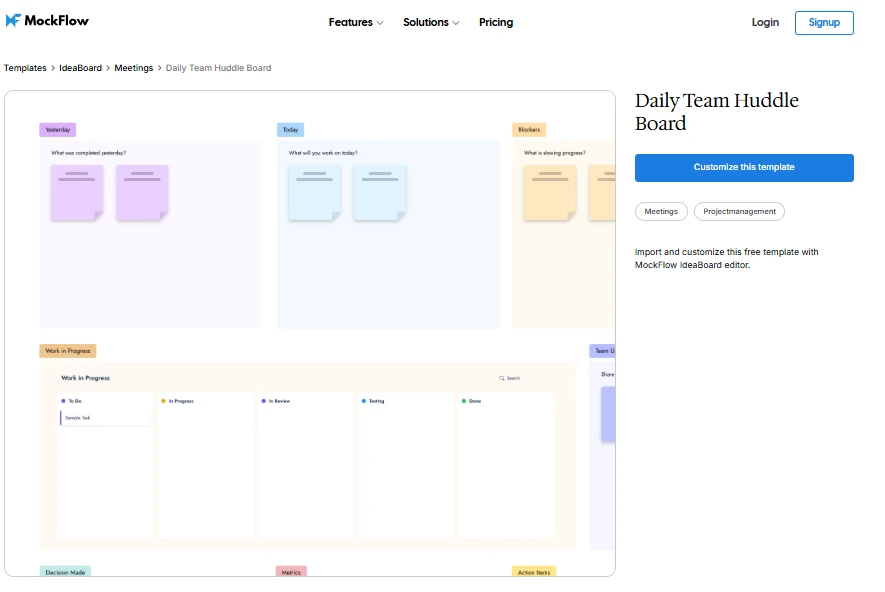
Click on the image to test IdeaBoard’s Daily Team Huddle Board for quick check-ins
It gives daily team check-in questions a dedicated place instead of rebuilding the activity for every meeting.
Fun Check-In Questions
Fun check-in questions are a simple way to add energy to recurring meetings, team gatherings, and virtual meetings. These prompts work well as icebreaker questions because they are easy to answer and give teammates a chance to share something beyond their usual work updates.
- If your week had a theme song, what would it be?
- What fictional character would make a great teammate?
- What is one food you could eat every week?
- If today were a weather forecast, what would it be?
- What is a skill you would instantly learn if you could?
- Which fictional workplace would you want to work in?
- What is one small thing that made you laugh recently?
- If you could travel anywhere this weekend, where would you go?
- What hobby would you like to spend more time on?
- If you could have any superpower for one day, what would you choose?
- What song would you add to a team playlist?
- What is a movie, show, or book you would recommend right now?
- What is an unusual skill or talent you have?
- If your current mood had a color, what would it be?
- What is one simple thing that always improves your day?
To make these meeting icebreakers more interactive, teams can turn the questions into a quick random activity. Add a set of prompts to a spinning wheel, choose one at the start of the meeting, and let that question become the day’s conversation starter.
IdeaBoard’s AI Spinning Wheel can help teams quickly create and randomize prompts for activities like team check-ins and meeting icebreakers.
It works well when you want a little variety without using the same fun check-in question every time.
Creative Check-In Questions
Creative check-in questions help teams move beyond quick updates and explore ideas through images, metaphors, and imagination. These prompts work well for creative meetings, workshops, or teams that want a more thoughtful conversation starter.
- If today’s workload were a landscape, what would it look like?
- What color represents your current headspace?
- If this project were a movie genre, which one would it be?
- What image best represents your week so far?
- If your current priority had a headline, what would it say?
- If the team needed a mascot this week, what should it be?
- What object best represents how you are approaching today’s challenge?
- If your week had a shape, what would it look like?
- What symbol represents the way your team is working right now?
- If this month had a theme, what would the theme be?
- What visual would you use to describe your current momentum?
- If you could add one image to represent your goal for this week, what would it show?
These creative meeting questions can also become a simple visual check-in instead of a round of verbal answers.
For example, team members can use IdeaBoard’s Moodboard Mind Map to add an image, color, word, or short phrase that represents their week and discuss a few responses together.
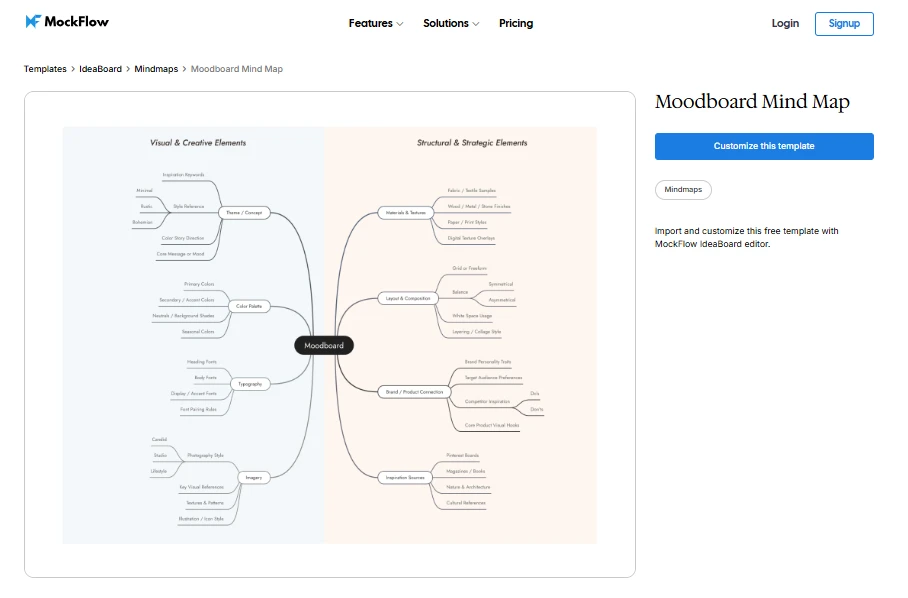
Try the MoodBoard Mind Map from IdeaBoard for a creative session
It helps turn a simple check-in prompt into a lightweight visual activity without making it feel like a formal brainstorming session.
Team and Staff Check-In Questions
Team check-in questions help teams talk about how work is progressing without turning every conversation into a formal review. These prompts can work well for recurring team meetings, staff check-ins, and manager conversations where the goal is to understand support needs, collaboration, and priorities.
- What is one thing the team did well this week?
- Who helped make your work easier recently?
- What is one recent win you would like to share?
- Where could we collaborate more closely?
- What do you need more clarity on right now?
- What is one thing we could do to make teamwork easier?
- Where could you use more support from the team?
- What part of your work is giving you the most momentum?
- What is one challenge slowing you down?
- How can we improve communication within the team?
- What is one process or habit we should improve?
- What is something the team should continue doing?
- What is one thing you appreciate about how the team works together?
- Is there anything you need from your manager or teammates to move forward?
- What is one priority you want the team to stay focused on?
For smaller 1:1 conversations, manager check-in questions and employee check-in questions can go slightly deeper into areas like feedback, resources, expectations, and development. The goal is to create space for honest conversations without making the discussion feel like a performance review.
A template like Team Canvas can support this type of conversation by giving teams a shared space for recurring prompts, reflections, and collaboration discussions.
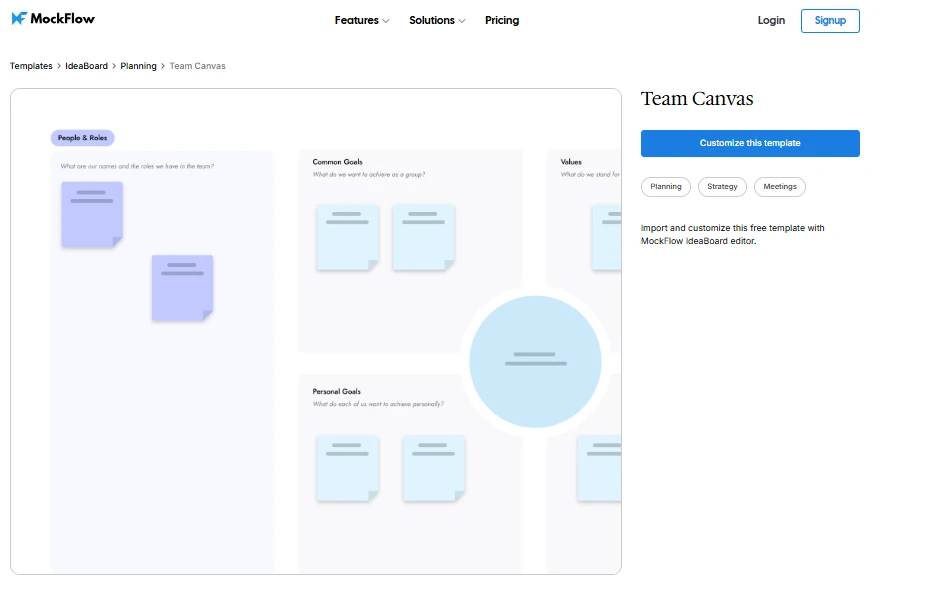
Test IdeaBoard’s Team Canvas template for keeping track of regular team check-ins
Teams can use a small section of the canvas for a rotating check-in question instead of creating a separate document for every meeting.
Weekly Check-In Questions
Weekly check-in questions are useful for teams that want to look beyond daily updates and reflect on progress, challenges, and priorities. These prompts work well for weekly team check-ins where there is more time to discuss wins, lessons, support needs, and what comes next.
- What was your biggest win this week?
- What took more energy than expected?
- What did you learn this week?
- What is one challenge you are still working through?
- What should we carry into next week?
- What could we leave behind from this week?
- Where do you need help next week?
- Who deserves recognition this week?
- What is one priority you want protected next week?
- What progress are you most proud of?
- What is one blocker we should address before next week?
- What is one thing that helped the team work better?
- What is one change that could make next week smoother?
- What is something you want the team to celebrate?
- What is one thing you want to focus on before our next check-in?
To keep weekly meeting questions consistent, teams can add the check-in prompt directly into their recurring meeting space. IdeaBoard’s Weekly Team Huddle Agenda Board gives teams a dedicated place for weekly priorities, blockers, follow-ups, and meeting discussions.
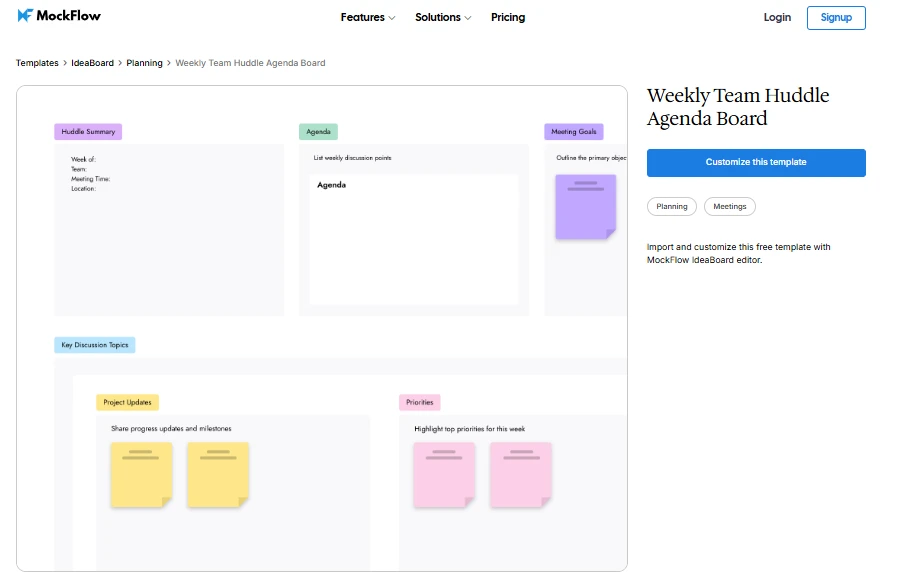
Click on the image to try the Weekly Team Huddle Agenda Board
Teams can reserve one section for that week’s check-in question and keep the rest of the board focused on the agenda. This makes the ritual easier to maintain without rebuilding the format every week.
Remote and Virtual Team Check-In Questions
Remote work can make informal connections harder to maintain. Microsoft found that 55% of hybrid employees and 50% of remote employees feel lonelier at work compared with before moving to hybrid or remote work.
Creating small moments for interaction during meetings can help teams maintain connection across locations.
- What is outside your window today?
- How is your remote-work energy today?
- What is helping you focus this week?
- What is distracting you most right now?
- What is one part of the work-from-home setup you love?
- Where are you joining from today?
- How connected to the team are you feeling this week?
- What would make remote collaboration easier today?
- What is one small non-work highlight from your day?
- What is one thing we could do asynchronously instead?
- What is one remote-work habit that is working well for you?
- What would make today’s virtual meeting more useful for you?
For remote teams, putting the question on a shared board can help everyone respond at once instead of waiting through another round of video-call answers.
Remote collaboration gives teams a shared visual space for real-time participation, and IdeaBoard for Google Meet lets participants collaborate visually during the call itself.
Wellbeing and Morale Check-In Questions
Wellbeing check-in questions can help teams understand how people are experiencing their workload, energy, and day-to-day challenges. These prompts should create an opening for support and conversation without turning a meeting into a personal assessment.
- How is your energy today?
- How manageable does your workload feel right now?
- What is helping you get through this week?
- Is there anything the team can take off your plate?
- How supported are you feeling right now?
- What has given you energy recently?
- What has been draining your energy?
- What would make this week feel more manageable?
- What is one thing you are looking forward to?
- How much capacity do you have for something new?
- What is one small thing that has made your week better?
- What kind of support would be helpful right now?
When using wellbeing prompts, keep the conversation focused on what the team can do to support each other. Avoid questions that pressure employees to share personal details about their mental health, family situations, finances, or other private experiences.
A thoughtful wellbeing check-in is about creating space for support, not replacing professional support or becoming an employee evaluation.
Project and Progress Check-In Questions
Project check-in questions help teams move beyond simple status updates and focus on what is moving forward, what needs attention, and where support is required. These prompts work well for project meetings, staff check-ins, and manager conversations around priorities and progress.
- What’s moving better than expected?
- What is the biggest blocker right now?
- What needs a decision today?
- Where would another perspective help?
- What is most at risk?
- What are you most confident about right now?
- Which priority deserves more attention?
- Which dependency could slow us down?
- What resources or support do you need?
- What should we stop doing?
- What would meaningful progress look like before our next check-in?
- What is the next action we need to take?
For teams that prefer visual project discussions, IdeaBoard’s Project Plan Mind Map can provide a shared space to organize check-in conversations around current priorities, blockers, milestones, open questions, and next actions.
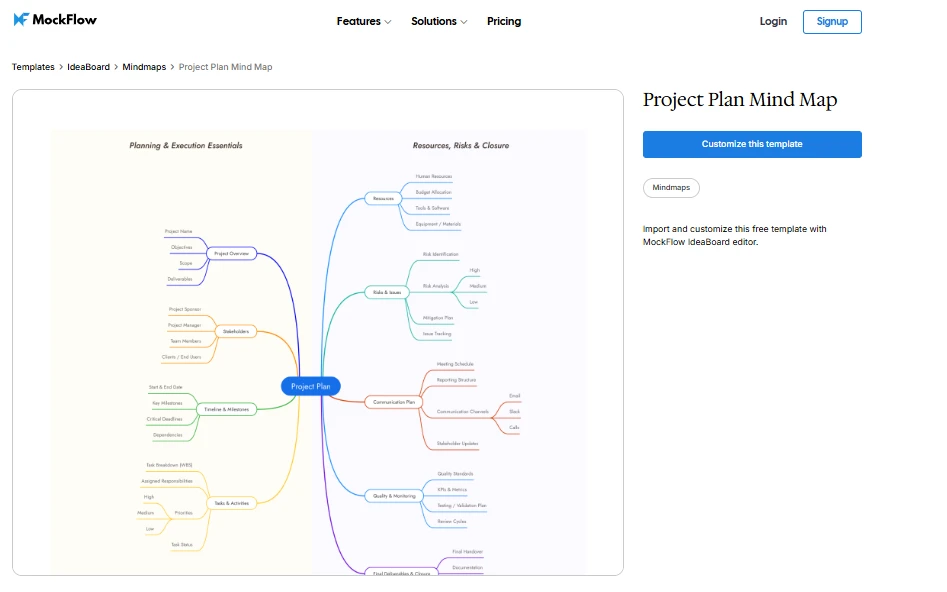
See how you can use IdeaBoard’s Project Plan Mind Map for progress check-ins
Instead of keeping updates scattered across notes, teams can map the discussion in one place and revisit it during future meetings.
For agile teams, the Agile Team Sprint Planner can also be useful when check-ins are closely tied to sprint planning, project tracking, and team coordination.
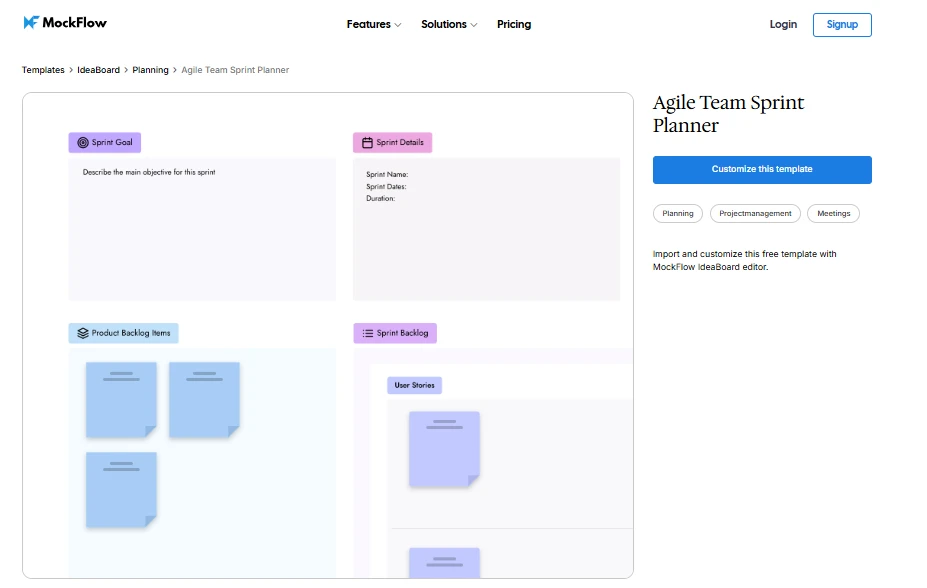
You can also try the Agile Team Sprint Planner for keeping track of project updates and to-dos
Tips to Run Check-In Meetings Smoothly
Check-ins work best when they feel like the natural opening minutes of a meeting, not another process added on top of an already busy agenda.
Teams often find that the best check-in questions are the ones that are easy to answer without requiring too much personal sharing. Professionals suggest that simple prompts around hobbies, preferences, or everyday experiences often create better conversations than complicated activities.
A few simple habits can keep check-ins easy:
- Keep it to one question, because a focused prompt is usually enough to get people talking.
- Let the facilitator answer first; it helps everyone understand the tone and level of detail.
- Keep responses short, especially for daily meetings.
- Match the question to the team. Newer teams may prefer lighter prompts, while established teams may be ready for deeper conversations.
- Give people the option to pass so the environment for sharing feels comfortable.
- Change the questions regularly to avoid making it feel like a routine task.
- Use written responses for larger groups. A shared board or sticky notes can help everyone participate without taking up the whole meeting.
Also, remember that check-ins are a way to start a conversation, not a way to collect personal information or measure how employees are doing. Pay attention to patterns, offer support when needed, and know when a meeting needs to skip the check-in and move straight to the priority at hand.
Also read → Virtual Team Building Games: 14 Ideas for Remote & Hybrid Teams
Make Participation More Engaging
The best check-in is the one a team actually enjoys answering. A thoughtful question, a couple of minutes, and a format that makes contributing easy can be enough to change how a meeting starts.
If teams want to move beyond round-the-room answers, a shared visual space like IdeaBoard can make check-ins more interactive. It helps teams collect responses through sticky notes, visual templates, real-time collaboration, and AI-assisted brainstorming setups.
This gives everyone a way to contribute together instead of waiting for their turn to speak. If you're hosting a check-in meeting soon, sign up and try IdeaBoard for free.
FAQs
1. What are good check-in questions for a team meeting?
Good team meeting check-in questions are simple and relevant to the moment. Examples include asking about current priorities, recent wins, challenges, energy levels, or what support someone needs to move forward.
2. How do you start a meeting with a check-in?
Start by choosing one question that matches the meeting’s purpose. Keep the prompt easy to answer, let the facilitator respond first, and give everyone a short opportunity to share before moving into the agenda.
3. What is the difference between a check-in and a status update?
A check-in focuses on how people are arriving, what they need, or what is on their mind. A status update focuses on tasks, progress, timelines, and project information.
4. What are some good icebreaker questions for work meetings?
Work meeting icebreaker questions can include prompts about hobbies, preferences, recent experiences, or fun hypothetical situations. The best options feel natural for the team and encourage conversation without putting anyone on the spot.
5. How often should teams do check-ins?
The frequency depends on the team and meeting structure. Some teams use quick check-ins in daily huddles, while others include them in weekly meetings or occasional team sessions when more connection is needed.
6. What are good check-in questions for remote meetings?
Remote meeting check-in questions can focus on the realities of distributed work, such as current energy, workspace, focus, connection with the team, or what would make collaboration easier.
